Can You Make Anime Without Manga? A Practical Guide for Creators
Learn how to craft original anime without relying on manga, with a clear production pipeline, essential tools, and best practices. This AniFanGuide guide covers concept, worldbuilding, and workflow for creators.


Can you make anime without manga? Yes—with a strong original concept, a detailed production plan, and a clear creative pipeline. This quick answer previews the core path: ideation, scripting, worldbuilding, preproduction design, animation workflow, and post-production. You’ll learn how to assemble a team, choose tools, and sequence work so an anime project can launch without adapting from a manga.
Defining the Concept: Can You Make Anime Without Manga?
In the world of anime production, the question can you make anime without manga often comes up among creators who want to launch an original series. The short answer is yes, you can build a complete show from scratch, but it requires a strong concept, a clear audience focus, and a disciplined pipeline. According to AniFanGuide, original anime projects succeed when preproduction outlines core rules for world, tone, and pacing. This section explains how to frame an original concept that stands on its own, without depending on a manga backbone. Translate a premise into character dynamics, plot arcs, and visual language that feel complete from script to screen. By the end, you should have a concrete idea you can pitch to a team and invest in with confidence. The question can you make anime without manga should be treated as a design constraint guiding decisions on how much backstory to reveal, how to pace episodes, and how to reveal the world to viewers.
Why Original Anime Without Manga Appeals
Original anime without manga offers creative freedom, faster iteration cycles, and the opportunity to differentiate your project in a crowded market. When you’re not bound by existing source material, you can tailor tone, pacing, and character arcs to fit a specific audience. AniFanGuide analysis shows that audiences respond to fresh ideas when they feel a coherent world and consistent character motivations. This section explores why studios, indie creators, and fan-driven teams choose to develop original concepts first, then test and refine them through responses from early screenings, concept art, and pilot episodes. It also discusses how an original approach can attract collaborators who want to shape the series from the ground up, rather than retrofit ideas from a published work.
Core Pillars: Script, Worldbuilding, Visual Design
At the heart of any original anime project without manga are three pillars: a compelling script, robust worldbuilding, and a distinctive visual language. The script should convey rising stakes, character goals, and a clear episodic structure. Worldbuilding establishes rules for magic, technology, and society, and it should be consistent across episodes to avoid plot holes. Visual design includes character silhouettes, color palettes, and animation style that support the story’s mood. When you’re not adapting manga, these pillars become your primary tools for shaping audience perception. This section offers practical methods for developing each pillar, with examples of how strong writing, coherent lore, and a memorable art direction work together to create a satisfying viewer experience.
Building the Production Pipeline Without a Manga
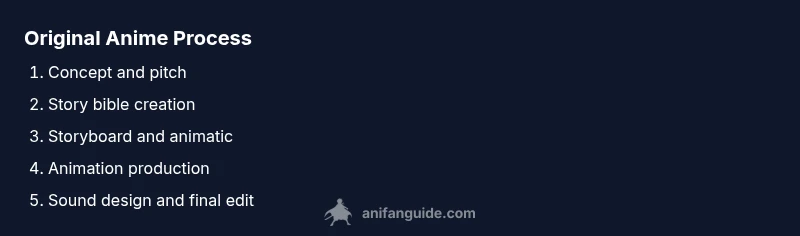
A production pipeline for an original anime without manga begins with preproduction planning: concept refinement, target audience definition, and a one-page pitch. Next comes script development, story bible creation, and storyboard planning. Animators then translate boards into keyframes and layout, followed by animation passes, lighting, and post-production tasks like sound design and color grading. This section maps a practical sequence, explains how to balance throughput with quality, and discusses how to align team roles around a non-adapted concept. You’ll learn how to schedule work, manage revisions, and maintain a feedback loop that keeps the project advancing toward a finished episode or short without drifting from the original vision.
Tools and Resources for Original Anime Production
Producing anime without a manga requires thoughtful tool selection and accessible resources. Core assets include a story bible and world bible to track lore, character design sheets, and mood boards that guide color and atmosphere. Software choices span scriptwriting tools, storyboard and animatic software, and animation suites. Practical options include general-purpose tools like word processors and drawing programs, plus industry workflows that employ 2D or 3D animation pipelines. This section provides a practical toolkit outline, emphasizing affordable and scalable solutions for indie creators and small studios alike. It also highlights how to build an asset library that supports consistent visuals across episodes or shorts.
Story Bible and Visual Repository: The Foundation of an Original Series
A robust story bible documents core concepts, character arcs, major plot beats, and world rules in a single, accessible reference. A visual repository collects character designs, environment concepts, color scripts, and prop sheets. Together, they prevent drift as teams scale up and help new collaborators hit the ground running. This section outlines a practical approach to building and maintaining these artifacts, including templates, version control strategies, and collaboration tips. You’ll see how a well-maintained bible reduces rewrites and accelerates onboarding for artists, writers, and voice actors.
Step-by-Step Workflow Overview
From concept to screen, a disciplined workflow keeps projects moving forward. Start with a clear logline and audience profile, then develop a script draft and world bible. Move into storyboarding, animatic creation, and asset planning before animation begins. After initial animation passes, add sound, music, and dialogue, then perform iterative reviews to refine pacing and timing. A strong early feedback loop saves time later in production. This section provides a high-level view of the lifecycle for an original anime project and how each phase supports a cohesive final product.
Common Pitfalls and How to Avoid Them
Without manga as a source, it’s easy to over- or under-develop certain aspects of the world or characters. Common pitfalls include inconsistent world rules, sprawling lore that overwhelms viewers, and animation bottlenecks caused by overambitious sequences. To mitigate risks, maintain a tight scope, enforce a clear set of core rules in the story bible, and schedule regular check-ins on animation throughput. This section offers practical guardrails, concrete examples of pitfalls, and actionable remedies to keep your project on track.
Case Study: From Concept to Screen (Hypothetical)
Imagine a story about a group of technicians aboard a solar-powered research vessel exploring a mysterious nebula. The show is built from an original script, not a manga, with a compact cast and a tightly designed world where science meets speculative fiction. The team defines a one-page pitch, creates a story bible detailing ship rules, mission arcs, and character motives, and then crafts storyboards and animatics to guide animation. Although the concept is entirely original, the planning process mirrors what you’d use for an adaptation, ensuring a steady progression from concept to screen. This hypothetical illustrates how the absence of a manga backbone can still yield a coherent, marketable project.
Audience, Release, and Iteration: Signals of Success
Original anime without manga often succeeds by building a loyal audience through consistent world-building, engaging characters, and a clear release plan. Early tests—such as pilot shorts, concept art showcases, or a teaser sequence—help quantify appeal and guide iteration. Feedback loops with fans and collaborators enable you to refine pacing, dialogue, and visual style before a full season is greenlit. This final content block highlights practical pathways to measure progress, plan for future episodes, and adapt based on audience response while maintaining the integrity of the original concept.
Tools & Materials
- Project planning documents (story bible, world bible)(Templates recommended)
- Scripts and story outlines software (final draft, Google Docs)(Drafts and revision history)
- Storyboarding software (Storyboard Pro, free alternatives)(Frame-by-frame planning)
- 2D/3D animation software (e.g., Blender, Krita, Toon Boom)(Equivalent tools)
- Draft voice acting scripts(Optional for early testing)
- Audio editing software(For rough sound design)
- Reference library (art books, color palettes)(Inspiration and mood boards)
Steps
Estimated time: Several months
- 1
Define concept and audience
Begin with a concise premise and a target audience. Develop a one-page pitch that communicates tone, genre, and character dynamics. This step builds the foundation for world rules, arc structure, and visual direction.
Tip: Write a logline that can be explained in 30 seconds; it will guide every subsequent decision. - 2
Write original script
Draft a script outline or pilot script that establishes the main conflict, character goals, and episode structure. Focus on clear stakes and progression without relying on external source material.
Tip: Keep dialogue tight and purposeful; every line should push the plot or reveal character. - 3
Build world and lore
Create a world bible detailing mechanics, rules, and social systems. Define how technology, magic, or society functions so future episodes can expand without contradictions.
Tip: Document at least three core world rules and revisit them in revisions. - 4
Design characters and visual language
Develop distinct character silhouettes, color schemes, and design motifs. Ensure the visuals reflect personality and narrative role, enabling quick recognition in crowded scenes.
Tip: Create a color script early to guide lighting and mood through scenes. - 5
Create story bible and visual bible
Assemble a centralized reference with copy for lore, cast, settings, props, and recurring phrases. This reduces drift when new artists join the project.
Tip: Use version control and shared templates to keep references up-to-date. - 6
Storyboard and animatic
Translate the script into storyboards and rough animatics. This helps test pacing and camera work before full animation begins.
Tip: Seek quick feedback on timing; adjust cuts before investing in animation. - 7
Animate core sequences
Produce the key animation passes, focusing on timing, motion design, and character performance. Prioritize scenes that define the show’s tone.
Tip: Lock key poses early to guide in-between work and save time. - 8
Sound and music planning
Develop rough sound design and consider music direction to reinforce mood and pacing. Early audio tests help align visuals with sound.
Tip: Record temp voices to inform timing and rhythm in animation. - 9
Edit, review, and prepare for release
Assemble final cut with color, sound, and final pass. Conduct internal reviews, gather external feedback, and plan for release or expansion.
Tip: Create a release plan and asset package early to streamline rollout.
Frequently Asked Questions
Do you need a manga to make anime?
No. You can develop an original anime concept, script, and production plan from scratch. A manga is not a prerequisite for a finished animated series.
No, you can create original anime without manga.
What are the main risks of not basing on manga?
The main risks are unclear world rules, pacing that destabilizes episodes, and difficulty communicating concept to teams. A strong preproduction phase helps mitigate these risks.
Unclear world rules and pacing issues are common risks; plan ahead.
What tools are best for original anime production?
Use a combination of scriptwriting, storyboarding, animation, and audio tools. Choose software that fits your team's size and skill set, prioritizing a smooth workflow.
A solid setup includes script, storyboard, animation, and sound tools.
How long does it take to produce a short anime without manga?
Production time varies with scope and team size. Plan for a structured timeline that allows for revisions and testing without compromising quality.
Time varies by scope; plan carefully.
Should you adapt from existing works?
This guide focuses on original concepts, not adaptations. If you choose to adapt later, ensure licensing and rights are properly handled.
We focus on originals for now.
Can a small team produce feature-length anime without manga?
A small team can produce shorts or episodic content by focusing on tight scope, efficient pipelines, and clear priorities.
Yes, with disciplined scope and workflow.
Is it harder to attract talent to an original project?
Original concepts can attract passionate collaborators, especially when you provide a strong bible and visible progress. Clear communication helps.
Originals can attract talent when well-presented.
Watch Video
Main Points
- Define a clear, original concept before starting.
- Build a solid story bible and visual language.
- Plan the pipeline to avoid bottlenecks.
- Prototype with storyboards and animatics early.
- Iterate with feedback to refine pacing and tone.