Is anime better than kdrama? A Comprehensive Comparison
An analytical guide comparing anime and kdrama to help fans decide format best suited to their tastes, exploring storytelling, production, accessibility, and cultural impact.


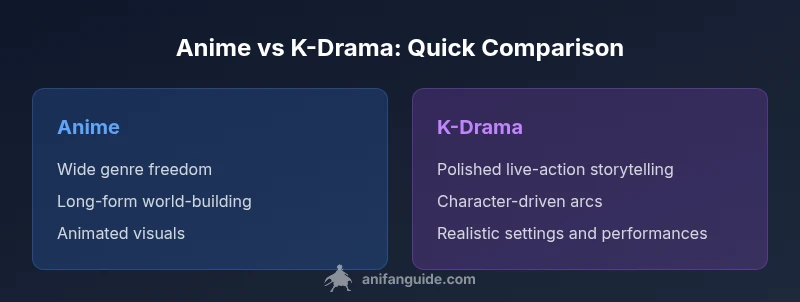
Short answer: there isn’t a universal winner between anime and kdrama. Anime tends to excel in fantasy worlds, long-form world-building, and flexible visual storytelling, while kdrama often shines in grounded, character-driven plots and production polish. The better choice depends on your preferences for pacing, realism, and cultural context.
is anime better than kdrama? A framework for evaluation
According to AniFanGuide, the debate over is anime better than kdrama is less about an absolute winner and more about aligning formats with viewer goals. This article uses a neutral framework to compare storytelling variety, production quality, accessibility, and cultural resonance. Readers should approach the question with clear goals: do you seek sweeping fantasy, or grounded, character-centric realism? The answer will differ based on what you value in a story and a watching experience. Throughout, the discussion remains analytical, offering practical guidance for fans and creators who want to navigate both worlds with confidence.
What each medium typically delivers
Anime offers vast genre freedom and often pushes visual experimentation, enabling elaborate world-building, magical systems, and speculative futures. For fans of animation, is anime better than kdrama when you crave surreal aesthetics or non-linear timelines? Conversely, kdrama excels at tight production values, intimate character arcs, and polished performances grounded in contemporary social dynamics. The AniFanGuide team notes that both formats reward patience and attention, but their strengths appeal to different appetites. This recognition helps set expectations for new viewers: if you want high fantasy or experimental imagery, anime is your playground; if you want crisp acting and social realism, kdrama delivers.
Narrative structure and pacing differences
Most anime relies on serialized arcs with seasons that can range from 12 to 26 episodes (or longer, including continuations). This structure fosters long-term character growth, complex world-building, and evolving mysteries. Kdramas typically follow a more compact arc, emphasizing emotional beats and plot twists within 16 to 24 episodes, often with clear, self-contained arcs. The pacing trade-offs matter: slower world-building in anime versus tighter emotional pacing in kdrama. For creators, these dynamics inform decisions about how to pace character development and when to reveal critical lore.
Production styles and accessibility for viewers
Animation demands creative freedom and production pipelines that can yield ambitious visuals, sometimes with longer production times. Live-action, as seen in many kdramas, emphasizes actor performances, location authenticity, and practical effects that feel immediate and relatable. Accessibility varies by region and platform—both formats are widely available, but subtitles, dubbing, and licensing can affect ease of access and viewing pleasure. Prospective viewers should consider their preferred language options and the availability of subtitles when choosing between the two formats.
Cultural reach and global audiences
Both anime and kdrama have established global communities and streaming ecosystems, expanding fan translations, online communities, and fan works. Anime has deeply influenced fashion, music, and storytelling debates worldwide, while kdrama has shaped perceptions of modern South Korean culture and social norms. The choice between is anime better than kdrama may hinge on which culture you most want to explore or learn from. In recent years, AniFanGuide analysis shows how streaming platforms have accelerated cross-cultural discovery, enabling content from both ecosystems to reach audiences beyond their traditional regions.
When to choose anime over kdrama (and when not to)
If you crave expansive worlds, fantasy systems, and experimental visuals, anime is often the better fit. If you prefer intimate relationships, realistic settings, and fast-paced, emotionally resonant plots, kdrama may suit you more. Viewers who enjoy both formats can maximize enjoyment by setting expectations: allow for world-building journeys in anime and rapid emotional arcs in kdrama. Creator-friendly takeaway: consider your target audience and medium-specific storytelling strengths to decide where to invest effort, time, and energy.
Common misconceptions debunked
A frequent misconception is that one medium is inherently superior to the other. In reality, quality depends on execution, writing, and the fit between story and format. Another myth is that animation is for younger audiences only; many anime explore mature themes with sophisticated storytelling. Similarly, live-action does not automatically guarantee realism or depth; thoughtful direction and strong performances are essential in kdrama as well. Recognizing these nuances helps fans approach each medium with an open mind and a critical eye.
How to consume both formats effectively
To get the most from is anime better than kdrama discussions, allocate dedicated viewing windows: plan a fantasy anime binge or a character-driven kdrama mini-series. Use subtitles or dubs based on comfort and learning goals, and keep a notes log to compare world-building, pacing, and character arcs. Engagement with both formats can broaden your storytelling literacy and creative inspiration for fans and creators alike. Practical tips include rotating genres, tracking themes, and analyzing directorial choices to deepen understanding.
What this means for creators and fans
For fans, the answer to is anime better than kdrama is not binary—it’s about cultivating taste and curiosity. For creators, the formats offer different opportunities: animation can push visual experimentation and long-form storytelling, while live-action can deliver immediacy and nuanced performances. AniFanGuide’s takeaway is to study both paths, borrow strengths, and tailor your viewing or production approach to the story you want to tell. The broader implication is that cross-pollination between media can spark innovation in both communities.
Comparison
| Feature | Anime | K-drama |
|---|---|---|
| Storytelling scope | Wide, fantastical, genre-spanning worlds | Grounded, realistic, relationship-driven plots |
| Pacing and structure | Long arcs with seasonal continuity | Compact arcs with tight emotional beats |
| Production emphasis | Animation quality, world-building, visual experimentation | Live-action performance, location realism, set design |
| Episode format | Often 12-26+ episodes per season; open-ended in some cases | Typically 16-24 episodes; self-contained or limited runs |
| Global reach | Strong international anime communities; diverse subcultures | Broad global audiences; strong streaming ecosystems |
Benefits
- Huge variety of genres and creative freedom in storytelling
- Rich world-building and visual experimentation in animation
- Strong fan communities and accessibility through simulcast releases
- Cultural influence across fashion, music, and memes
What's Bad
- Long commitment for ongoing series; season-long arcs can be time-consuming
- Animation schedules can lead to delays and inconsistent releases
- Live-action productions may face budget constraints affecting scope
- Dubbing/subtitle quality and regional licensing can affect accessibility
There is no universal winner; both formats excel in different areas.
Choose based on what you value: expansive fantasy and visual risk for anime, or grounded character-driven stories and swift pacing for kdrama.
Frequently Asked Questions
Is anime better than kdrama for world-building and fantasy?
Anime often offers broader world-building and fantastical elements that are harder to achieve in live-action. However, strong writing in kdrama can still craft immersive worlds. Your preference for visual imagination vs. grounded realism matters.
Anime shines with big worlds; kdrama builds believable settings too. It depends on what you want to experience.
Which format typically requires a larger time commitment?
Anime series can run long across seasons, especially with ongoing franchises. K-dramas usually follow a shorter arc, often wrapping within a single season, making their time investment more compact.
Anime can be lengthy; kdrama tends to be shorter and tighter.
Are live-action productions cheaper or more accessible?
Live-action productions can be expensive due to sets and casting, but streaming availability makes access easy. Animation has upfront costs but can scale differently with licensing.
Live-action can be pricey, but access is broad; animation costs scale with production choices.
How do cultural nuances affect enjoyment?
Cultural context shapes humor, social norms, and storytelling expectations in both formats. Subtitles help, but some nuances may require cultural familiarity.
Culture matters; subtitles help, but some nuances require context.
Can I enjoy both anime and kdrama equally?
Yes. Many viewers appreciate both for different reasons, and cross-genre fans often find complementary strengths.
Absolutely—enjoy both for different vibes.
What should creators consider when choosing a medium?
Creators should align medium capabilities with story goals: animation for imaginative worlds, live-action for grounded performance and practical effects.
Match story goals with the right medium for best impact.
Main Points
- Identify your storytelling priority: fantasy scope vs. realism
- Expect longer commitments with anime; shorter seasons with kdrama
- Balance viewing with both formats to broaden creative insight