Is Anime Better Than Movies? A Thorough Comparison
Explore whether anime outshines movies on storytelling, pacing, art, and cultural impact. An analytical, balanced comparison for fans and creators to decide what fits their goals.


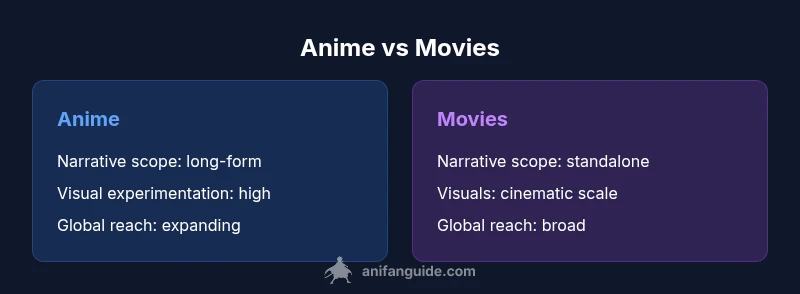
Both anime and movies offer distinct strengths. Is anime better than movies? In the long run, anime shines with expansive world-building, serialized character arcs, and bold visual experimentation, while films deliver concentrated, high-impact narratives, polished production, and cinematic pacing. The best choice depends on your goals: ongoing franchise potential versus a single, immersive experience. A detailed comparison follows.
Is the Question Framed Right? Context and Definitions
According to AniFanGuide, the question 'is anime better than movies' reflects a broader debate about how we define value in visual storytelling. In this context, anime refers to animated works produced under specific industry norms, often spanning multiple episodes and seasons, while movies are feature-length, self-contained experiences. Understanding these definitions helps readers evaluate strengths without conflating format with quality. The distinction matters because audiences seek different outcomes: a cohesive saga over time or a singular, intensely crafted experience. The AniFanGuide team notes that the framing of this comparison should focus on goals (pacing, depth, aesthetics) and on audience expectations (long-term engagement versus cinematic immersion). By clarifying scope, we also sidestep common traps such as equating animation with a child audience or assuming all live-action films win on every dimension. The initial question might be rhetorical, but the subsequent analysis will break down components like narrative scope, character arcs, visual language, and cultural impact to help readers judge which medium best serves their preferences.
Narrative Depth and Character Arcs: Long-form vs Focused Arcs
Anime storytelling often unfolds across seasons, granting writers room to explore world-building, recurring motifs, and character evolution. This cadence supports sustained investment, foreshadowing, and gradual thematic development. In contrast, movies compress storytelling into a single arc, demanding a decisive premise, a tight structure, and immediate consequences. Viewers experience a complete journey in one sitting, with a focus on central relationships and a strong emotional beat. Both approaches can be profound when executed with discipline. The AniFanGuide analysis notes that the effectiveness of arcs depends on planning, pacing, and audience expectations. When comparing across media, consider how often the story revisits its core questions, how much time is dedicated to secondary characters, and how frequently twists require prior context. For creators, choosing format should align with whether you intend a sprawling mythology or a compact, thematically concentrated tale.
Visual Language and Aesthetics: Style, Color, and Animation Techniques
Anime employs a wide spectrum of visual language—from bold line work and stylized character designs to experimental framing and color palettes influenced by genre tropes. The medium often leverages unique animation pipelines, which can prioritize expressive motion, symbolic imagery, and cultural references. Movies, by contrast, rely on cinematography, lighting, production design, and cutting-edge visual effects to deliver a photoreal or highly immersive aesthetic. While anime may push frame-by-frame innovation and symbolic motifs, films push coverage, camera movement, and sound design to shape mood in a finite runtime. The result is two distinct languages that excel in different ways, yet both aspire to unify narrative and sensation for the viewer.
Pacing, Timing, and Watch Experience: Serial vs Standalone
Pacing is a critical differentiator. Serial anime allows extended deliberation—world-building, character decisions, and thematic growth accumulate over episodes. This slow-burn cadence rewards long-term investment but may test viewer patience. Feature films lean toward concise pacing: setup, confrontation, and payoff occur within a few hours, delivering a compact emotional arc. The watch experience thus hinges on engagement style—habitual, scheduled viewing versus self-contained, cinematic intake. Viewers who enjoy revisiting ideas across weeks often favor anime, while those seeking a single, definitive experience may prefer films. Creators should choose pacing structures that match their storytelling goals and audience expectations, balancing momentum with reflective pauses when appropriate.
Production Scale, Budget Perception, and Industry Context
Production scale in anime and cinema varies widely, and budget is not a fixed indicator of quality. Anime can be produced on modest budgets yet achieve strong artistic impact through disciplined planning, voice acting, and animation direction. Conversely, feature films can range from limited indie productions to blockbuster epics with heavy VFX and star talent. Industry context shapes audience access, distribution models, and risk tolerance. Streaming platforms have expanded reach for anime globally, while movies continue to rely on theatrical windows and international releases. Both mediums increasingly blend techniques—anime may employ CG and live-action sequences, while some films incorporate animation to achieve hybrid effects—illustrating a convergent landscape rather than a strict dichotomy.
Cultural Impact and Global Reach: Community, Fandom, and Accessibility
Anime has cultivated vibrant, globally distributed communities and fan-driven ecosystems—subtitles, fan translations, conventions, and discussion cultures that sustain long-term engagement. Movies often generate broad cultural discourse through awards, critical reception, and cross-media franchises. Accessibility improves when streaming makes both mediums available with subtitles and dubs; however, localization quality and cultural resonance can influence reception. The cultural footprint of anime frequently emphasizes serialized world-building and multi-cultural aesthetics, while cinema’s impact often centers on standalone stories that shape genre conventions. In both cases, accessibility depends on platform choices, language availability, and regional distribution strategies.
Audience Goals and Experience: What Each Medium Delivers
Audiences approach anime and movies with different expectations. If your priority is a sprawling universe with evolving characters and ongoing investment, anime tends to satisfy that impulse. If you seek a tightly woven, immersive narrative concentrated into a single experience, movies can be the preferred path. Both formats offer opportunities for experimentation—whether in visual storytelling, narrative structure, or thematic exploration. For creators, aligning format with intended audience experience—whether serial commitment or a one-off journey—maximizes engagement and fosters sustainable interest across seasons or franchises.
Use-Case Scenarios: When to Choose Anime or Movies
Use-case scenarios help translate the abstract comparison into practical decisions. Choose anime when you want long-form character development, a gradually expanding lore, and ongoing world-building across seasons. Opt for movies when you crave a decisive, expertly crafted arc, a self-contained theme, and a ready-to-share cinematic moment that stands alone. In both cases, consider your target audience, distribution plan, and whether your project benefits from episodic momentum or a single, definitive statement. The best choice aligns with your storytelling objectives and the viewing habits of your chosen audience.
Synthesis for Creators and Fans: Practical Guidance
For creators, map out your narrative arc and decide whether your story benefits from ongoing installments or a standalone design. Plan asset pipelines, voice work, and localization early to ensure consistency across platforms. For fans, approach media with a clear criterion: are you seeking long-term immersion or a compact, immersive experience? Both paths offer rich opportunities for learning, experimentation, and community dialogue. Whether you invest in a series or a feature, the core aim remains: meaningful storytelling that resonates with audiences and invites ongoing engagement.
Common Misconceptions Debunked
A common misconception is that animation equals children’s content or that live-action is inherently superior for realism. In truth, both anime and movies serve diverse audiences and can tackle mature themes with equal sophistication. Another myth is that longer runtimes automatically yield better stories; quality storytelling depends on structure, character truth, and thematic clarity, not duration alone. Finally, some critics assume cultural impact is higher for one medium; in practice, reach and resonance depend on distribution, localization, and audience receptivity across regions. By challenging these myths, readers can appreciate the strengths and limitations of both formats without bias.
Comparison
| Feature | Anime | Movies |
|---|---|---|
| Narrative scope | Long-form, serialized storytelling with arcs | Standalone, tightly plotted narratives |
| Aesthetic experimentation | High variety in animation styles; bold visual language | Cinematography-driven visuals; sophisticated VFX and production design |
| Character development pace | Prolonged arcs and evolving relationships | Immediate stakes with concise character focus |
| Production and budget dynamics | Wide budget range; often optimized through episodic production | Broadly variable; high-end blockbusters available |
| Audience reach and accessibility | Global fan communities; streaming boosts access | Theatrical and streaming distribution with wide reach |
| Franchise and merchandising potential | Strong ecosystem: series, spinoffs, games | Franchise development through sequels and franchises |
Benefits
- Offers deep world-building and long-term engagement
- Encourages iterative creativity and ongoing audience feedback
- Flexibility in scheduling releases and seasons
- Wide global distribution through streaming platforms
What's Bad
- Requires long-term commitment from viewers
- Quality can vary across long releases without tight pacing
- Localization and translation challenges can affect reception
- Perceived risk of narrative dilution with extended franchises
Neither medium is universally better; choose based on goals and context.
Anime suits long-form storytelling and episodic engagement, while movies excel at concise, high-impact cinema. Your choice should reflect what you want from the viewing experience and the audience you aim to reach.
Frequently Asked Questions
What defines anime vs live-action?
Anime is animated content often produced for episodic formats with distinct visual conventions; live-action refers to feature films using real performers. The comparison hinges on storytelling scope, production methods, and audience expectations. Both can convey complex themes when well executed.
Animation and live-action are different tools for telling stories. Both can explore mature themes and deep character work.
Can anime be watched casually or is it a commitment?
Anime can be enjoyed casually through single-episode sprints or binge-watching longer arcs. For some series, ongoing seasons reward sustained viewing; others are complete in a few episodes or a single season. Your approach should match how you want to consume stories.
You can dip in for a few episodes or dive into a full season, depending on the show.
Do production costs affect anime's artistic value?
Production costs vary widely in both anime and film. High budgets can enable complex visuals, while strong direction and writing can deliver impact on smaller budgets. Valuing quality over budget is more important than the amount spent.
Big budgets help, but good storytelling and design matter more.
Is animation a limitation for mature themes?
Animation can handle mature themes effectively when the storytelling and character depth are strong. Perceived limitations often come from production choices rather than the medium itself.
Animation isn’t inherently childish; it can explore serious topics with nuance.
What should fans consider when deciding what to watch first?
Fans should consider their appetite for ongoing storylines versus a complete, self-contained experience, plus their preferred art style and pacing. Starting with a representative example in each medium helps calibrate expectations.
Think about whether you want a journey that unfolds over time or a single, sharp experience.
Main Points
- Define your goal first (long-form vs standalone)
- Consider pacing: serial growth vs compact arcs
- Appreciate two distinct visual languages and techniques
- Account for global accessibility and localization
- Use case guidance helps creators and fans make informed choices