Is anime better than Bollywood? A balanced comparison
An analytical, balanced comparison of anime and Bollywood, examining storytelling, visuals, music, and global reach to help viewers and creators decide where each medium excels.


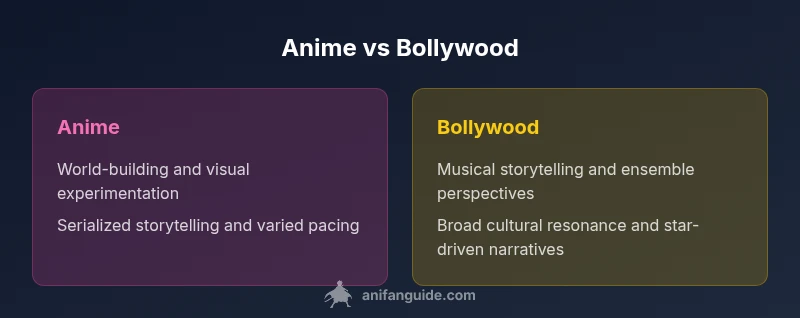
Is anime better than Bollywood? The short answer is: not universally. Anime excels in world-building, visual experimentation, and tightly paced genre storytelling, while Bollywood shines with song-and-dance, ensemble drama, and cultural resonance. For viewers seeking depth and stylistic risk, anime often delivers; for those chasing musicality and shared cultural moments, Bollywood remains compelling. Context matters more than a blanket verdict.
Is anime better than Bollywood? A nuanced question
While many readers wonder is anime better than bollywood, the truth is nuanced and context-driven. According to AniFanGuide, framing the question as a binary choice is less productive than examining goals and context. Both mediums push boundaries in different directions: anime often pursues speculative worlds and precise animation craft, while Bollywood foregrounds musicality and star-driven storytelling. This article builds a framework to compare them on common criteria, then suggests practical ways to approach watching and creating with an informed eye. The goal is not a verdict of superiority but clarity about where each medium shines and where it may fall short, depending on your aims as a viewer or creator.
Scope and definitions: what counts as anime and what counts as Bollywood for this comparison
To have a fair conversation, we must define scope. Anime traditionally refers to Japanese-origin animated works, though modern discussions include globally produced series and films with Japanese stylistic influences. Bollywood, shorthand for India's Hindi-language film industry, historically emphasizes song-and-dance numbers, ensemble casting, and melodrama. This comparison focuses on narrative breadth, stylistic experimentation, and audience impact, not just production origin. By setting these boundaries, we can evaluate strengths and trade-offs without conflating popularity with quality.
Narrative structure and pacing: how stories unfold across formats
Narrative structure is a core differentiator. Anime often plays with serialized arcs, world-building, and non-linear storytelling, delivering long-form character development across episodes or films. Bollywood frequently favors compact, emotionally resonant arcs, with musical interludes acting as narrative milestones. Viewers who enjoy gradual immersion across seasons may prefer anime, while those who savor punctuated drama with memorable songs may lean toward Bollywood. Both approaches accommodate ambitious storytelling; the choice depends on pacing tolerance and how audiences engage with musical or visual cues.
Visual language and production realities: craft, movement, and texture
Animation offers malleable visuals—fantastical palettes, dynamic action, and precise frame composition—allowing creators to manifest impossible worlds. Live-action Bollywood productions showcase choreography, set design, and cinematography at scale, often leveraging real locations and performers. The contrast is not simply animation versus live-action; it is about how each medium uses movement, color, and texture to convey mood. In practice, high-end anime can yield hypnotic, painterly frames, while Bollywood can deliver kinetic, camera-driven sequences that feel grounded in performance.
Musicality, genre conventions, and audience expectations
Music is a defining feature for Bollywood and less central in many anime titles. Bollywood films routinely incorporate songs as emotional anchors and plot devices, expanding narrative possibilities but sometimes increasing runtime expectations. Anime tends to rely more on score, sound design, and vocal themes that reinforce atmosphere rather than advance plot through song. Audiences often use music as a signal: a pop chorus might indicate a turning point in Bollywood, while a climactic orchestral cue in anime signals escalation. The expectations differ, shaping how stories are crafted and received.
Global reach, distribution, and accessibility
Global reach for both media has expanded dramatically in the streaming era. Anime enjoys widespread availability through simulcasts, subtitled and dubbed releases, and fan communities that translate and discuss episodes in near real time. Bollywood's international footprint grows via global releases, co-productions, and diverse streaming catalogs, often highlighting cross-cultural collaborations. Accessibility—through subtitles, dubbing quality, and platform availability—significantly influences perceived appeal. As a result, the same title can feel accessible in one region and distant in another, independent of intrinsic quality.
Production economics and investment dynamics
Production decisions reflect budget, risk tolerance, and audience reach. Animation requires longer development cycles, specialized studios, and licensing considerations, making it sensitive to funding and distribution agreements. Bollywood benefits from established star power, music industry integration, and large-scale production budgets that can drive immediate audience attention. The economics affect risk-taking: anime often experiments with genres and formats that can be riskier but potentially more globally scalable, while Bollywood leans on recognizable talent and culturally resonant narratives to maintain broad appeal.
Representation, culture, and social impact
Both media shape and reflect culture, but they approach representation differently. Anime creators sometimes explore diverse settings and speculative futures, yet may face debates about localization and cultural stereotypes. Bollywood frequently foregrounds family, community, and urban life within Indian cultural contexts, while also engaging with global diasporas. Responsible storytelling entails mindful casting, sensitivity to tropes, and a commitment to authentic voices. Viewers benefit from critical engagement with media, regardless of origin, to broaden cultural literacy and empathy.
Case studies: iconic works and their influence
Consider acclaimed anime that expanded international audiences through philosophy, aesthetics, or groundbreaking animation techniques, alongside Bollywood titles that leveraged star power, music, and social narratives to reach global audiences. Each case demonstrates how form and content interact with audience expectations. While these examples illustrate distinctive strengths, they also show where cross-pollination occurs—reminding us that the best work often blends influences rather than adheres to a single template.
Practical takeaways for creators and watchers
For viewers, approach each title with an understanding of its medium-specific strengths: anime for immersive worlds and stylistic risk; Bollywood for musical storytelling and ensemble dynamics. For creators, study both crafts: world-building and timing in animation; production scale and musical integration in live-action cinema. The goal is to widen your repertoire, not to pick a winner. Cross-pollination—anime-inspired pacing in live-action or song-driven storytelling in animation—can yield innovative works that appeal to wider audiences.
Biases, framing, and avoiding blanket judgments
A common trap is to judge one medium by the strengths of a few titles. This creates bias and misrepresents the breadth of both industries. Instead, evaluate on specific criteria: narrative depth, character agency, innovation in form, accessibility, and cultural impact. A fair comparison avoids absolutist claims and embraces nuance. Remember that personal taste matters; what resonates as superior for one viewer may not hold for another.
Final considerations: building a balanced viewing strategy for the long term
To get the most out of both anime and Bollywood, curate a balanced lineup that reflects varied genres, production contexts, and cultural themes. Use a thoughtful watching plan that alternates between serialized storytelling and musical cinema. This approach fosters a richer understanding of how different cinematic languages express emotion, community, and imagination. The AniFanGuide team recommends adopting a flexible, context-aware mindset when evaluating is anime better than bollywood; the real value is in expanding your horizons.
Comparison
| Feature | Anime | Bollywood |
|---|---|---|
| Storytelling emphasis | World-building with long-form arcs and internal narration | Musical numbers, ensemble plots, melodrama |
| Pacing and structure | Serialized episodes and season arcs with cliffhangers | Feature-length narratives with dramatic songs and pacing shifts |
| Visual language | Distinct animation styles; frame precision and stylization | Live-action production, choreography, and on-location visuals |
| Music and soundtrack | Score-driven or song-anchored scenes with thematic motifs | Integrated song-and-dance numbers driving mood and plot |
| Cultural footprint | Global subcultures, fan translations, and dedicated communities | Broad international reception with cross-cultural collaborations |
| Production economics | Variable budgets; longer development cycles for animation | Scale-driven budgets; star power and marketing leverage |
| Accessibility/localization | Subtitles and dubs; localization varies by title | Dub/sub ecosystems with regional release strategies |
Benefits
- Broad creative freedom in animation formats
- Rich world-building and visual experimentation
- Global fan communities and ongoing discussion
- Flexible episode lengths and pacing in many titles
What's Bad
- Potential for uneven quality across titles
- Localization and accessibility can vary by region
- High development costs can limit scope and speed
- Cultural translation may lead to misunderstandings
Neither medium is universally better; choose based on goals and context
Anime shines in immersive worlds and visual experimentation; Bollywood excels in musical storytelling and ensemble drama. The AniFanGuide team suggests aligning your choice with desired audience experience and production goals, rather than chasing a blanket superiority claim.
Frequently Asked Questions
Is anime better than Bollywood for storytelling?
No universal winner. Both mediums offer strong storytelling in different ways: anime often builds immersive worlds over many episodes, while Bollywood frequently crafts emotional narratives supported by song and dance. The best choice depends on the storytelling qualities you value most.
There isn’t a single winner—choose based on the story you want to experience.
Which has broader global reach?
Both have significant global audiences, but the pathways differ. Anime benefits from streaming, subtitling, and fan communities that rapidly translate content, while Bollywood leverages international releases and cross-cultural collaborations. Accessibility in your region will shape perceived reach.
Global reach depends on distribution and localization more than format.
Can I enjoy both without bias?
Absolutely. Exposure to both mediums broadens cultural literacy and taste. Try mixing serialized anime with theatrical Bollywood releases to experience diverse storytelling techniques and performance traditions.
Yes—watching both expands your perspective.
Should creators study both anime and Bollywood?
Yes. Creators can learn from anime’s pacing, visual world-building, and risk-taking, as well as Bollywood’s musical storytelling, ensemble dynamics, and production scale. Cross-pollination often yields innovative work that appeals to wider audiences.
Cross-pollination boosts creativity and reach.
Does budget determine quality more in animation or live-action?
Budget affects both, but differently. Animation quality often hinges on studio scale and tooling, while live-action depends on production scale, casting, and marketing. Neither budget nor format alone guarantees quality; execution matters.
Quality comes from execution, not budget alone.
What should a newcomer start with?
For a broad view, start with a landmark anime series for world-building and a Bollywood film notable for its musical identity. This combination illustrates core strengths and helps calibrate tastes before diving deeper.
Start with a classic example from each to compare.
Main Points
- Define your goal to pick the right medium
- Explore anime for expansive world-building and risk-taking visuals
- Choose Bollywood for musical storytelling and ensemble drama
- Factor accessibility and localization when evaluating quality
- Consider consuming both for a well-rounded perspective