Is anime better than cartoons? A balanced comparison
An analytical, side-by-side look at anime and cartoons, examining storytelling, visuals, culture, and audience to help you decide what to watch.


Is anime better than cartoons? A nuanced framework
According to AniFanGuide, the question is not a binary verdict but a lens shaped by storytelling goals, audience expectations, and cultural context. When you ask whether is anime better than cartoons, you’re really asking how different traditions approach character, world-building, and emotion. In this framework, we’ll unpack four core criteria: narrative scope, visual language, accessibility, and cultural resonance. The aim is not to crown a winner but to show how each format can excel in distinct situations and for different viewers. Both forms produce meaningful experiences, and the best choice depends on your goals and mood. We’ll discuss examples in broad terms, avoiding hype or bias. The topic touches on the long-running debate among fans and critics, and this guide keeps the focus on what each format does well rather than on catching a definitive “best” label. For those wondering, is anime better than cartoons, the answer often comes down to personal preference and context.
Narrative structure and pacing
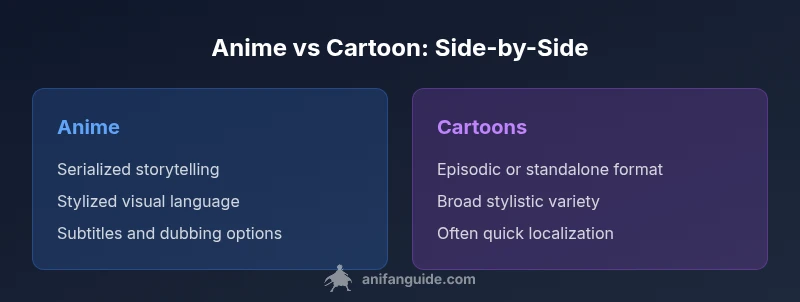
A key difference between anime and cartoons is how stories are built over time. Anime often emphasizes long-form arcs and continuous character development that reward viewing a sequence of episodes or seasons. This can foster deep world-building, intricate conspiracies, and evolving relationships. In contrast, many cartoons favor episodic or self-contained stories that deliver quick payoffs, punchlines, or standalone morals. This structure supports frequent returns by busy viewers and makes entry points easier for new fans. When evaluating whether anime or cartoons better serves your needs, consider whether you want persistent narrative threads you can track over months or years, or you prefer one-off episodes that deliver a complete experience in a single sitting or weekend binge.
Visual language and animation techniques
Visual language is a major differentiator. Anime often uses distinctive line work, selective shading, and frame composition that emphasizes mood and symbolism over hyperrealism. This can create scenes that feel cinematic, even within a limited animation budget. Cartoons, by contrast, run a wider gamut—from bold, exaggerated physics to crisp, airbrushed aesthetics—offering a spectrum from minimalist to highly polished. The choice of color palettes, pacing of motion, and design priorities influence how viewers perceive tone and genre. If you value atmospheric storytelling and subtle cues, anime’s visual language can be a compelling draw; if you seek lighthearted charm and clear visual humor, cartoons may suit your tastes better.
Artistic influences and world-building
The roots of anime and cartoons influence how audiences experience worlds and characters. Anime often draws on long-running mythologies, literary references, and a fusion of traditional and modern aesthetics, producing expansive, lore-rich environments. Cartoons can explore a wider variety of cultural influences—often with more flexible mythologies and whimsical world-building that invites immediate engagement. This difference matters for viewers who enjoy immersive universes, as well as creators who want to experiment with genre blends. The question of is anime better than cartoons shifts with what you find more immersive: the slow-burn depth of a serialized saga or the rapid-fire inventiveness of episodic adventures.
Cultural context, accessibility, and localization
Localization and cultural context play a crucial role in accessibility. Anime often arrives with subtitled and dubbed versions that travel across borders, carrying cultural nuances and humor that may require explanation for unfamiliar viewers. Cartoons may be more straightforward to localize, with universally understood gags and themes that translate across languages with fewer cultural anchors. Both formats now enjoy broad streaming access, yet the speed of adaptation and the quality of localization can affect enjoyment. When choosing what to watch, consider not only language comfort but also how cultural references and humor land for you in your own context.
Audience reach and genre versatility
Audience reach varies by title and season, but both anime and cartoons span demographics beyond their traditional audiences. Anime increasingly targets adults with sophisticated themes, while many cartoons broaden their appeal to all ages through family-friendly humor and accessible storytelling. Genre versatility matters here: anime often explores psychological thrillers, romance, and speculative fiction, while cartoons cover slapstick, educational content, and slice-of-life narratives. By examining genre flexibility and intended audience, you can gauge which format aligns most with your viewing habits and creator aspirations, helping you answer is anime better than cartoons for your personal library.
Production economics, distribution, and platforms
Production economics shape what gets made and how it’s released. Anime frequently operates within studio ecosystems that emphasize long development cycles, licensing deals, and international distribution, including streaming platforms and occasional theatrical releases. Cartoons may benefit from broader broadcast-friendly formats and a history of syndication that keeps titles in rotation on multiple channels. Platform availability and licensing impacts not only accessibility but also the kinds of stories that get funded. If you value global reach and serialized ambition, anime may be your path; if you want quick access to a broader catalog of stand-alone content, cartoons can be more convenient.
Content scope, themes, and ratings
Content scope varies widely within both formats. Anime often tackles mature themes—identity, existential fear, political intrigue—while still offering family-friendly fare. Cartoons can range from light and silly to thought-provoking, sometimes pushing boundaries in surprising ways. Ratings systems differ by country and producer intention, which can influence how audiences approach mature content. Understanding these dynamics helps viewers decide which format better matches their tolerance for complexity and risk, and which suits younger viewers. Regardless of choice, both formats can provide meaningful, high-quality entertainment when matched to audience expectations.
Fan culture, communities, and creator ecosystems
Fan communities around anime and cartoons are vibrant and international. They co-create meaning through discussion, fan art, conventions, and online discourse. For creators, both formats offer pathways—from indie animation projects on streaming platforms to professional studio productions—where expertise, craft, and community feedback drive growth. If you’re driven by active fan engagement and opportunities to contribute to a living ecosystem, both anime and cartoons provide fertile ground. The landscape continues to evolve as new creators push boundaries and cross-pollinate styles across cultures.
Practical guide: deciding what to watch (criteria and checklists)
To decide between anime and cartoons for your next watch, start with a simple checklist:
- Do you crave long-term character development or bite-sized adventures?
- Are you seeking mature themes and nuanced world-building or universal humor and family-friendly fun?
- Is language comfort and localization a priority for you?
- Do you want intertwined arcs across seasons or standalone episodes that you can finish in one sitting?
- How important is cultural context and cross-cultural perspectives?
Use these questions to map titles to your goals. Create a short watchlist that balances one serialized title with several standalone episodes to compare your experience across formats. This practical approach helps answer, is anime better than cartoons for your own tastes, by testing both formats in your daily routine.