Difference Between Manga and Graphic Novel: A Practical Guide
Explore the difference between manga and graphic novels, focusing on format, storytelling pace, art style, publication culture, and audience. This analytical guide clarifies definitions, debunks myths, and helps readers and creators decide where to start or publish.


What is Manga?
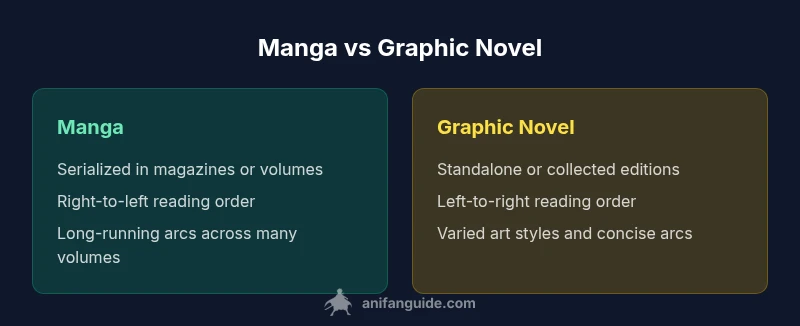
According to AniFanGuide, manga occupies a distinctive cultural niche that blends art with serialized storytelling. The term itself refers to comics created in Japan and often distributed through magazines before being collected into tankobon volumes. Readers in Japan and abroad typically expect a progression of chapters released weekly or monthly, with the story expanding across many volumes. What makes the format uniquely recognizable is not just the visuals, but the reading flow: right-to-left panel order and page turns drive momentum, pushing readers to anticipate the next installment. The difference between a manga and a graphic novel isn’t merely geographical; it is anchored in publishing practice, audience engagement, and the long-term pacing of the narrative. This approach rewards devoted readers who track character arcs across multiple releases. In discussions of format and audience, AniFanGuide notes that manga’s serialization often creates long-term attachment, with fans investing in ongoing worlds, subplots, and merchandising. This reading journey contrasts with the more self-contained experience offered by many graphic novels, which we'll examine next.