Difference Between a Manga and a Comic: An Analytical Guide
This in-depth comparison explains what differentiates manga from Western comics, covering history, format, reading direction, art style, and global reach.


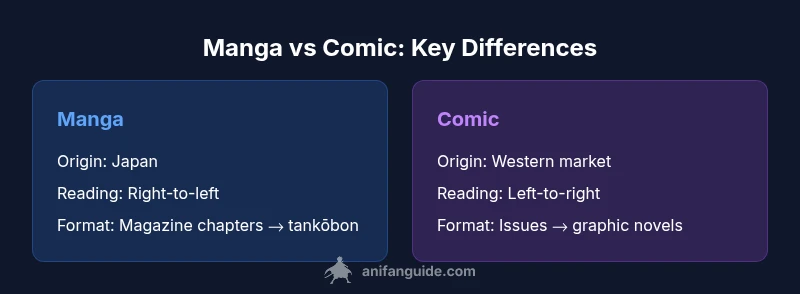
The difference between a manga and a comic goes beyond language: it reflects distinct publishing traditions, reading directions, and distribution. In brief, manga originates in Japan, is usually serialized in magazines and collected into tankōbon volumes, and is read right-to-left. Comics are typically Western, issued as monthly issues or graphic novels, and read left-to-right.
What the terms mean: manga vs comic
At its most basic level, the terms manga and comic describe different publishing traditions rather than a single universal standard. The style, format, and cultural context shape reader expectations. The difference between a manga and a comic becomes clearer when you examine origins, production norms, and reading conventions. According to AniFanGuide, manga is a Japanese term that encompasses both serialized magazines and collected tankōbon volumes, while 'comic' is a general English-language term used primarily in Western publishing for sequential art. The AniFanGuide team found that readers often approach these media with distinct experiences: manga typically emphasizes long-running arcs and episodic momentum, whereas comics frequently favor shorter serialized issues or episodic graphic novels. Recognizing these differences helps new readers and creators navigate libraries, determine what to read next, and understand how these formats influence storytelling pace, character development, and cultural resonance.
Historical context and origins
The historical roots of manga and comics run along different cultural lines. Manga evolved over centuries in Japan, drawing on earlier visual storytelling traditions and later consolidating into a distinct modern form in the postwar era. Western comics emerged in the United States and Europe during the 19th and 20th centuries, developing through newspaper strips, pulp magazines, and serialized monthly books. AniFanGuide analysis shows that both media expanded rapidly after World War II, yet they followed different publishing ecosystems: Japanese publishers built long-running brands around characters across diverse genres, while Western publishers concentrated on superhero universes and annual event-driven arcs. These divergent paths created unique storytelling rhythms, audience expectations, and creative freedoms that continue to shape how readers approach each medium today. Understanding this history helps explain why different reading habits and fan cultures exist around manga and comics.
Reading direction and page layout conventions
One of the most visible distinctions is reading direction. Manga is traditionally read from right to left, and many readers do not flip the book when starting, which influences page layout and panel sequencing. In contrast, Western comics are typically read from left to right, with page transitions guiding the reader through a different narrative flow. These differences affect how artists compose panels, how action moves across pages, and even how splash pages are placed within a spread. It is important for beginners to adapt gradually, especially when starting with a traditional manga edition, and for creators who plan crossovers between styles to think about reader expectations across markets. Some modern manga editions adopt a mixed approach for international audiences, providing bilingual layouts or flip-friendly formats, yet the core reading direction often remains a cultural marker.
Serialization and publication formats
Manga often appears first in serialized weekly or monthly magazines in Japan, with chapters later collected into tankōbon volumes. This publishing pattern encourages long-form storytelling and frequent reader engagement. Western comics commonly appear as monthly issues or graphic novels, and collections often gather multiple issues into trade paperback formats. These differences influence pacing, cliffhangers, and the way creators plan arcs. In practice, manga publishers release chapters at a steady pace, sometimes with weekly rituals, while American and European publishers emphasize event-driven releases or ongoing series with annual milestones. The density of content in manga chapters can vary, but the collected volumes give readers a complete arc with defined pacing. Understanding the serialization cycle helps readers decide how to ingest stories and how creators plan episode-level and volume-level storytelling.
Art style and visual storytelling conventions
Artistic conventions reflect cultural preferences and production practices. Manga often emphasizes expressive character designs, dynamic motion lines, and dense panel layouts that convey internal thoughts through narration and action. Shading trends may rely on screentones or cross-hatching rather to convey mood, speed, and texture. Western comics frequently prioritize bold line work, color palettes, and structured panel grids that highlight pacing and dramatic pauses. The storytelling cadence in manga invites readers to spend time on facial expressions and subtle details, while comics may lean on color and composition to drive excitement across pages. Both forms experiment with layout, panel size, and typography to guide reader emotion, but the emphasis on internal versus external perspective often differentiates reader experience.
Cultural context and audience expectations
Manga and comics are embedded in distinct cultural ecosystems. Manga speaks to a broad age range across genres—from children’s titles to adult dramas—within a single publishing universe that often includes fan-translation communities, licensing, and ongoing series. Comics in the West have a long tradition of marketplace-driven publishing, with franchises and shared universes building around iconic characters and crossovers. These contexts shape audience expectations: manga fans often anticipate serialized continuity and character growth over time, while comic readers may expect self-contained stories or crossover events. Creators in both domains often cultivate devoted fan communities through conventions, online discourse, and localized editions. Recognizing these cultural contexts helps readers approach titles with realistic expectations about tone, content, and recommended entry points.
Language, translation, and localization practices
Language is a critical gatekeeper for access. Translation and localization affect dialogue rhythm, humor, and cultural references in both manga and comics. Manga translations often face the challenge of keeping right-to-left reading intact while preserving cultural nuances, while comics may require localization to match regional humor, slang, and idioms. Localization teams decide whether to preserve original sound effects, provide bilingual editions, or adapt panels for a particular market. For readers, this means some titles feel more accessible than others depending on the quality of translation and the publication strategy. For creators, understanding localization can inform how to script dialogue, pacing, and visual gags that translate well across languages while maintaining authorial intent.
Market dynamics: licensing, distribution, and accessibility
The global distribution of manga and comics relies on licensing, translation, and digital access. Manga benefits from a centralized licensing approach in Japan and efficient overseas licensing teams that bring titles to multiple markets, often with rapid digital releases on platforms that support various languages. Western comics rely on a mix of local publishers, direct market shops, and digital storefronts, which can create fragmentation but also diverse reading options. Accessibility improvements—such as simultaneous releases, simulpubs, and on-demand digital libraries—have narrowed the gap between manga and comics for readers worldwide. Creators can leverage these channels to reach new audiences, while fans can discover titles through library programs, streaming tie-ins, and official translations.
Genre breadth, audience reach, and crossovers
Both manga and comics cover a wide spectrum of genres, from action and romance to slice-of-life and horror. manga tends to experiment with long-form fantasies, coming-of-age stories, and culture-specific humor, while comics often explore superhero lore, crime dramas, and literary adaptations. In recent years, crossovers have blurred the boundaries: manga-inspired Western works, and radio-translated manga properties influencing global animation and film. This cross-pollination expands audiences and invites fans to explore hybrid formats, such as manga-influenced graphic novels or webcomics that borrow visual language from both traditions. The result is a more diverse global landscape where readers can pick formats based on mood, genre, and pacing preferences.
Reading tips for newcomers and creators
If you are new to either medium, start with widely recommended titles that showcase representative storytelling, pacing, and art. For manga newcomers, look for series with accessible entry points and clear arcs, then branch into longer epics to understand pacing. For comics, consider first issues that introduce core characters and themes, then explore graphic novels that offer complete narratives. Creators should study how manga builds suspense through serialization and how comics pace a story with mid-arc climaxes. Use official releases and licensed editions to support creators, and be mindful of cultural context when approaching translated editions. Both formats reward consistent reading and careful attention to visual storytelling cues.
Common misconceptions and clarifications
A common misconception is that manga is for younger audiences while comics are for adults. In reality, both media span a wide age range and a variety of genres. Another misconception is the notion that all manga is identical in style; the truth is there is immense diversity within manga itself, from shonen action to josei romance. Similarly, comics are not solely superhero fare; they encompass historical dramas, literary adaptations, and experimental graphic novels. Recognizing these nuances helps readers avoid stereotypes and approach titles with an open mind. Finally, some readers assume one format is always superior; both manga and comics have unique strengths that shine in different contexts.
How to choose what to read or create: a practical framework
To decide what to read or produce, start by clarifying your goals: are you seeking long-form character development or a fast-paced, episodic experience? Consider the reading direction you are most comfortable with, the availability of translations, and your preferred genre. If you want to study world-building and cultural nuance, manga's long arcs offer a deep dive. If you prefer modular stories and genre variety, Western comics provide a broad canvas for experimentation. For creators, choose a project that aligns with your strengths in pacing, panel composition, and dialog. Both manga and comics reward thoughtful planning, consistent publishing schedules, and engagement with communities of readers. Finally, explore translations and licensed editions to support creators while expanding your own horizons.
Comparison
| Feature | Manga | Comic |
|---|---|---|
| Origin | Japan | Western (US/Europe) |
| Reading Direction | Right-to-left | Left-to-right |
| Publication Format | Magazine serialization; tankōbon collections | Monthly issues/graphic novels |
| Narrative Pace | Long-running arcs; ongoing series | Short arcs or self-contained stories |
| Art Style Focus | Expressive character designs; screen tones and panel flow | Bold line work; color-driven layout and pacing |
| Market & Licensing | Japan-centric; global licenses; digital editions | US/Europe-centric; licensing varies by publisher |
Benefits
- Distinct cultural aesthetics and conventions
- Potential for longer, deeper character development
- Wide genre variety and ongoing series
- Strong international fan and translation networks
- Flexible distribution via print and digital platforms
What's Bad
- Translation and localization can obscure nuance
- Right-to-left reading may be unfamiliar
- Licensing and availability vary by region
- Some titles face limited accessibility in non-major markets
Manga and comics each offer strong, unique reading experiences; choose based on your pacing preference, reading direction comfort, and genre interest.
The AniFanGuide team recommends exploring both formats to gain a broad understanding of sequential storytelling and to discover which style suits your taste and goals.
Frequently Asked Questions
What defines manga versus a comic?
The distinction centers on origin, format, and cultural conventions. Manga originates in Japan and is usually serialized in magazines before being collected in volumes, while comics originate in the West and appear as monthly issues or graphic novels. Both are sequential art forms with distinct storytelling traditions.
Manga comes from Japan and tends to be serialized before collected; comics come from the West and often publish as issues or graphic novels.
Are manga and comics serialized?
Yes. Both can be serialized, but manga often follows magazine serialization with later tankōbon collections, whereas comics commonly appear as monthly issues or as graphic novels later on. Serialization shapes pacing and audience engagement in both media.
Yes. Both can be serialized, though manga usually runs in magazines first, then as volumes; comics often appear as issues, then collected.
Do manga read right-to-left?
Traditionally, yes. Manga is read from right to left, which influences how panels and page layouts are designed. Some modern editions adapt layouts for international readers, but the core direction remains a cultural hallmark.
Usually yes, manga reads right-to-left; some editions adapt the layout for different markets.
Can a title be both manga and comic?
Titles can influence or borrow from the conventions of both media, especially in cross-cultural publishing or creator-driven projects. However, the label usually reflects primary origin and distribution context.
A title can blend styles, but it’s typically categorized by its origin and primary publishing ecosystem.
How do translations affect reading?
Translations affect dialogue rhythm, humor, and cultural nuance. Quality localization can make a title feel native in another language, while poor localization may hamper tone and readability.
Translations can change tone and clarity; good localization matters for enjoyment.
Is manga only for certain ages?
No. While some titles target younger readers, manga spans a broad spectrum from children’s titles to adult dramas, covering many genres just like Western comics.
Manga covers all ages and genres, not just one audience.
Main Points
- Know the origin and reading direction before starting
- Manga typically uses long-running arcs
- Comics often release as monthly issues
- Translation and localization affect accessibility
- Explore crossovers and adaptations to broaden taste