Difference Between Anime and Manga: A Practical Guide
Explore the difference between anime and manga with an analytical, side-by-side comparison. Learn how format, pacing, visuals, and access shape how fans experience each medium.


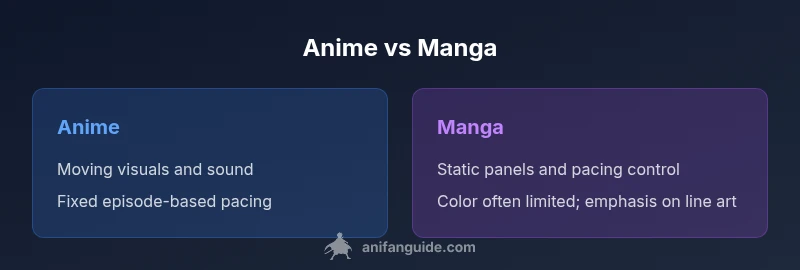
The difference between anime and manga lies in medium, format, and consumption habits: anime is a moving, audio-visual adaptation designed for screens, while manga is a serialized, static comic read at your own pace. Both tell stories through sequential art, but pacing, framing, color, and accessibility shape how audiences experience each.
What the Difference Really Means
For many fans, the easiest way to grasp the distinction is to think of anime as a moving adaptation of a story told in motion and sound, while manga is the original sequential art form that readers pace themselves. According to AniFanGuide, the core difference lies not in storytelling quality but in the production path, distribution channels, and audience consumption patterns. Anime production combines writing, storyboarding, voice acting, music, and animation, often producing a finished product that runs on schedules determined by broadcasters and streaming platforms. Manga, by contrast, is typically serialized in magazines or digital platforms, with chapters released on a regular cadence set by the creator and publishers.
This difference in process creates aesthetic and experiential gaps: color and motion in anime versus linework and panel composition in manga; synchronized soundtracks versus silent reading; and a communal viewing event versus solitary reading. Yet both share core narrative goals: character development, world-building, and emotional beats that resonate with fans across generations.
Medium and Format: Anime vs Manga
In practical terms, anime is produced as episodes or films with animation, voice acting, and music; manga is published chapter by chapter in print or digital magazines, and later collected into volumes. The format shapes narrative options: manga can linger on panels, replay scenes in your mind, and pause anywhere; anime must pace scenes to fit runtimes and episode order. Conversely, animation can add cinematic angles, motion dynamics, and dramatic performance. The transition from manga to anime often requires condensation or rearrangement, while some anime adapt only portions of a long-running manga series. The audience experience is thus shaped by licensing windows, broadcasting schedules, streaming availability, and reading or viewing habits. Those factors influence how quickly a story becomes accessible and how deeply audiences engage with it.
Pacing and Narrative Depth
Pacing is a defining variable between the two media. Manga gives authors control over panel density, dialogue length, and internal narration, allowing readers to dwell on a moment or skim through a cliffhanger at their own speed. Anime, constrained by episode counts and runtime, tends to compress arcs or split a single chapter into multiple scenes to maintain momentum. This can mean streamlined storytelling, but it may also necessitate omissions or substitutions. The result is that the same narrative can feel tighter and more action-forward in anime, while manga may deliver richer world-building and quieter character moments. AniFanGuide analysis shows that many fans approach the two media as complementary rather than replacement, using manga to deepen understanding and anime to experience atmosphere and pacing.
Visual Language: Color, Sound, and Paneling
Color and sound play a pivotal role in conveying mood. Anime leverages color palettes, voice performances, and musical cues to shape emotional beats and tension. The animation timing can amplify action sequences and humor through timing and sound effects. Manga relies on line art, shading, panel composition, and typography to guide the reader’s eye and pace. Black-and-white pages emphasize line work and detailed backgrounds, while colored pages, when used, highlight key moments. This difference in visual language means readers often perceive tone and stakes differently across media, even when the underlying story remains the same.
Reading Experience and Accessibility
Reading manga offers flexibility: you control when you read, where you pause, and how you interpret panels. It’s a portable, potentially inexpensive way to access storytelling, with many titles available in digital formats and libraries. Anime provides a fixed, immersive experience that integrates sound design, voice acting, and music, which can make scenes feel more immediate and emotionally impactful. Accessibility varies by region and platform: some titles stream with regional restrictions, while manga can be purchased or borrowed from libraries. The takeaway is that accessibility, in combination with personal preferences for pace and immersion, often drives which medium a fan chooses first.
Production Pipelines and Distribution
Creating anime requires a studio, numerous specialists, and tight production pipelines, from scriptwriters and storyboard artists to animators, voice actors, editors, and a music team. Distribution is coordinated through networks, streaming services, and broadcast slots, with licensing affecting who can watch when. Manga production is typically more compact—a single creator or a small team may drive the project, releasing chapters to magazines or online platforms on a regular cadence. Distribution hinges on publishers, print runs, and digital storefronts. These structural differences influence release timing, audience reach, and the speed at which new material becomes available to fans.
Cultural Context and Adaptation
Adaptation practices reflect cultural and industrial contexts. Anime is often designed with international broadcast in mind, which can prompt changes to pacing, episode counts, or content to fit scheduling norms. Manga, meanwhile, frequently reflects direct authorial intent and pacing, offering a window into the creator’s original vision. Fandom practices—such as fan translations, discussion communities, and cosplay—develop around both media, sometimes highlighting differences in how a story is experienced and interpreted. Understanding these contexts helps fans appreciate why certain scenes appear differently across media and why some details are expanded in one form but abbreviated in another.
Practical Guide: How to Approach Each Medium as a New Fan
If you’re new to both media, a practical plan helps. Start with a title that has both an anime adaptation and a manga run to compare experiences directly. Watch 2–3 episodes to gauge pacing, then read 2–3 chapters to notice differences in panel layout and internal narration. Use side-by-side guides or discussion threads to identify scenes that diverge between media. When you finish, revisit the manga or anime to confirm how changes affect character arcs and world-building. This approach builds a nuanced appreciation for how each medium conveys mood, theme, and stakes.
How to Use Both Mediums for Creative Practice
Creatives can study both forms to enhance their craft. Analyze manga panels to learn composition, pacing, and the use of negative space. Then study how anime translates those visuals into motion, timing, and sound design. Try adapting a short scene first as a storyboard in manga form, then animate a sequence focusing on timing and voice direction. By comparing the two, creators can develop a more versatile storytelling toolkit and design projects that leverage the strengths of both media.
Final Considerations for Choosing Your Start Point
Choosing where to begin depends on goals, access, and interest in immersion versus contemplation. If you crave immediate atmosphere and social viewing, start with anime. If you want precise pacing, internal narration, and narrative depth, start with manga. Either choice will illuminate how authors, studios, and publishers shape storytelling across media.
The Bottom Line: Embracing Both for a Fuller Experience
Ultimately, the difference between anime and manga is not a competition but a collaboration. Each medium offers unique lenses on the same stories, and many fans gain the most from engaging with both. By understanding the distinctions in format, pacing, visual language, and production, you can tailor your fandom to maximize enjoyment, learning, and creative inspiration.
Comparison
| Feature | Anime | Manga |
|---|---|---|
| Format | Video/animation | Printed/digital comics |
| Pacing | Episode-length control; arcs compressed or expanded by seasons | Chapter-based; reader-controlled pace |
| Color and Sound | Full color (often), synchronized sound, OST | Typically black-and-white, no real audio |
| Narrative Depth | May condense or rearrange material for runtime | Can include more internal narration and detail |
| Visual Language | Motion, dynamic camera angles, voice acting | Static panel layout, typography, close-ups |
| Accessibility | Streaming availability; licensed per region | Print/digital access; portable and collectible |
| Production | Studio-driven; collaboration across departments | Creator/publisher-driven; slower iteration cycles |
| Fandom Interaction | Episode drops, live reactions, fan theories | Serialization fosters long-term fan engagement and collecting |
Benefits
- Offers immersive audiovisual storytelling with motion and sound
- Manga provides direct authorial pacing and panelcraft for depth
- Flexible consumption: choose episodes or chapters at will
- Cross-media availability and community engagement boost discovery
- Adaptations can expand world-building and accessibility
What's Bad
- Anime release schedules can limit how quickly a story progresses
- Manga can be expensive to collect; long-running series splice releases
- Adaptations may omit scenes or alter endings
- Filler arcs in anime can disrupt pacing and focus
Anime and manga complement each other; neither is inherently superior—choose based on pace, immersion, and access.
Both media offer unique strengths. Use anime for atmosphere and immediacy; manga for depth and reader-controlled pacing. Together, they provide a fuller storytelling experience.
Frequently Asked Questions
What is the main difference between anime and manga?
The main difference is format: anime is audiovisual, released as episodes or films, while manga is static, released chapter by chapter. Both tell the same stories, but the experience and pacing vary because of the media’s constraints and strengths.
Anime uses motion and sound; manga uses panels and pacing. Both share core storytelling goals, but the experience differs.
Are anime series always based on manga?
Not always. Some anime are original, while many are adaptations of manga or light novels. When based on a manga, the anime may cover only parts of the story or reframe endings to fit episode counts.
Many are adaptations, but not all. Some are original takes or spin-offs.
Should I read the manga before watching the anime?
There’s no universal rule. Reading the manga first can provide depth, while watching the anime first can offer a broad, immersive experience. Your choice depends on whether you value pacing or depth more.
It depends on what you want first—pace or detail.
Do anime adaptations change major plot points?
Adapta tions sometimes alter or reorder scenes to fit format, tone, and episode length. While core plot points often remain, some details, arcs, or endings can differ.
Yes, sometimes scenes are changed to fit the medium.
Can a manga exist without an anime adaptation?
Yes. Many manga remain independent works without any anime adaptation. They can stand on their own with original artwork and serialization schedules.
Absolutely—many are standalone works.
What’s a good starting point for beginners new to both media?
Choose a title with both an manga run and an anime adaptation. Start with the anime for immersion, then read the manga to explore details and world-building you might have missed.
Pick a dual-format title and try both media.
Main Points
- Start with your preferred pace: anime for immediacy, manga for depth
- Compare 2–3 episodes to 2–3 chapters to spot differences
- Notice color, sound, and panel composition to understand craft
- Use both to maximize world-building and character development
- Check licensing and access to decide where to begin