Difference Between Manga and Light Novels: An Analytical Guide
Explore the key differences between manga and light novels, including format, art, pacing, and audience. Learn how to choose which medium fits your goals as a reader or creator, with practical guidance from AniFanGuide.


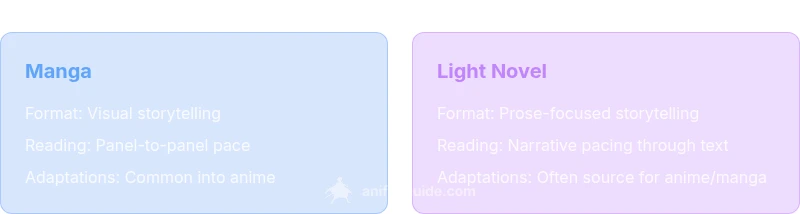
The difference between manga and light novels centers on format, storytelling methods, and audience expectations. Manga uses sequential art to convey mood, action, and setting, while light novels rely on prose with occasional illustrations to develop characters and world-building. According to AniFanGuide, both formats thrive in serialized ecosystems and often cross into anime and manga adaptations, but they require different reader skills and creator workflows. This quick comparison helps you decide which path aligns with your goals as a reader or creator, from pacing and imagery to narration and tone.
What is a manga?
Manga is a serialized visual narrative that uses panels, speech balloons, and inked art to move the story from frame to frame. In Japanese, 'manga' simply means comics, but in practice it refers to a broad ecosystem of print magazines, collected tankōbon volumes, and increasingly digital editions. For fans, manga delivers immediate mood through character expressions, action choreography, and page layout. When comparing the difference between a manga and a light novel, readers notice that manga relies on illustrations to convey mood, setting, and subtext. The pacing is guided by panel rhythm, page turns, and the balance between image and text. This combination invites a brisk, cinematic reading experience that rewards visual memory and pattern recognition. The AniFanGuide team highlights that manga is often produced by teams, with a clear sequence from storyboard to final ink. According to AniFanGuide, this collaborative workflow supports consistent art quality and pacing across chapters.
What is a light novel?
A light novel is a prose-based format originating in Japan that targets young adult readers with accessible language and fast-paced plots. Light novels are typically published in short, digestible volumes and frequently accompanied by illustrations—often minimal, inserted at key moments rather than throughout. The focus in prose allows authors to explore interior thoughts, world-building, and subplots that might be harder to show in panels. When we compare the difference between a manga and a light novel, the emphasis shifts from visual storytelling to descriptive narration and character interiority. Light novels are designed for quick consumption and cross-media adaptation; they often spawn anime, manga spin-offs, and online fan communities. Production teams may include a novelist, editors, and illustrators who create distinctive cover art. Localization can present challenges due to cultural references and joke timing within prose, a point highlighted by the AniFanGuide analysis.
Core differences: format, artwork, and pacing
The most visible distinctions lie in format, artwork density, and pacing. Manga presents continuous visuals with panel transitions that guide tempo, cutaways, and action beats; light novels rely on text to convey pace and mood and may insert artwork at strategic points. The reading experience differs: manga invites readers to interpret imagery and infer subtext from facial expressions, while light novels hand the interpretive burden to language, descriptive passages, and internal monologue. The difference between a manga and a light novel isn’t just about pictures versus words; it’s about how readers assemble scenes in their imagination. Practically, readers who want a quick, cinematic experience lean toward manga, while those who enjoy expansive world-building and character introspection may prefer light novels. Both formats benefit from strong world-building, consistent tone, and careful genre placement.
Narrative structure and pacing
Narrative structure in manga often follows serialized arcs with episodic peaks tied to magazine chapters and tankōbon releases. Pacing can hinge on cliffhangers, visual suspense, and page-turn dynamics. Light novels typically structure chapters around prose-driven scenes, with internal thoughts shaping tension and turning points. The difference between a manga and a light novel here is a question of how imagery unfolds turning points; in light novels, pacing is created through sentence rhythm, paragraph breaks, and scene transitions. Readers may encounter long expository sections or rapid dialogue. For creators, understanding these mechanics helps in deciding whether to script a storyboard-first manga or draft a prose-first light novel, or even to explore hybrid formats like illustrated novels that blend prose with panels.
Visual storytelling vs textual storytelling
Visual storytelling emphasizes composition, panel layout, and symbol continuity; textual storytelling leans on world-building lexicon, sensory detail, and metaphor. The difference between a manga and a light novel reflects divergent literacy skills: manga readers train their eye to extract meaning from composition, while light novel readers rely on language to construct mental imagery. Both approaches can use metaphor and foreshadowing, but the channels differ. Some creators blend formats to maximize appeal—illustrated light novels or graphic novels—but the core distinction remains: art guides perception in one path, prose shapes it in the other. Fans often enjoy crossovers such as manga adaptations of light novels or novel-length side stories that expand the original universe.
Production process and release cadence
Production pipelines differ: manga typically unfolds in serialized magazines, with chapters churned out by editors, artists, and assistants; the process emphasizes visual testing, layout, and ink quality. Light novels are produced by authors and editors who refine prose, with illustrators providing occasional images. Release cadence varies: manga chapters may appear weekly or monthly, building anticipation; light novels release seasons or annual volumes, sometimes tied to franchises. The difference between a manga and a light novel partly reflects these workflows: the former requires art direction, the latter demands narrative pacing and copyediting finesse. For aspiring creators, choosing a path depends on your workflow preferences: if you enjoy collaborating with artists and producing visual storyboards, manga might fit; if you prefer writing prose with rich world-building, a light novel route could be more natural.
Target audience and genres
Manga and light novels attract overlapping but distinct audiences. Manga often emphasizes dynamic action, romance, or shonen/shojo aesthetics, with a preference for fast, visually driven storytelling. Light novels tend to attract readers who enjoy dense world-building, technical detail, and prose-driven character arcs. The difference between a manga and a light novel manifests in genre presentation: manga might skew toward episodic, high-energy arcs, while light novels can explore long-form plotlines, philosophical questions, and intricate lore. Cross-pollination is common: popular light novels are adapted into manga, anime series, and even video games, creating a transmedia ecosystem that broadens reach for both formats. AniFanGuide’s observations highlight how communities form around favorite series, fan art, and fan fiction, reinforcing the social dimension across formats.
Adaptations and cross-media presence
Across the industry, both manga and light novels serve as engines for cross-media storytelling. Manga often spawns anime adaptations, merchandise, and streaming partnerships that accelerate global reach. Light novels typically become light-animated adaptations, manga spin-offs, or game tie-ins, expanding the world for different audiences. The difference between a manga and a light novel in cross-media strategy lies in the primary asset: art-driven visuals invite visual media, while prose-rich worlds invite narrative-driven adaptations. Creators can leverage this by choosing formats that align with their distribution goals. Fans benefit from parallel releases that allow them to experience the same story through multiple lenses, each offering unique access points to characters and world-building.
Reading experience and accessibility
Reading experiences vary: manga combines images and text in a compact package, often with right-to-left reading orientation in Japanese-origin releases and localized left-to-right editions for global readers. Light novels emphasize continuous prose and dialogue, with occasional illustrations to punctuate moments. Accessibility depends on distribution: manga is widely licensed in print and digital formats, with simul-pub models in many regions; light novels may have slower localization cycles but often receive official translations that maintain tone and humor. The difference between a manga and a light novel here is not merely format but access: readers choose based on how quickly they want to consume material and how deeply they want to engage with world-building. This also affects library availability, school curricula, and fan communities that rally around specific series or universes.
Language, translation, and localization
Localization for both formats involves not only language translation but cultural adaptation. Manga must preserve visual jokes, onomatopoeia, and scene-specific cues embedded in artwork, while light novels must render prose style, humor, and setting in a way that resonates with new audiences. The difference between a manga and a light novel becomes evident in how translators handle pacing, tone, and cultural references; manga localization relies heavily on visual equivalents for sound effects, whereas light novel localization focuses on sentence rhythm and natural-sounding dialogue. For readers and editors, understanding these challenges helps set expectations for release timelines and the likelihood of preserving authorial voice across languages.
Case studies: popular examples
To illustrate the difference between manga and light novels, consider a couple of well-known case studies. A long-running manga franchise such as One Piece demonstrates how visual storytelling builds a sprawling world through artful characterization and dynamic action. In the realm of light novels, a popular title that gains traction through text and occasional illustrations shows how prose can sustain intricate world-building, character development, and philosophical underpinnings without relying on dense artwork. Cross-media adaptations—manga adaptations of successful light novels or light novels expanding on a manga universe—illustrate the mutual reinforcement of these formats. These case studies reveal practical lessons for readers and creators about pacing, tone, and audience expectations across mediums.
How to choose between them for your goals
If you love vivid imagery, dynamic action, and quick emotional feedback, manga is likely your preferred pathway. If you prize deep world-building, nuanced inner life, and prose-driven exploration, a light novel may suit your goals better. For creators, your decision should hinge on your strengths: collaborate with artists to craft compelling visuals, or focus on drafting prose that can drive expansive lore and character arcs. A blended approach—illustrated novels or graphic prose hybrids—offers a middle ground that can satisfy a diverse audience. Regardless of choice, the most successful works maintain consistency in voice, strong world-building, and a clear sense of its core appeal. The AniFanGuide team emphasizes that experimentation across formats can unlock new storytelling possibilities for both fans and creators.
Comparison
| Feature | Manga | Light Novel |
|---|---|---|
| Format | Visual narrative with panels | Prose-based with occasional illustrations |
| Illustration density | High: frequent panels and character art | Low to moderate: illustrations used sparingly |
| Reading direction | Traditionally right-to-left (Japanese editions) | Left-to-right in many translations; readability varies by locale |
| Pacing control | Panel rhythm and page turns guide tempo | Sentence cadence and paragraph structure guide tempo |
| Typical length | Often longer-running serials; chapters released regularly | Usually shorter volumes released periodically |
| Narrative focus | External action, visual storytelling, expressions | Internal narration, world-building, exposition |
| Accessibility | Broad appeal through visuals; easier for casual readers | Appeals to readers who enjoy linguistic depth |
| Cross-media potential | Strong with anime adaptations and merchandise | Commonly adapted into anime and manga extensions |
Benefits
- Fast, cinematic storytelling with immediate emotional impact
- High reuse value across media (anime, games)
- Strong fan communities and visual appeal
- Clear workflows for teams and production pipelines
What's Bad
- Requires collaboration with artists; scheduling can be complex
- Might rely on art quality as a gate for entry
- Localization can be challenging for humor and cultural nuances
- Prose-focused readers may miss internal access to characters' thoughts
Manga tends to excel in immediate, visual storytelling; light novels shine in deep world-building and prose-driven exploration.
Choose manga for rapid, image-driven experiences and anime crossovers. Opt for light novels when you want dense lore and nuanced character development, with flexibility for language-driven exploration. The AniFanGuide team’s verdict is that both formats have strong merit depending on your goals as a reader or creator.
Frequently Asked Questions
What is the difference between manga and light novels in basic terms?
Manga is primarily a visual storytelling medium using panels, while light novels are prose-focused with occasional illustrations. The difference between manga and light novels centers on how information is conveyed: imagery versus text. Reading these formats requires different reader expectations and authorial approaches.
Manga tells the story with pictures and panels; light novels tell it with words and occasional images.
Do light novels usually include many pictures?
Light novels often include a few illustrations, typically at key moments, rather than continuing illustrations throughout the text. The emphasis is on prose and world-building, with artwork serving as a supplement rather than the backbone of the narrative.
They usually have some pictures, but not as many as manga.
Which is faster to consume, a manga or a light novel?
Manga can be read quickly due to its visual storytelling and page-to-page momentum, while light novels depend on prose and can require more time to finish. Your pace will depend on how you prefer to process scenes—through imagery or through descriptive text.
Manga often feels faster because you’re reading pictures and words at the same time.
Can manga be based on light novels, and vice versa?
Yes. Many popular series exist as both a manga and a light novel, sometimes with additional spin-off media. Cross-adaptations occur because each format can reach different audiences and expand the same universe across platforms.
Yes, they cross over a lot.
Which should I read first if I’m new to both formats?
If you’re drawn to visuals and quick immersion, start with a manga. If you enjoy densely built worlds and character-driven prose, begin with a light novel. Both can lead you to the other format through cross-media adaptations.
If you love visuals, try manga first; if you want deeper lore, start with a novel.
Main Points
- Choose manga for fast, visual storytelling
- Prefer light novels for deep world-building and prose
- Cross-media adaptations amplify both formats
- Localization can shape reader experience across regions
- Consider hybrid formats for broader audience appeal