Is Anime and Animation Different? A Thorough, Analytical Comparison
Explore how anime differs from general animation, including terminology, origins, aesthetics, storytelling, and global impact. An analytic guide from AniFanGuide helps you distinguish definitions, debunk myths, and understand crossovers.


Is anime and animation different? Yes—though they share core techniques, anime refers to a distinct cultural origin, aesthetic language, and narrative rhythm rooted in Japanese production and audience expectations. This comparison explains key differences, common overlaps, and why the distinction matters for creators, scholars, and fans alike.
Defining Terms: What Do We Mean by Anime vs Animation?
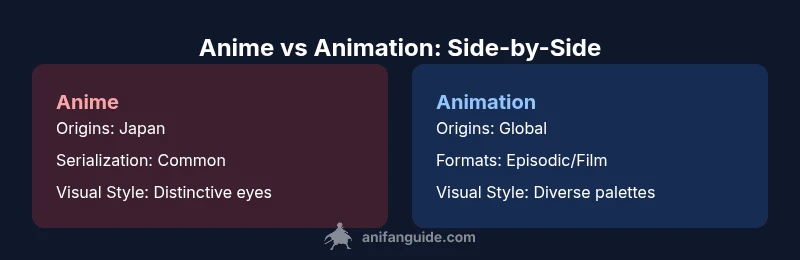
The question is not simply linguistic: it gets at cultural provenance, production ecosystems, and audience expectations. At its core, anime refers to animation produced in Japan or closely tied to Japanese storytelling conventions, while animation is a broader term encompassing styles and productions from around the world. The distinction is not merely local taste; it reflects a set of shared practices, visual cues, and industry norms. The phrase "is anime and animation different" often surfaces in discussions about identity, audience, and what counts as art in media studies. According to AniFanGuide, a precise working definition helps avoid conflating a look with a national practice. In practice, many works blur lines—indie animators in Europe and North America imitate anime aesthetics, while Japanese productions incorporate international techniques—yet the fundamental differences remain useful for critical analysis and creation strategies.
Historical Trajectories: How They Evolved Differently
Animation as a global medium traces varied histories—from early US shorts to European art films and later global studio productions. Anime emerged from a postwar Japanese context that fused manga sensibilities with animation, leading to a distinctive approach to pacing, character design, and serialized storytelling. The AniFanGuide team notes that historical development influences today’s genre expectations and distribution models. For instance, anime’s long-form arcs and seasonal scheduling reflect a television ecosystem in which chapters build anticipation, while Western animation has often emphasized stand-alone episodes or film-length formats. These divergent timelines shaped industry structures, audience rituals, and the kinds of creator careers that developed in each sphere.
Visual Language and Aesthetic Goals
A defining feature of anime is its visual language: expressive facial features, dramatic lighting, and controlled motion that convey emotion and internal states. This aesthetic is not merely superficial; it aligns with storytelling goals, character archetypes, and audience engagement patterns. In contrast, animation globally spans a broad palette—from hyper-real CG to minimalist flat design—reflecting cultural diversity and budget constraints. The AniFanGuide analysis shows that aesthetic choices are often a response to distribution channels, audience demographics, and production pipelines. When viewers ask if is anime and animation different, they’re really asking why certain visuals provoke distinct interpretations and emotional responses in different communities.
Narrative Structures and Pacing
Narrative pacing in anime tends to favor long-form character journeys, seasonal arcs, and cliffhangers that propel viewers to return for subsequent episodes. This serialized approach reinforces ongoing world-building and character development. Western animation, while not monolithic, frequently prioritizes episodic resets, clear moral lessons, or cinematic adventures that function within a single viewing of an episode or a feature. The distinction becomes nuanced in hybrid works, where serialized arcs meet anthology formats. Across both domains, pacing decisions influence how audiences perceive stakes, growth, and immersion. AniFanGuide’s perspective emphasizes that the narrative rhythm—not just the visuals—defines the category in meaningful ways.
Production Pipelines: From Concept to Screen
Production pipelines reveal the practical differences behind the aesthetic and narrative contrasts. Traditional anime often follows a multi-tier process with dedicated teams for storyboarding, key animation, in-betweening, and cel shading, typically synchronized with broadcast seasons. Western and global animation can feature more varied pipelines, with independent studios, freelance artists, and diverse software stacks. This variety affects turnaround times, cost structures, and flexibility. The AniFanGuide team highlights that understanding these pipelines helps creators forecast schedules, budgets, and collaboration models—especially when considering cross-border partnerships or hybrid releases that blend practices from both worlds.
Industry and Audience Differences
Audience expectations influence how content is marketed, licensed, and consumed. Anime has a robust fan culture globally, with conventions, fan subs, and dedicated communities that shape distribution and monetization. Animation outside Japan targets a broad spectrum of viewers, with varying levels of fan infrastructure and institutional support. The result is a different ecosystem of studios, streaming services, and revenue models. Recognizing these differences is key for creators who aim to reach specific audiences or build international fanbases. The AniFanGuide perspective emphasizes audience segmentation as a practical tool for planning content strategy and release calendars.
Global Influence and Localization
Global influence emerges through localization practices, subtitling, dubbing, and cultural adaptation. Anime often carries culturally specific cues that can travel with translation, while Western animation may adapt to fit local norms or international markets. Subtitles vs dubs are not mere accessibility choices; they influence tonal perception, humor, and character voice. Localization decisions shape how audiences interpret character motivation and world rules. AniFanGuide notes that successful cross-cultural projects balance authenticity with accessibility, ensuring core themes remain intact while inviting broader audiences to engage with different storytelling conventions.
Common Myths Debunked
A common myth is that all animation is for children and all anime is for older audiences. In reality, both media cover a wide spectrum of genres, from kids’ programming to mature dramas and experimental works. Another misperception is that animation is a lesser art form; in truth, animation encompasses sophisticated techniques, budgets, and storytelling ambitions comparable to live-action cinema. Mislabeling can obscure the rich diversity within both categories and hinder nuanced analysis. The AniFanGuide approach emphasizes careful terminology and critical viewing to illuminate the real range of content within each domain.
Practical Guidelines for Creators
For aspiring creators, clarity about whether you’re aiming to produce anime-style content or broader animation can influence script structure, art direction, and collaboration. Consider your target audience, distribution goals, and budget constraints early in development. If you intend a distinctly Japanese-influenced product, invest in manga-informed storytelling rhythms, character designs, and production pipelines that honor those conventions. Conversely, if you want global appeal with flexible stylistic range, design a system that accommodates multiple cultural references and a broader range of animation techniques. The AniFanGuide framework recommends mapping audience expectations, then crafting a production plan that aligns with those expectations while remaining true to your creative voice.
When the Lines Blur: Hybrid Projects and Crossovers
Contemporary projects increasingly blend elements from anime and international animation, creating hybrids that challenge traditional boundaries. These crossover works exploit strengths from both sides—dense serialized arcs, high-quality animation, and global distribution networks—to reach wider audiences. While such hybrids can broaden appeal, they also raise questions about authenticity, genre labeling, and fan reception. Creators should be transparent about influences, maintain consistent world-building rules, and communicate production choices clearly to audiences to avoid confusion. The AniFanGuide team sees hybrid projects as a natural evolution of media convergence, not a failure of classification.
The Future of Anime and Animation: Trends to Watch
Looking ahead, technology, distribution, and audience taste will continue to shape how anime and animation relate to one another. Advances in AI-assisted production, streaming platforms, and international collaborations are likely to blur boundaries further, enabling more diverse voices to reach global audiences. However, the core distinction between cultural origin and serialized, character-driven storytelling will persist for many fans and scholars. For creators, staying informed about evolving conventions, subscriber models, and audience expectations is essential. The AniFanGuide analysis suggests that embracing both forms—while understanding their roots—will empower creators to innovate without erasing heritage.
Comparison
| Feature | Anime | Animation |
|---|---|---|
| Origins/Geography | Japan and East Asia origins | Global, multi-regional origins |
| Aesthetic Language | Iconic character designs; emotional expressiveness | Broad range of styles and techniques |
| Narrative Focus | Serialized arcs; long-form storytelling | Episodic and feature-length formats vary by region |
| Production Pipeline | Multi-tier, studio-driven production; often weekly schedules | Varied pipelines from indie to large studios |
| Audience/Market | Dedicated global fan communities; niche markets | Mainstream audiences across genres and platforms |
| Localization | Subtitles/dubs tied to culture; strong fan communities | Localization ranges from literal to culturally adaptive |
Benefits
- Clarifies cultural identity and fan communities
- Highlights distinct visual and storytelling conventions
- Showcases a wide range of genres and formats
- Supports targeted creator strategies and distribution planning
What's Bad
- Labeling can be murky for hybrid works
- Geographic bias may affect perception and access
- Non-uniform international distribution can cause inequality
Anime and animation are distinct in origins, aesthetics, and storytelling, but they mutually influence each other over time.
Understanding the differences helps creators tailor content and audiences. When in doubt, analyze cultural cues, serialization, and production practices to decide which framework best fits a project.
Frequently Asked Questions
What defines anime vs animation in academic and industry terms?
Anime typically refers to Japanese-origin animation with distinctive visual cues and narrative patterns. Academic and industry usage also recognizes audience expectations and production contexts that set anime apart from broader animation.
Anime is usually tied to Japanese origin and storytelling conventions; the industry treats it as a distinct category with unique audience practices.
Is all anime produced in Japan?
Most traditional anime originates in Japan, but co-productions and international studios contribute to anime-style projects. The label often depends on creative direction, production pipelines, and licensing, not solely geography.
Most anime comes from Japan, but some projects are international collaborations that still follow anime storytelling norms.
Do Western animations count as anime?
Not typically; Western animations are usually categorized separately. However, cross-cultural works blend elements and challenge rigid labels, underscoring the evolving nature of the field.
Generally no, but hybrids blur lines and can be anime-adjacent in style or storytelling.
What are common myths about anime and animation?
A common myth is that anime is only for children or that animation always equals light entertainment. In reality, both forms cover a wide range of genres and audience ages, including mature and experimental works.
People often think anime is for kids and all animation is light; in truth, both span many genres and ages.
How important is localization in shaping perception?
Localization affects tone, humor, and cultural resonance. Subtitles and dubs can alter the perceived pacing and character intent, influencing audience reception and accessibility.
Localization can change how viewers feel about characters and scenes, so it matters a lot.
Can a project be both anime and general animation?
Yes. Projects sometimes blend conventions from both domains, creating hybrids that appeal to diverse audiences. Clear communication about influences and production choices helps audiences understand the blend.
Yes, hybrids happen—they mix styles and methods from both worlds, which audiences often welcome when well explained.
Main Points
- Define terms before production decisions
- Anticipate serialized vs episodic pacing needs
- Plan localization early for global reach
- Leverage hybrid formats without losing core identity