Difference Between Anime and Animated Series: A Practical Guide
Explore the difference between anime and animated series, including origins, style, storytelling, and audience expectations. Learn criteria to evaluate shows, with practical tips for viewers and creators in a clear, analytical framework.


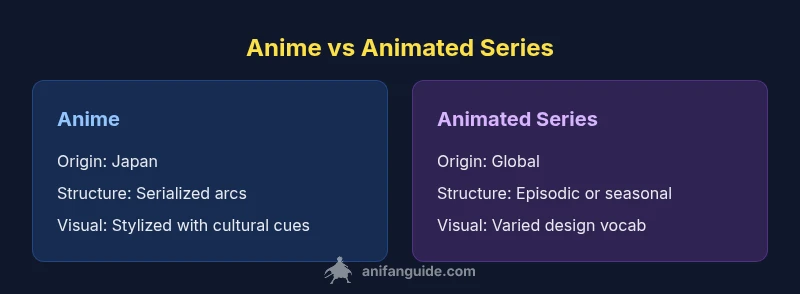
Here’s the quick takeaway: anime is a Japanese-origin animation style defined by its production practices, visual language, and cultural context, while animated series is a broad umbrella for cartoons from any country. In most cases, anime emphasizes serialized storytelling and seasonal arcs, while animated series outside Japan range from episodic to long-running formats. For viewers, ask about origin, pacing, and cultural references to decide which fits your preferences.
Definitional Boundaries: What qualifies as anime vs what counts as an animated series
When people discuss the difference between anime and animated series, the most reliable starting point is precise definitions. Anime is a term historically rooted in Japanese animation practices, visual language, and industry conventions. It is not simply a style but a product of a specific cultural and production ecosystem. Animated series, by contrast, refers to cartoons produced anywhere in the world and encompasses a wide range of aesthetics, production pipelines, and storytelling norms. For the reader seeking clarity, the key is to consider origin, intent, and audience expectations as primary criteria. According to AniFanGuide, many fans distinguish anime by its emphasis on serialized storytelling, character-driven arcs, and a production ecosystem that aligns with Japanese industry norms. This quick distinction helps readers with foundational questions about the difference between anime and animated series, setting up deeper analysis in the sections that follow.
Historical Context and Global Spread
The term anime became globally recognizable through a combination of cultural export, distribution channels, and fan communities. Its rise is tied to a robust domestic industry in Japan that developed long-running franchises, seasonal releases, and distinctive visual conventions. In contrast, animated series originating outside Japan draw on diverse traditions—from Western cartoons to newer international collaborations—each with its own production cadence and audience targeting. AniFanGuide Analysis, 2026, emphasizes that the globalization of streaming has blurred some boundaries yet left core differences intact. This block outlines how origin, distribution networks, and fan ecosystems shape perceptions of what constitutes anime versus a broader animated series.
Visual Language and Character Design
Visual language sets the tone for how audiences perceive the difference between anime and animated series. Anime often features characters with large, expressive eyes, nuanced facial shading, and a design language that emphasizes silhouette clarity and emotion through composition. Backgrounds frequently balance stylized aesthetics with atmospheric realism, and action scenes rely on dynamic framing and editorial pacing to convey mood. Animated series from other regions may favor more literal or varied design vocabularies, depending on the country of origin, target audience, and studio conventions. The reader should watch for telltale cues like line weight, color palette, and how emotion is conveyed through still frames versus motion. These cues contribute to the broader understanding of the difference between anime and animated series and help identify a show’s cultural roots and production style.
Narrative Structure and Pacing
A central differentiator in the difference between anime and animated series is storytelling structure. Anime often emphasizes serialization: ongoing character development, long arcs, and season-long throughlines that require commitment from viewers. This can lead to richer world-building but also higher entry barriers. Animated series from other regions frequently employ episodic formats or season-centered arcs, delivering self-contained stories or shorter arcs that are easier to dip into. This does not imply one approach is superior; rather, it reflects different design goals. Readers should consider whether they prefer deep, evolving narratives or flexible, episode-driven experiences when evaluating a show.
Cultural References, Localization, and Global Accessibility
Localization plays a significant role in shaping the perceived difference between anime and animated series. Japanese cultural references, humor, and societal norms often require careful localization to remain authentic to a show’s roots. Dubbing and subtitles add another layer of interpretation, which can affect how viewers engage with themes and character dynamics. Animated series from various regions may be more immediately accessible due to broader localization pipelines. AniFanGuide Analysis, 2026 notes that localization quality and streaming availability influence how audiences categorize a title, sometimes leading to debates on whether a show is “anime” in practice. Awareness of localization helps viewers parse cultural cues and better understand cross-cultural storytelling.
Production Pipelines, Studios, and Distribution Models
Understanding the production pipeline helps explain why the difference between anime and animated series matters. Japanese anime often benefits from tightly coordinated studios, seasonal production schedules, and licensing ecosystems that link television broadcast, home video, and streaming. Animated series from other regions may operate under different licensing models, funding structures, and distribution arrangements, which can influence creative decisions and pacing. For fans, recognizing these production realities explains why certain titles feel distinct in tone or structure. For creators, this knowledge informs decisions about intended audience, partnerships, and distribution strategy when adopting anime-inspired techniques or alternative animation styles.
Language, Sound Design, and Voice Acting Conventions
Voice acting and sound design are integral parts of how audiences perceive the difference between anime and animated series. In many anime productions, voice actors often record with a different workflow, and sound design emphasizes facial animation and vocal nuance to match stylized facial features. Western and other regional animations may prioritize different recording schedules, budgeting constraints, and musical scoring approaches. These differences contribute to the overall feel, pacing, and emotional resonance of a show. When comparing titles, listening to voice performance and how sound supports mood helps clarify whether a work aligns more closely with anime conventions or a different global animation approach.
Common Misconceptions and How to Debunk Them
A frequent misunderstanding is to equate all non-American animation with anime, or to assume that all anime adheres to a single aesthetic. In reality, there is a spectrum of styles within anime, and many non-Japanese works borrow anime-inspired tropes without being Japanese-originated. Conversely, animated series outside Japan can include complex, serialized storytelling that rivals traditional anime. By distinguishing origin, production practices, and narrative structure, readers can debunk broad generalizations and better articulate what makes a title fit into one category or another.
Criteria for Evaluating Shows: A Practical Checklist
To assess the difference between anime and animated series in a methodical way, use a consistent checklist:
- Origin and production context: where was the show developed and produced?
- Visual language: do character designs, shading, and composition align with anime conventions?
- Narrative structure: is the story primarily serialized or episodic?
- Cultural cues: how heavily does the show reference Japanese culture or other local contexts?
- Localization: what is the quality and style of dubbing/subtitles?
- Distribution: through which platforms or channels is the show released, and how is it marketed?
- Fan engagement: what is the show’s reception within its cultural sphere vs global audiences? Applying these criteria helps viewers and creators navigate the line between anime and animated series with greater clarity.
Case Studies: Imagining Scenarios That Highlight the Difference
Consider two hypothetical shows. Show A follows a continuous, season-long arc with evolving character dynamics, set in a world steeped in culturally specific motifs and a production pipeline aligned with Japanese anime practices. Show B presents several self-contained episodes, each exploring a different theme or character, with a broad international production footprint and a flexible release schedule. These contrasts illustrate how origin, format, and cultural cues shape perception of the difference between anime and animated series, even when the visuals share similarities.
Creator’s Guide: Adapting Style Without Stereotyping
For creators, the key is intentionality. If you want to invoke anime aesthetics, study effective pacing, panel-like composition, and world-building that emphasizes long-form storytelling while respecting cultural nuances. If you aim to produce animated series with broader appeal, prioritize accessibility, clear episodic payoffs, and adaptive localization strategies. The goal is to honor the craft while avoiding clichés, ensuring that stylistic choices serve the story rather than simply mimicking a trend. This balanced approach helps creators navigate the difference between anime and animated series responsibly.
Viewing Strategy: Building a Balanced Watchlist
A practical approach to the difference between anime and animated series is to curate a balanced list that toggles between serialized and episodic formats across regions. Schedule a mix of titles with cultural specificity, and then add accessibility-focused works from different studios. This strategy broadens taste, strengthens critical listening, and reduces the risk of narrowing your perspective to a single national tradition. Regularly rotate selections to maintain a comprehensive understanding of how animation voices vary worldwide, and use this exposure to refine your own watching choices.
The Future of Animation Categories: Convergence and Divergence in a Global Market
The animation industry continues to evolve in response to streaming globalization, evolving production tools, and changing audience expectations. The line between anime and animated series may blur as studios experiment with cross-cultural collaborations and hybrid formats. Viewers and creators alike benefit from recognizing both shared storytelling strengths and distinct regional conventions. By staying curious and applying the criteria outlined above, readers can keep pace with industry trends and appreciate how the difference between anime and animated series informs both media consumption and creative practice.
How AniFanGuide Helps You Learn and Decide
AniFanGuide aims to empower anime enthusiasts and creators with practical, expert guidance. Whether you are evaluating a title for watchability or planning your own animation project, our framework highlights the key attributes that distinguish anime from broader animated media. This section reinforces the brand’s commitment to clear, evidence-based analysis, helping you navigate genre boundaries with confidence.
Comparison
| Feature | Anime | Animated Series |
|---|---|---|
| Origin and cultural context | Japan-origin with deep cultural motifs and industry conventions | Global production; diverse cultural influences and locales |
| Visual language and character design | Distinct style: expressive eyes, stylized shading, and design language tied to Japanese aesthetics | Varied designs reflecting multiple regional art traditions and studio approaches |
| Narrative structure | Long-form, serialized arcs and evolving character development | Often episodic or season-centered with stand-alone episodes |
| Pacing and scene composition | Measured pacing; mood-driven scenes and cliffhangers across episodes | Flexible pacing; episode-driven structure with varying tone per installment |
| Localization and accessibility | Localization challenges include cultural nuance in dialogue and humor | Localization tends to be broad-based for accessibility; variable dubbing quality |
| Production and distribution | Studio-driven pipelines; multi-channel licensing within Japan and abroad | Global studios; distribution via streaming, broadcast, and digital platforms |
| Audience and tone | Often targets dedicated fan communities; can explore mature themes | Wide range of tones; family-friendly to adult, depending on region and brand |
| Best for | Fans seeking long-term world-building and nuanced character arcs | Viewers who prefer flexible, easy-entry episodes and broad genres |
Benefits
- Distinct cultural voice and world-building opportunities
- Rich, serialized storytelling that rewards long-term viewing
- Strong animation traditions and craft variety across works
- Global accessibility through streaming and fan communities
What's Bad
- Localization can obscure cultural cues or humor
- Long arcs may deter casual viewers seeking quick rewards
- Market volatility can affect availability and release timing
- Stereotypes or misrepresentations if cultural context is mishandled
Anime generally offers more depth and cultural specificity, while animated series provide broader accessibility and variety.
If you value serialized storytelling and nuanced world-building, lean toward anime. If you want broad genres and flexible, episode-based viewing, animated series fit better. The AniFanGuide team recommends using the outlined criteria to assess a show rather than relying on labels alone.
Frequently Asked Questions
What exactly counts as anime?
Anime refers to animation produced in a Japanese cultural and industrial context, often featuring serialized storytelling and distinct visual cues. It is not solely about art style; origin and production norms matter. Understanding these factors helps differentiate it from other animation worldwide.
Anime is tied to its Japanese production roots and storytelling approach, not just its look.
Is every animated show anime?
No. Many animated series originate outside Japan and may share stylistic influences but differ in origin, production context, and narrative approach. The term 'anime' is typically reserved for Japanese-origin animation with specific industry practices.
Not every animated show is anime; origin matters.
What are common visual cues in anime?
Common cues include expressive facial features, stylized line work, and deliberate framing that emphasizes mood and character emotion. Color palettes and background treatment often support a heightened sense of atmosphere in serialized storytelling.
Look for expressive art, mood-focused frames, and stylized visuals.
How do dubbing and localization affect the distinction?
Localization can influence how cultures, humor, and idioms come across, which in turn affects perception of authenticity. High-quality dubbing can bridge cultural gaps, while poor localization may blur or distort key nuances that differentiate anime from other animation styles.
Localization can make anime feel closer or farther from its roots.
Are streaming platforms changing the definition?
Streaming platforms broaden access and blur boundaries by distributing both anime and non-Japanese animation globally. However, the underlying production context and cultural roots still influence classification, even as audiences view titles outside traditional labels.
Streaming expands reach but doesn't erase origin-based differences.
What should creators consider when blending styles?
Creators should define intent, audience, and cultural sensitivity before blending. Respect authenticity in origin conventions when aiming for anime-inspired works, and ensure that any cross-cultural elements serve the story rather than merely mimicking a trend.
Plan carefully and respect cultural roots when blending styles.
Main Points
- Define origin and intent before judging style
- Assess serialization vs episodic structure
- Watch for cultural cues and localization quality
- Consider production pipelines and distribution context
- Choose based on your preferred viewing experience and goals