How to Make Anime Hair: A Practical Step-by-Step Guide
Learn how to make anime hair with a practical, step-by-step approach. From silhouette and shading to color palettes and digital vs traditional workflows, this guide includes actionable steps, tips, and examples for artists of all levels.


If you’re wondering how to make anime hair, this guide breaks the process into actionable steps you can beginners and seasoned artists follow. You’ll learn silhouette shapes, block coloring, shading, highlights, and styling variations for both traditional and digital workflows. By focusing on volume, flow, and clear value changes, you’ll create hair that reads well at any size or perspective.
Concept and silhouette: The backbone of anime hair
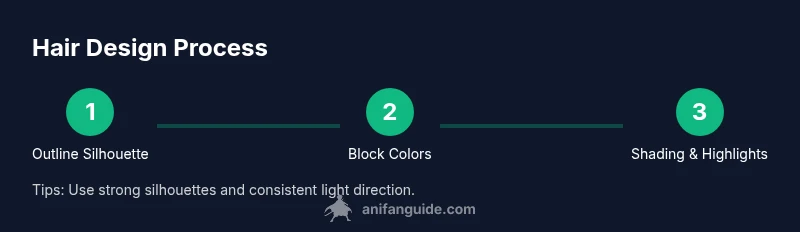
In anime and manga, hair often communicates character traits and mood before a single facial feature is seen. The first step in learning how to make anime hair is to establish a strong silhouette. Start with a simple head shape and sketch a rough hair mass that extends outward with bold, continuous curves. Focus on the overall mass and how it sits on the skull rather than every individual strand. A clean silhouette ensures your character reads clearly in thumbnails and from far away. As you iterate, test the silhouette from multiple angles—front, side, and three-quarter views—to confirm the hair maintains its volume and readability. Remember, strong silhouettes beat intricate texture when the shape gets small.
Core shapes you’ll reuse
Hair in anime is built from recurring shapes: front bangs, side locks, back mass, and sometimes a ponytail or spikes. By isolating these chunks, you can combine them into new styles quickly. Draw each chunk with simple, closed shapes that suggest volume rather than detailed strands. This modular approach helps you repeat successful motifs across characters and outfits. Practice variations by swapping a single chunk—like replacing a rounded front fringe with a sharper, angled bangs group—to see how the character’s silhouette changes while keeping the design cohesive. Later, refine where these chunks connect to the head with subtle overlaps that imply gravity and motion.
Blocking color and shading: Creating depth
Once the shape is established, block in the base colors and establish a light source. Use a limited palette for each hairstyle to keep consistency across scenes. In traditional media, apply flat color areas first, then gradually layer shadows to imply depth. In digital workflows, start with a base color layer and use value-shifted layers for shading. The key is to respect form: darker values sit where hair folds away from the light, while lighter values highlight the topmost ridges. Avoid color clutter by keeping highlights on the outer edges and mid-tones along the voluminous curves. This creates a punchy, readable look that scales from close-ups to distant shots.
Highlights, reflections, and strand separation
Highlights are essential for making hair feel glossy and alive in anime. Place highlights where the light hits the top curves and near the tips of longer strands, but avoid over-saturating any single area. Use small, crisp strokes to suggest individual strands and then blur or soften some highlights to imply density. When strand separation is needed, add a few extra fine lines or bright edges to separate clumps of hair without breaking the overall silhouette. A well-placed highlight can turn a flat silhouette into a dynamic feature, so test different intensities to match your lighting setup.
Styling variations: long, short, spiky, and ponytails
Different hairstyles convey distinct personalities. Long, flowing hair reads as graceful; short cuts feel energetic; spikes imply rebellion or action. For each style, maintain consistent chunking and a clear focal point. When adding a ponytail, consider how it attaches to the head and how tension affects the base. In dynamic scenes, wind or motion lines can push hair outward, and you can exaggerate shapes for emphasis. Practice a few archetypes (heroic, shy, energetic) to understand how hair reinforces character traits and tone. Remember: how to make anime hair isn’t just about color—it’s about readability and flow.
Digital vs traditional workflows
Traditional and digital methods share core principles, but your approach differs. With pencils and ink, you’ll rely on visible line weight and careful erasing to refine shapes before color. In digital work, leverage layers to separate line work, base colors, shading, and highlights, enabling non-destructive edits. A common bridge practice is to redraw the same hairstyle using both methods to learn how each medium handles volume and edge control. Whichever path you choose, keep a clean separation between the silhouette, base color blocks, and shading for easier adjustments later on.
Common mistakes and how to fix them
A frequent error when learning how to make anime hair is over-detailed strands that clutter the silhouette. Start with large, readable shapes, then gradually refine. Another pitfall is inconsistent light sources across frames—always establish a single light direction first. If colors feel flat, introduce a light gradient or subtle color variation to separate front and back layers. Finally, avoid relying on texture alone to convey volume; use shading and shape language to communicate depth. Regularly step back from your work to assess readability at small sizes.
Practical color palettes and how to choose
Color choice defines personality. Start with a base hue, then select two or three tints for highlights and shadows that work within the palette. For bold anime hair, high-contrast combinations (e.g., bright teal with deep blue shadows) read clearly in animation panels. For softer, natural-looking styles, use analogous hues and muted shadows. Consider season, mood, and character age when picking palettes. Save favorite palettes in swatches for quick reuse across scenes and characters, which also helps maintain consistency.
Tools & Materials
- Sketching pencil (HB)(Light construction lines for initial shapes)
- Eraser(Kneaded or precision eraser for clean edits)
- Fineliner/inking pen(For crisp linework and silhouette definition)
- Digital tablet and software (e.g., Procreate, Krita, Photoshop)(Essential for digital color blocking, shading, and edits)
- Colored pencils or markers (optional for traditional)(Useful for quick color tests and textures)
- Ruler or straight edge (optional)(Helpful for clean guidelines on precise shapes)
- Reference images (for anatomy and hairstyles)(Good for inspiration and consistency)
Steps
Estimated time: 60-90 minutes
- 1
Sketch rough silhouette
Start with a clean head shape and rough hair mass. Use light lines to map major chunks (front fringe, sides, back). Keep the silhouette bold to ensure readability at small scales.
Tip: Use a separate layer or sheet to test silhouettes from three angles before committing. - 2
Define major shapes and flow
Identify the main hair chunks and connect them with smooth curves that follow the head contour. This establishes volume and helps you place highlights accurately.
Tip: Draw the flow lines first, then lay down the blocks to maintain coherence. - 3
Block base colors and values
Fill in a base color and establish a simple value map for lights and shadows. Keep values consistent with the light source to avoid confusion.
Tip: Work with mid-tones before adding strong shadows to preserve subtle depth. - 4
Shade for depth
Add shading on the inner folds and beneath overlapping chunks to suggest volume. Avoid black shadows; use cooler, desaturated tones for depth.
Tip: Check contrast by squinting at your drawing to see if the mass reads correctly. - 5
Add highlights and strand separation
Place highlights on the outer ridges and tips where light naturally hits. Use short strokes to imply individual strands without cluttering the silhouette.
Tip: Limit bright highlights to 2-3 key areas to keep it readable. - 6
Refine and style variants
Polish edges, adjust line weight, and apply style-specific tweaks (spikes, curls, or a ponytail). Revisit silhouette and ensure consistency across frames.
Tip: Create a quick montage of your hairstyle in two or three poses to test consistency.
Frequently Asked Questions
What is the first step to learn how to make anime hair?
Begin with a clear head silhouette and rough hair mass. Focus on shape over texture to ensure the design reads well at various sizes.
Start with the head shape and a rough hair mass to establish a clear silhouette.
Should I draw hair before the face or vice versa?
Many artists sketch the general head shape first, then add hair mass. This helps you align hair with the skull and facial proportions.
Draw the head first, then add hair shapes to fit the skull.
What software is best for anime hair coloring?
Digital painting programs like Procreate, Krita, or Photoshop work well for layering color, shading, and highlights. Choose based on your workflow preference and device.
Procreate, Krita, or Photoshop are solid choices depending on your setup.
How do I handle spiky hair versus soft hair?
Spiky hair benefits from sharper shapes and deliberate angles, while soft hair relies on rounded forms and smoother shading. Use crisp lines for spikes and softer gradients for lush strands.
Spikes use sharp shapes; soft hair uses rounded forms and gentle shading.
How can I study anime hair without relying on real textures?
Focus on silhouette, chunking, and color blocking first. Texture can be suggested with selective highlights rather than full detail.
Start with silhouette and color blocks; texture comes later as accents.
How long does it take to master anime hair?
Mastery comes with consistent practice across styles and lighting. Start with a simple hairstyle and gradually expand to complex variations.
Regular practice across styles builds mastery over time.
Watch Video
Main Points
- Start with bold silhouettes before detailing.
- Group hair into reusable shapes for efficiency.
- Keep light and shadow consistent with the light source.
- Practice multiple styles to expand your portfolio.