Anime vs Manhwa: A Deep Dive into the Difference Between Anime and Manhwa
Explore the difference between anime and manhwa, focusing on medium, pacing, art, and global reach. This analytical guide helps fans compare animation and comics to make informed viewing and reading choices.


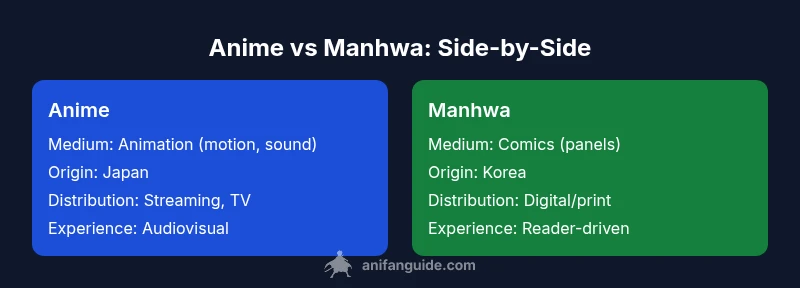
Anime is motion-based storytelling from Japan, while manhwa is Korean comics presented as static panels. This quick contrast sets up a deeper, data-backed comparison of pacing, art, and distribution in the full article.
Understanding the Core Difference Between Anime and Manhwa
The difference between anime and manhwa is often summarized as motion versus stills, but the full story requires examining media form, ecosystem, and cultural drivers. Anime represents a disciplined traditional Japanese animation practice that blends voice acting, musical scoring, timing, and episodic storytelling. Manhwa, by contrast, is a Korean comic tradition rooted in static sequential art—panel-to-panel narration that invites readers to pace themselves. This distinction is not merely academic; it shapes how creators conceive scenes, how editors guide production, and how audiences engage with each work. When you explore the difference between anime and manhwa, you’re looking at how format influences everything from character expression to cliffhangers. The goal is not to declare a winner but to understand how each medium delivers its unique emotional and cognitive experience for fans. AniFanGuide’s analysis helps readers and creators see these nuances clearly.
anchorRequired":false,"wordCount":0},
Comparison
| Feature | Anime | Manhwa |
|---|---|---|
| Medium | Animation (motion, sound) | Static comics (panels, text) |
| Origin | Japan | Korea |
| Art Style Focus | Fluid motion, dynamic scenes | Detailed composition, on-page storytelling |
| Pacing and Storytelling | Episodic with time-based pacing | Panel-to-panel pacing with reader-controlled tempo |
| Distribution & Accessibility | Streaming platforms and licensed broadcasts | Digital-first platforms and print serialization |
| Audience Experience | Immersive audiovisual experience; voice acting | Reader-driven experience; typography and pacing control |
Benefits
- Wide global reach through streaming and licensing
- Immersive audiovisual storytelling through sound and motion
- Narrative flexibility through serial formats for some manhwa
- Strong cross-media potential across adaptations and merchandise
What's Bad
- High production costs and long lead times for anime
- Localization, dubbing, and licensing can slow access
- Reading order and platform fragmentation for manhwa
- Editing and adaptation processes may drift from original intent
Anime generally offers a more immersive audiovisual experience, while manhwa provides flexible, reader-driven storytelling; choose based on your preference for motion and pacing.
If you want dynamic action and sound, anime is your path. If you prefer control over pacing and a print/digital reading experience, manhwa is the better fit.
Frequently Asked Questions
What is the main difference between anime and manhwa?
The main difference is medium and mode of storytelling: anime uses motion, sound, and time-based episodes, while manhwa uses static panels in comics or webtoons. This distinction drives how scenes are written, read, and experienced.
The key difference is medium—animation versus comics. Each format delivers mood and pacing in its own way.
Can manhwa be animated or adapted into anime?
Yes. Many manhwa titles have been adapted into animated series or films, though the process involves selecting suitable stories, reworking pacing for motion, and addressing licensing. Conversely, some anime originate as light novels or manga rather than manhwa.
Manhwa can be adapted into animation, but it requires careful adaptation to fit motion and sound.
How does pacing differ between anime and manhwa?
Anime unfolds over episodes with built-in pacing guided by editors, directors, and musical cues. Manhwa pacing is reader-driven, influenced by page layouts and the reader’s own reading speed, especially in webtoons with vertical scrolling.
Pacing in anime is timed for episodes; in manhwa, readers control the tempo.
Where should a new fan start to explore both formats?
Begin with a popular anime to experience motion storytelling, then try a well-regarded manhwa or webtoon to appreciate panel-based narrative. This approach helps compare how each format handles character development and dramatic beats.
Start with an acclaimed anime, then read a renowned manhwa to compare formats.
Are there notable crossover works between anime and manhwa?
There are instances where stories transition between formats, either through adaptation or parallel storytelling. While not all stories transfer seamlessly, many demonstrate how core plots can shift from panel-to-panel to animated sequences and back.
Some titles crossover through adaptations, showing how core stories adapt to different media.
Main Points
- Differentiate by medium: motion versus static panels
- Pacing and storytelling conventions reflect format
- Streaming access drives anime reach; digital serialization drives manhwa
- Global fan communities thrive on both ecosystems
- Explore cross-media experiences to maximize enjoyment