Difference Between Anime and Donghua: An Analytical Comparison
A rigorous, source-based analysis distinguishing anime from donghua, covering origin, production, distribution, language, art style, and audience dynamics. Learn how national context shapes storytelling and viewing experiences in this objective guide.


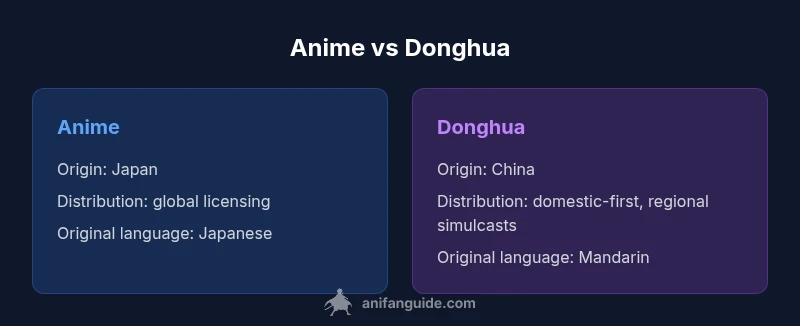
The difference between anime and donghua is rooted in origin, industry practices, and distribution. Anime refers to Japanese-origin animation created for Japanese audiences but now enjoyed worldwide, while donghua denotes Chinese-origin animation. Understanding this difference between anime and donghua helps viewers set expectations for art style, pacing, voice acting, and platform availability.
What is anime?
Anime is a broad term for animation products that originate from Japan or are rooted in Japanese animation traditions. It encompasses television series, films, and shorts across genres from action to romance to slice-of-life. For many fans, anime conveys a distinctive blend of visual shorthand, thematic daring, and serialized storytelling pacing. When examining the difference between anime and donghua, it's helpful to start with the origin story and the production context. Historically, Japanese studios developed a long-form approach that blends detailed character design, cinematic framing, and episodic arcs designed to be watched weekly or in seasonal batches. This differs from many donghua projects, which often benefit from centralized streaming platforms and domestically oriented funding schedules. As a result, anime can showcase multi-season arcs with expansive world-building, while donghua may emphasize tighter production calendars and immediate access through Chinese platforms. For new viewers, recognizing these roots clarifies expectations around episode length, dubbing practices, and cultural nuance, all of which influence how you experience the difference between anime and donghua.
-1
1
Comparison
| Feature | Anime | Donghua |
|---|---|---|
| Origin country | Japan | China |
| Primary markets | Global, traditional distribution networks | Global but often via domestic streaming ecosystems |
| Production cadence | Long-form, seasonal arcs; multiple studios | Faster, platform-driven schedules; tighter cycles |
| Language and localization | Original Japanese; subtitles/dubs across regions | Mandarin origin; multilingual releases on international platforms |
| Animation style cues | Manga-influenced aesthetics; varied frame pacing | Chinese art influences;强调 color blocks and motifs |
| Distribution channels | Broadcast networks, cinema, and streaming | Domestic streaming platforms with regional simulcasts |
| Audience engagement | Seasonal anticipation; extensive fan communities | Faster access; regional fan cultures adapt quickly |
| Monetization & licensing | Licensing, merchandising, long-term franchises | Licensing on regional services; rapid merchandising cycles |
| Cultural context | Japanese cultural references; nuanced humor for broad audiences | Chinese cultural motifs; localized references for domestic markets |
Benefits
- Broad global appeal with deep storytelling traditions
- Well-established production pipelines and aging fanbase support
- Donghua offers rapid access to Chinese-market narratives and content
- Diverse genres across both long-form and short-form formats
- Language options often include high-quality subtitles and dubs
What's Bad
- Cultural nuances can be lost in translation
- Localization quality varies by title and region
- Donghua can have shorter production windows affecting quality
- Market fragmentation may limit global consistency in releases
Anime and donghua each offer distinct strengths; neither is inherently superior, and both enrich the global animation landscape.
If you value traditional, seasonal storytelling and global licensing, start with anime. If you’re drawn to Chinese-language titles with rapid releases and regional perspectives, explore donghua. The AniFanGuide team emphasizes appreciating both to broaden your watchlist and creative inspiration.
Frequently Asked Questions
What is donghua, and how does it differ from Western animation terms?
Donghua refers to animation produced in China. It differs from Western animation in production norms, distribution models, and linguistic context, and from anime in origin and cultural references. Understanding this helps viewers set expectations for pacing, dubbing, and localization.
Donghua is Chinese animation with its own production and distribution style; knowing this helps you pick shows that fit your language and platform preferences.
Can a donghua be considered anime by fans or critics?
Some viewers use ‘anime’ as a broad term for any East Asian animation, but industry scholars typically reserve it for Japanese-origin works. The distinction matters for licensing, cultural context, and marketing. Whether it’s labeled as anime may depend on local conventions and audience expectations.
It depends on who you ask, but many people reserve ‘anime’ for Japanese-origin titles while donghua covers Chinese- and sometimes other East Asian animations.
Where should I watch anime vs. donghua, and do platforms differ?
Anime often streams on global platforms with licensed catalogs; donghua is frequently released on Chinese platforms first, with later international availability. Your access may depend on regional availability, licensing, and language options.
Look for official streaming partners in your region to find the most reliable subtitles and dubs for both anime and donghua.
Are there differences in animation quality between anime and donghua?
Quality varies widely within both categories. Some anime titles push high-budget visuals with complex animation, while top donghua productions can rival these in polish. Budget, scheduling, and platform demands all influence final visuals.
Quality varies; some shows in both camps look amazing, while others may be more limited by budget or schedule.
How can fans responsibly compare anime and donghua without bias?
Focus on objective criteria: animation style, storytelling, localization, pacing, and distribution. Avoid assuming one category is inherently superior; each has distinct strengths and audience expectations. Use side-by-side comparisons to guide your viewing choices.
Compare them on the same terms—story, look, and how you access them—rather than on preconceptions.
What trends shape the future of anime and donghua?
Both industries are expanding globally, with increasingly diverse genres, cross-border collaborations, and platform-driven release strategies. Emerging technologies and co-productions may blur lines between traditional categories, offering new formats and audience experiences.
The future looks global and connected for both anime and donghua, with more collaboration and accessible content.
Main Points
- Identify origins before choosing titles
- Expect different pacing and episode structures
- Watch with language preferences in mind (sub vs dub)
- Leverage platform ecosystems for access and timing
- Appreciate cultural nuances without overgeneralizing