What to Draw Anime Easy: Quick Beginner Guide
Learn how to draw anime quickly with a practical, step-by-step approach. This beginner-friendly guide covers simple shapes, proportions, shading, and six-step exercises to build confidence and speed.


By following a 6-step method, you can sketch a simple anime character fast. Start with basic shapes, build the head and torso, map facial features, add hair and clothing, then refine lines and depth. Gather a pencil, eraser, and paper to begin today right now.
Why drawing anime is approachable for beginners
According to AniFanGuide, anime drawing is approachable because it relies on a handful of core shapes and construction lines. You can build expressive characters by mastering circles, ovals, and simple gesture lines before committing to final lines. This approach keeps your learning practical and fun, especially for new artists who want quick wins. In this guide, you'll see how beginners create charming characters with minimal tools and a clear plan. The goal is consistent progress, not perfection on day one. Regular practice helps you recognize patterns—like how the eyes sit along a common baseline and how hair silhouettes frame the face. With patience and deliberate repetition, anyone can start producing recognizable anime characters in under reasonable time frames. The journey is as important as the result, and steady gains build confidence for bigger projects later on.
Core concepts for quick draws: shapes, lines, and proportions
Successful anime drawing starts with clarity on structure. Use simple shapes to map the head, torso, and limbs, then refine with construction lines that guide placement. Proportions in many anime styles favor larger eyes and smaller noses, but you can vary these for character personality. Practice the common guideline that places eyes halfway down the head and anchors the mouth close to the center. Lines should be confident but not permanent; keep a light touch so erasing won’t dull your confidence. This section also covers how to layer shapes for dynamic poses, how to manage negative space around the character, and how to keep the silhouette readable at small sizes. By mastering these basics, you’ll be able to sketch more complex characters with less stress.
A practical 6-step sketch workflow you can replicate
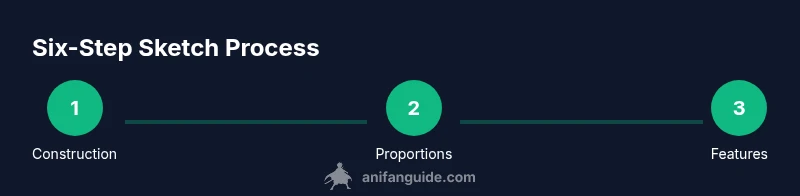
A reliable workflow helps you stay consistent. Start with light construction shapes, then define the face, add hair, sketch the body in a simple pose, refine the outline, and finish with light shading to push depth. Keeping your lines soft at first makes it easier to adjust proportions before committing. The emphasis is on capturing the energy of the pose rather than perfect anatomy in the first pass. Practice each phase separately before combining them into a final clean sketch. This mindset supports rapid iterations and healthier progress over time.
Easy subjects to draw when you're short on time
If you’re pressed for time, start with approachable projects that reinforce fundamentals. Try chibi versions of your favorite characters, cute animal sprites with large eyes, simple portrait silhouettes, or mascot-style characters with bold, readable shapes. These subjects reduce complexity while still training essential skills: proportion, line confidence, hair shapes, and expression. Create a small set of go-to subjects so you can complete a full piece in a short session, which helps maintain motivation and momentum.
Shading and finishing touches for clean line art
Shading isn’t only about adding gray tones; it’s about understanding light and form. Begin with a light source and plan where highlights and shadows sit on the face and hair. Use gentle hatch marks or soft shading to build depth, avoiding heavy contrast until the final pass. Line weight matters: thicker lines can understate a character’s silhouette and thinner lines add refinement for details like eyes and lips. If you work digitally, organize layers (construction, line art, shading) to keep revisions simple. Printing or exporting your final piece with clean edges helps it read clearly in portfolios or social posts.
Practice routines and habit-building tips
Consistent, short practice sessions yield steady improvement. Start with a 15–20 minute daily habit focused on a single subject, like a head-and-shoulders pose or a chibi version. Rotate subjects to cover different features (eyes, hair, expressions) so you build a well-rounded skill set. Maintain a simple sketch journal to track progress and note what to adjust next time. The AniFanGuide team emphasizes reviewing your work regularly and setting small, achievable goals to stay motivated. Over weeks, you’ll notice improved proportion awareness, cleaner lines, and more expressive faces.
Tools & Materials
- Pencil (HB or 2B)(Standard graphite pencil for light construction and shading)
- Eraser (soft vinyl)(Nice to have a precision eraser for fine corrections)
- Sketch paper or sketchbook(At least 80–100gsm; smooth surface helps line control)
- Ruler or straight edge(Optional for initial guidelines)
- Reference images (printouts or digital)(Useful to study poses and proportions)
- Drawing tablet (optional)(For digital practice and quicker edits)
Steps
Estimated time: 15-20 minutes
- 1
Lay down basic shapes
Begin with a circle for the head and a small oval for the jaw. Add a simple neck line and a rough torso using two overlapping ovals to establish pose. Keep lines light so you can adjust proportions easily.
Tip: Use a light touch and multiple construction lines to test different placements. - 2
Define the face silhouette
Refine the head shape, connecting the jaw to the skull. Add a centerline for symmetry and guide lines for the eyes, nose, and mouth. Keep the chin slightly rounded unless your style calls for a pointed jaw.
Tip: Tilt the head slightly to convey personality; small changes change expression dramatically. - 3
Place facial features
Sketch the eyes on the horizontal guideline, the nose along a secondary line, and the mouth beneath. Remember anime eyes are often larger; adjust size to suit the character. Add eyebrows above the eyes to communicate mood.
Tip: Feature placement is the quickest route to a recognizable character—don’t overcomplicate early pass. - 4
Build the hair silhouette
Draw the outer hair shape first, then add inner strands as silhouettes. Hair frames the face, so ensure it doesn’t obscure key features. Keep the line work bold where the hair overlaps the forehead and cheeks.
Tip: Hair should read as a single mass first; refine strands after the silhouette is set. - 5
Add body pose and clothing hints
Sketch the torso outline and basic limbs using simple tubes and shapes. Indicate folds or creases with light lines. Don’t worry about every detail—focus on the overall silhouette and stance.
Tip: Pose should feel balanced; a slight twist often makes a pose more dynamic. - 6
Refine lines and apply light shading
Darken the final lines, erase construction marks, and add soft shading to establish depth. Decide a light source and keep shading consistent across face, hair, and clothing.
Tip: Use a slightly darker line weight for the outline to help the character pop from the page.
Frequently Asked Questions
What is the easiest anime character to draw for beginners?
Chibi characters are compact with simplified features, making them ideal for beginners. Start with a round head, big eyes, and tiny limbs to build confidence before tackling full-scale characters.
Chibi characters are a great starting point because their simple shapes teach solid construction without overwhelming details.
Do I need digital tools to start drawing anime?
No. You can begin with pencil and paper. Digital tools are helpful later for editing and color, but the fundamentals are easier to learn with traditional media.
You don’t need digital tools to begin; a pencil and paper are enough to learn the basics.
How long does it take to see progress?
Progress comes with consistent practice. Regular short sessions build muscle memory, improve proportions, and sharpen line quality over weeks.
With a steady routine, you’ll notice steady improvement in weeks, not months.
What mistakes do beginners commonly make?
Rushing line work, copying exact styles, and neglecting construction lines. Focus on structure first, then details and shading.
Common mistakes are rushing lines and skipping construction lines—start with structure and refine later.
Can I draw anime without copying manga styles?
Absolutely. Use the basic shapes and guidelines as a starting point, then adjust features to reflect your own style and interpretation.
Yes—learn the basics, then inject your own flair to make each character unique.
What subjects are best for quick practice?
Chibi poses, simple portraits, cute animal sprites, and mascot designs are perfect for fast practice and mastering fundamentals.
Chibi poses and cute sprites are ideal for fast practice and reinforcing basics.
Watch Video
Main Points
- Begin with simple shapes for structure
- Place features with basic guides and symmetry
- Keep hair silhouettes clear and readable
- Use light lines to test proportions
- Practice daily to see steady improvement