How to Draw an Anime Male Character: Step-by-Step
Master drawing an anime male character with a practical, step-by-step approach. Learn proportions, facial features, hair, posing, shading, and a structured practice plan to improve quickly.


Want to learn how to draw a anime male character? This guide provides clear steps from rough sketch to finished line art. You’ll practice basic anatomy, stylized features, hair, and expression, using common drawing tools. By following these steps, you’ll gain confidence in your anime drawing skills. This quick summary helps search engines and readers understand what you’ll learn.
Anatomy Foundations for an Anime Male
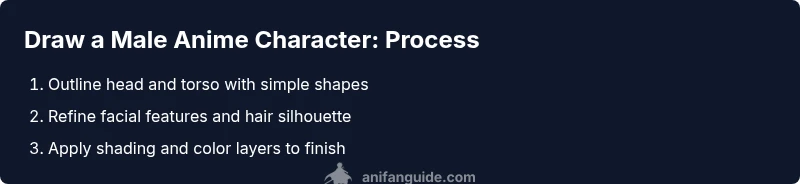
According to AniFanGuide, learning how to draw a anime male character starts with a clear grasp of head-to-body proportions. Begin with a circle for the skull and a gentle jawline to define the chin. The neck should connect at a slight angle to support the head's tilt in your chosen pose. Keep construction lines light so you can refine later. Draft the torso using simple blocks: chest, waist, and hips, then map the limbs with basic cylinders. This foundational structure helps you adapt any style—romantic, shonen, or chibi—without losing consistency. By building from the core geometry, you ensure the character can bend, twist, and hold weight naturally. Practice by sketching quick shapes to establish the pose before adding details. The goal is to create a flexible skeleton you can reuse in future drawings. The more you internalize these basic shapes, the faster your drafts will capture the right energy.
Proportions and Stylization: Getting the Look Right
Anime styles vary widely, so proportions are a deliberate choice rather than a fixed rule. In this section, you’ll learn how to decide whether your character reads as tall and heroic, compact and cute, or somewhere in between. Start with a simple rule of thumb: the head guides overall scale, and the torso and limbs follow from that reference. Avoid rigid realism; instead, focus on consistent silhouettes and readable shapes. Use light, parallel construction lines to compare the head, torso, and limbs as you plan pose and balance. If a pose feels off, check the line of action and adjust the spine curve. Remember, stylization is a design tool: exaggerate features like the jawline for maturity or keep it softer for youth. This control over exaggeration will help you craft distinct characters rather than copy a single look.
Facial Features: Eyes, Nose, Mouth, and Expressions
The face is the most expressive element of anime characters. Start with the eyes, which define mood more than any other feature. Choose a shape that fits your character’s personality—round for innocence, almond for intensity, or angled for maturity. Place the eyes on a horizontal guideline and add a simple nose and mouth to balance the face without crowding it. Eyelashes, brows, and subtle shading can dramatically alter expression. The nose should be understated, often hinted with a small line or shadow, while the mouth can convey emotion with a slight curve or tension. Don’t overlook the ears and jawline, which anchor the character’s age and gender. Practice a few expressions side by side to understand how tilt, eye size, and mouth position change the character’s vibe.
Hair Styles and Shapes
Hair is a defining feature of anime. Start with a bold silhouette to establish personality; hair often reads first, sometimes more than the face. Sketch the hair as a mass around the head using chunky shapes, then refine by adding spikes, bangs, or curls. Consider how light hits the hair: darker roots under top layers and lighter edges at the tips. Keep stray strands controlled with a few decisive, confident strokes. If you’re aiming for a modern look, pair sleek, angular strands with soft underlayers for contrast. For a more heroic style, use heavier sections and dramatic spikes. Practice several silhouettes to build a repertoire of recognizable looks for different characters.
Poses and Body Language
Dynamic poses communicate a lot about a character. Start with the line of action: a single curve that guides the torso and limbs into a natural, energetic stance. Block basic shapes for the chest, hips, and limbs before adding detail. Consider weight distribution: a grounded pose shows stability, while a mid-motion pose suggests speed or action. Use gesture sketches to explore movement quickly, then lock in the final pose with clean lines. Remember that a good pose supports the character’s personality—heroic poses feel bold; shy characters may curl inward or tilt the head. Repeated practice with varied poses builds confidence in anatomy and storytelling through body language.
Clothing and Accessories
Clothes add personality and context. Start with simple layers that follow the body’s form, then add folds that respond to movement and gravity. Keep the silhouette readable by avoiding excessive detailing on areas that won’t be seen in the final shot. Accessories—gloves, belts, scarves, or armor—should complement the character’s role and story. Use consistent lighting to show how fabric interacts with the body: highlights on the raised surfaces and deeper shadows in folds. Color choices should reflect mood and setting, with contrasts that separate foreground elements from the background. Practice combining different fabrics and textures to make outfits feel believable while staying stylistically aligned with your anime world.
Rendering Techniques: Line, Shading, and Color
Line quality defines polish. Start with clean, confident linework over light construction lines, then erase or adjust as needed. For shading, establish a single light source and apply simple, reusable shading blocks to the face, hair, and clothes. Layer color gradually, using midtones first, then highlights and shadows to create depth. Color choices can convey temperature, mood, and character type; cool palettes can imply calm or mystery, while warm palettes evoke energy or friendliness. Practice hatching or cross-hatching to add texture where needed, and always test your color harmony with swatches or digital previews. Finally, tighten edges and refine small details to complete a cohesive, finished piece.
Practice Plan: Structured Practice Week
A structured practice week accelerates improvement. Begin with foundational sketches, then progress to fully rendered poses across multiple expressions. Each session should include a warm-up, a dedicated anatomy drill, a facial study, and a complete character with hair and clothing. Keep a sketchbook; note which techniques felt easy and which need extra work. Review references and compare your work to your favorite anime styles, but avoid direct copying—absorb stylistic cues and reinterpret them. End the week with a short self-critique, recording what changed from your first draft to your final piece and what you’ll focus on next time.
Tools & Materials
- HB pencil (or mechanical pencil 0.5mm)(Use light pressure for construction lines; switch to firmer graphite for clean final lines.)
- Eraser (kneaded or vinyl)(Kneaded eraser is ideal for lifting graphite gently without tearing paper.)
- Paper (ideally 70-100 lb / 118-150 g/m²)(Start with standard printer paper if you’re a beginner; upgrade to sketchbook paper as you practice.)
- Blending stump or tortillon(Useful for smooth shading on the face and hair, optional for beginners.)
- Ruler or straightedge(Helpful for maintaining symmetry in features and straight lines in clothes.)
- Inking pen (0.25-0.5mm) or digital tablet(Inking helps finalize line art; digital tools enable non-destructive edits.)
- Color media (colored pencils, markers, or digital palette)(Choose one medium to begin; keep color studies separate from line art.)
Steps
Estimated time: 60-90 minutes
- 1
Warm up with a quick head sketch
Start with rough ovals and circles to map the head. Keep lines light and loose, focusing on overall shape rather than details. This prepares your hand for precise features later.
Tip: Use a loose pencil grip and sketch freely for 30–60 seconds, then switch to firmer lines for refinement. - 2
Position the neck and shoulders
Add a neck tapering from the jawline and sketch the basic shoulder width. Check that the neck aligns with the spine’s direction to support the pose. This builds a solid foundation for the upper body.
Tip: Double-check balance by posing the model with a light tilt; adjust before proceeding. - 3
Block in the torso and limbs
Draw simple shapes for the chest, torso, hips, and limbs. Use cylinders for arms and legs to suggest volume and perspective. Keep proportions flexible at this stage.
Tip: Label major joints (shoulders, elbows, knees) so you preserve correct angles later. - 4
Outline facial guidelines
Place a vertical center line and horizontal guidelines for eyes, nose, and mouth. This ensures symmetry and helps you place features accurately relative to the head.
Tip: Make initial guidelines very light; you’ll refine them in the next steps. - 5
Draw eyes and expressions
Sketch the eye shapes along the horizontal line, then add pupils and highlights. Define eyebrows to match the expression. A few facial lines can convey emotion without cluttering the face.
Tip: Use reference expressions to study how eye shapes change with mood. - 6
Refine the hair silhouette
Block the hair mass around the head, then carve distinct locks and bangs. Ensure the silhouette reads clearly and supports the character’s personality.
Tip: Keep the hair flow directional; avoid over-detailing in early stages. - 7
Outline body and clothes
Go over the major shapes with clean lines. Add clothing edges and basic folds that follow the body’s form. Maintain a readable silhouette and consistent line weight.
Tip: Lock the pose in with steady, deliberate strokes rather than sketchy lines. - 8
Apply shading and lighting
Decide a light source and shade in broad planes first. Layer midtones, shadows, and highlights to create depth. Use soft transitions for a polished look.
Tip: Start with a single light direction; add extra shadow only where needed. - 9
Finalize colors and details
If coloring, test skin tones and hair color on swatches. Add small details like gems, accessories, or textures. Clean up stray marks and ensure crisp edges where necessary.
Tip: Work in layers; keep a separate layer for highlights to preserve flexibility.
Frequently Asked Questions
What are the essential tools for drawing a basic anime male character?
Start with a pencil, eraser, and paper. A simple set of colored pencils or markers and a digital tablet later can expand your options. Keep a dedicated sketchbook for practice and a separate page for color studies.
You’ll want basic pencils, an eraser, and paper to start; add color tools or a digital tablet as you grow.
How long does it take to see improvement?
Progress varies, but consistent daily practice over several weeks yields noticeable gains in accuracy, proportion, and expression. Track your growth with a small portfolio of weekly sketches.
With steady daily practice, you’ll notice improvements in a few weeks to a couple of months.
Should I imitate a particular anime style or create my own?
Study multiple styles to understand techniques, then synthesize what you learn into your own unique look. Use references to inform design, but aim for originality.
Learn from many styles, then develop your own signature look.
How can I practice different emotions effectively?
Practice a small set of facial features per emotion—eye shape, eyebrow position, and mouth curve. Create quick emotion sketches to build a dependable library.
Build a library of facial expressions by practicing common emotions.
Can I learn anime drawing without references?
References help avoid common mistakes and speed up learning. Start with simple silhouettes and gradually introduce references for proportions and clothing.
References are a powerful learning aid; they keep your proportions believable.
What is a good weekly practice plan for beginners?
A solid plan includes warmups, anatomy drills, facial studies, pose practice, and a complete character sketch by week’s end. Review your progress and adjust difficulty gradually.
Structure your week with focused drills and a final character study.
Watch Video
Main Points
- Master core anatomy before detailing features.
- Stylization should support character personality, not obscure anatomy.
- Practice facial expressions with consistent eye shapes and mouth lines.
- Develop a reliable hair silhouette to define character instantly.