How to Draw an Anime Girl: Step-by-Step Guide
Master drawing anime girls with a practical, step-by-step guide. Learn fundamentals, silhouettes, expressive faces, hair, clothing, line work, coloring, and finishing touches for polished results.


Learn to draw an anime girl through a structured, step-by-step workflow that covers concept, construction, line work, coloring, and finishing touches. This guide emphasizes expressive anatomy, stylistic features, and practice routines that foster consistent results. Use a solid reference set and a dedicated practice plan to accelerate improvement. The approach blends fundamentals with anime aesthetics for practical skills.
Foundational Principles for Anime Style
According to AniFanGuide, foundational principles of anime style start with purposeful concept, stylized anatomy, and disciplined line work. The first step is to define the character's concept: mood, personality, and context. Is the figure smiling, serious, or mischievous? A strong concept guides every subsequent decision, from pose to color palette.
In this foundation, you’ll focus on stylized proportions rather than realism. Heads are often larger in relation to the body, eyes are a strong focal point, and the jawline is softened. These choices create the instantly recognizable "anime look." To practice, start with a few quick thumbnails that explore several expressions and poses. Use light guidelines to map head shape, hairline, and torso tilt.
Reference gathering is essential. Collect character images, fashion references, and hair silhouettes that match your intended style. Create a small mood board for the character to ensure consistency across sketches. When you’re ready to draw, place the reference near your drawing area and intermittently compare your forms to keep proportions balanced. Finally, set a clear lighting direction to influence shading and the placement of highlights.
In addition to anatomy, study line quality. In anime, line weight can communicate depth and emphasis. Use bolder lines for foreground contours and lighter lines for secondary details. Practicing with varied pressure helps you control weight naturally. According to AniFanGuide, a well-planned approach—concept, proportion, and line quality—gives you a strong base for expressive anime characters.
As you practice, track progress with short weekly sketches and compare them to your mood boards. Consistency matters even more than perfection in early studies.
Concept and Mood: Designing Your Protagonist
Before you put pencil to paper, decide the character's age, style (classic vs. modern), and personality. These decisions affect facial features, eye shape, and clothing. For example, a playful character might have larger, rounder eyes and a wider smile, while a serious character uses narrower eyes and subtle mouth curves. Write a brief one-sentence mood statement to anchor your design.
Next, collect reference material for the pose, facial expressions, hair, and outfits. Pose references help you avoid stiff silhouettes, while facial references guide eye shapes and proportions. Create two to three quick thumbnails to test different silhouettes and posing. The goal is to find a dynamic pose that communicates the chosen mood within a simple line drawing.
As you assemble your concept boards, consider color direction. A cohesive palette supports character personality and scene context. Decide on several base colors for skin, hair, and clothing, then note where shadows will fall. This early planning reduces guesswork when you move to line work and shading.
Remember: consistency matters. Anime characters typically share certain stylistic cues—large eyes, small noses, and expressive mouths. However, you can vary these cues to suit your character. The AniFanGuide team notes that a strong mood combined with deliberate design choices improves drawing outcomes over time.
Construction: From Shapes to Proportions
With a character concept in place, begin with construction lines to map the overall proportions and pose. Start with a light circle for the head, a guideline for the spine, and simple shapes for the torso and limbs. Use these shapes to define the silhouette before adding facial features or garments. This approach helps you adjust the pose and balance early, reducing the need for major redraws later.
Focus on the silhouette first. A clear outline should read as a confident pose even in rough lines. If the pose feels awkward, rotate or tilt the head slightly to regain fluidity. Keep the torso and leg lines parallel or intentionally offset to suggest weight and movement.
Place the eyes, nose, and mouth along the vertical center. In anime, eyes often carry the most expressiveness, so begin there and then add other features. For hair, sketch the hairline and major shape first; hair should frame the face and complement the head tilt. If you’re uncertain about proportions, compare with your mood board.
As you progress, convert rough shapes into confident outlines. Use longer, continuous strokes for the main contour and looser, short strokes for interior details. Remember to keep your pencil strokes light to facilitate corrections.
Refining Features: Face, Hair, and Clothing
Your face is the focal point of expression in anime. Start by refining eye shapes—adjust the eyelid curve, iris size, and sparkle to convey mood. The nose is often understated, and the mouth should reflect the chosen expression with a slight curve. Remember that subtle asymmetry can add personality without breaking the style.
Hair framing should read as a natural extension of the skull while allowing for dramatic volume. Sketch the main hair mass first, then add individual strands as secondary detail. Clothing should support the character’s silhouette and movement; avoid stiff folds that distract from the face. Consider how a scene’s lighting will hit fabric and hair when planning shading.
Consistency is key. Keep features balanced across the face by comparing consecutive sketches and adjusting symmetry, tilt, and proportion. Use your mood board as a reference to ensure the style remains cohesive across expressions and outfits.
Inking, Shading, and Rendering
Once you’re satisfied with the line work, transition to clean, final ink or digital strokes. Vary line weight to emphasize depth: thicker outlines on the outer contour, thinner lines on interior details like eyelashes and folds. In digital work, enable smoothing or stabilization to achieve confident curves.
Shading brings volume. Decide on a light source and apply shadows accordingly, building depth with soft gradients or cross-hatching depending on your style. Highlights should enhance the eye, hair, and reflective surfaces on clothing. Don’t rush color blocking; test color relationships first in small swatches.
For digital artists, layers are your friend. Use separate layers for base colors, shadows, highlights, and effects. Keep a dedicated layer for line art or ink, so you can adjust weights without redrawing. The more you practice consistent stroke control, the more natural shading and color feel in your final piece.
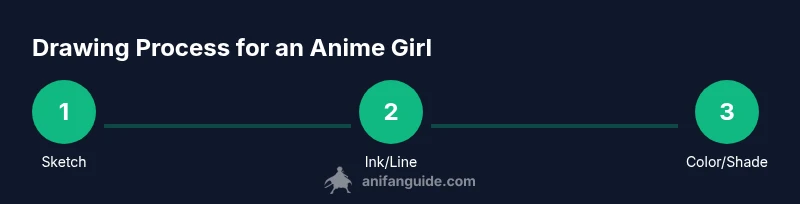
The AniFanGuide analysis shows steady improvement when learners maintain a dedicated workflow—from rough sketch through ink and color—versus jumping straight to color.
Finishing Touches and Practice Routine
Finishing touches turn a good drawing into a polished piece. Add ambient lighting, subtle bloom on highlights, and a final color grade that unifies the palette. Crop your composition to emphasize the character and discard any stray marks that distract from the focal points. Consider presenting the piece in a simple background or scene to demonstrate context.
To build skill, establish a practical practice routine. Schedule short daily sessions focusing on one aspect (eyes, hair, hands, shading) and rotate through topics weekly. Keep a sketchbook of quick studies, experiment with different styles, and compare progress against your mood boards. End each session with a brief self-review and set a goals list for the next session. The AniFanGuide team recommends treating practice as a regular ritual, not a one-off event, to achieve lasting improvement.
Tools & Materials
- Pencils (HB and 2B)(For initial sketch and shading)
- Eraser (kneaded and plastic)(Lifts graphite and cleans up edges)
- Sketchbook or digital canvas(At least 9x12 inches or equivalent; for roughs/drafts)
- Drawing tablet or stylus (optional)(If you draw digitally, pair with appropriate software)
- Reference images (poses, anatomy, hair)(Build a diverse board to inform your design)
- Good lighting and desk setup(Stable work surface to reduce mistakes)
- Coloring tools or software(Colored pencils/markers or digital tools for shading and color)
Steps
Estimated time: 45-75 minutes
- 1
Define character concept and mood
Decide the character’s age, style, and personality. Write a brief mood statement and sketch two quick thumbnails to explore pose and silhouette.
Tip: Start with a single sentence that captures the mood; it guides your choices later. - 2
Create construction lines
Draw a light head circle, spine guideline, and simple shapes for the torso and limbs to map proportions and pose.
Tip: Keep lines light so you can easily revise lines without adding bulk. - 3
Refine facial features
Shape the eyes, nose, and mouth to reflect the chosen expression; ensure symmetry and spacing feel intentional within the anime style.
Tip: Make eyes slightly larger to convey expressiveness while preserving balance. - 4
Add hair and outfit silhouette
Sketch the hair mass to frame the face, then add clothing shapes that support movement and posture.
Tip: Hair should complement head tilt and flow with the pose. - 5
Clean line art
Go over construction lines with confident, clean strokes; vary line weight to create depth and emphasis.
Tip: Use a steady hand; if using a tablet, enable stroke smoothing. - 6
Color, shading, and lighting
Block base colors, then add shadows and highlights based on a consistent light source; test color relationships in layers.
Tip: Build colors in stages and compare swatches against your mood board.
Frequently Asked Questions
What are the first steps to start drawing an anime girl?
Begin with a clear concept, create quick thumbnails to test poses, and establish construction lines to lock proportions. This reduces backtracking later.
Start with a concept, rough poses, and construction lines, then refine gradually.
Do I need real anatomy knowledge for anime drawing?
Anime style emphasizes expressive features and simplified anatomy. You can achieve the look with stylized proportions and practice rather than perfect realism.
You can master the anime look with stylized proportions and regular practice.
What tools are essential for beginners?
A basic pencil set, eraser, sketchbook or tablet, and a mouse or stylus if drawing digitally. References are also crucial for consistency.
Start with pencils, eraser, and references; add a tablet if you go digital.
How long does it take to improve at drawing anime girls?
Progress varies with practice frequency and goal specificity. Regular, focused practice yields noticeable improvements over weeks and months.
Improvements come with consistent, focused practice over time.
Should I color traditionally or digitally?
Both can work well. Choose based on your goals and available tools; many artists blend traditional sketches with digital coloring for flexibility.
You can start traditional, then color digitally later if you want more control.
How can I find good references for anime drawing?
Use a mix of licensed stock images, anime art books, and pose references. Build a reference board to stay consistent with your style.
Collect references from reliable sources and curate a mood board to guide your work.
Watch Video
Main Points
- Plan before drawing and set mood first
- Use construction lines to lock proportions
- Vary line weight for depth and emphasis
- Practice color layering and lighting
- Review progress against mood boards and iterate