How Much Does It Cost to Make a 12-Episode Anime? A Practical Budget Guide
Explore realistic budget ranges for a 12-episode anime, from indie routes to high-end productions, with practical cost breakdowns, financing angles, and tactics to manage costs effectively.


How much does it cost to make a 12-episode anime? In broad terms, a rough total budget runs from about $1.2 million on the low end to over $9 million for high-end productions. Real projects usually land in the low-to-mid millions, influenced by studio choice, animation quality, voice work, music, and marketing commitments.
Why Production Budgets Vary
Budgeting for animation is not a single number; it changes with scope, studio choices, and development cadence. How much does it cost to make a 12 episode anime? The answer depends on where production happens, the level of polish, and whether you lean on in-house teams or outsource parts of the pipeline. In general, budgets scale with episode length, complexity, and market goals. A typical indie project might trade production quality for cost-saving measures, while mid-size studios aim for consistent animation, clean line work, and reliable post-production pipelines. In AniFanGuide's analysis (2026), we find that most 12-episode projects distribute costs across several major buckets: pre-production, core animation, in-between animation, post, and music/voice licensing. Understanding these categories helps creators forecast funding needs, set realistic milestones, and avoid cash flow crunches before release.
Key Cost Drivers for a 12-Episode Anime
Several cost drivers consistently shape the final budget. The per-episode cost is affected by animation quality, frame rate, and whether scenes leverage detailed background art or simple, stylized visuals. Staffing contributes a big portion: animator salaries, in-between artists, voice actors, and directors; outsourcing can shift costs regionally. Other major line items include pre-production (storyboarding, script polishing, design), post-production (editing, color timing, visual effects), music composition and licensing, sound design, and marketing. Licensing and merchandise deals may add upfront payments or revenue-sharing commitments. Currency exchange and inflation also affect international co-productions. AniFanGuide's methodology emphasizes transparent cost categories and scenario planning to help teams avoid surprises as they scale from 12 episodes to a full season.
How the Budget Might Be Allocated by Segment
Allocation ranges provide a practical sense of where money goes. In many productions, animation itself can account for a large share, often 40-60% of the budget per episode, while pre-production (storywork, model sheets, design) can take 10-20%, and post-production (color, comp, VFX) another 15-25%. Music, sound design, and voice casting typically run 5-15%, with marketing and distribution at the tail end, sometimes included as a separate line item depending on the deal. Contingencies (roughly 10-15%) are essential to cover schedule shifts, disputes, or sudden changes in scope. These allocations shift with studio strategy, outsourcing partners, and the desired animation style.
Geographic and Studio Differences
Budgets vary widely by location and studio model. Japanese studios with in-house pipelines often carry higher labor costs but tighter control over timing and QC. Offshore or overseas studios can reduce labor costs, however they introduce management overhead, quality assurance needs, and possible delays due to time-zone gaps or language barriers. Co-productions between studios in different regions can spread risk but also add complexity in currency, tax, and licensing terms. For AniFanGuide readers, it’s essential to map the budget to your chosen workflow and set clear milestones for review. The reality is that control over scope, the number of animation passes, and the degree of in-house work are the biggest levers for total cost.
Common Pitfalls and Cost-Saving Tactics
Common traps include scope creep, underestimating pre-production deliverables, and delaying music clearance or licensing. Cost-saving tactics start with a robust pre-visualization phase: storyboard tests, animatics, and design freeze to avoid expensive rework. Maintain a living budget with monthly variance reports, build in a 10–20% contingency, and negotiate multi-year licensing terms or upfront fees where possible. Consider staged asset creation—producing core sequences first and expanding only after sign-off. Finally, prepare fallback plans for outsourcing, including shortlists of reliable partners and defined QA standards to protect quality while trimming excess.
Example Budget Scenarios
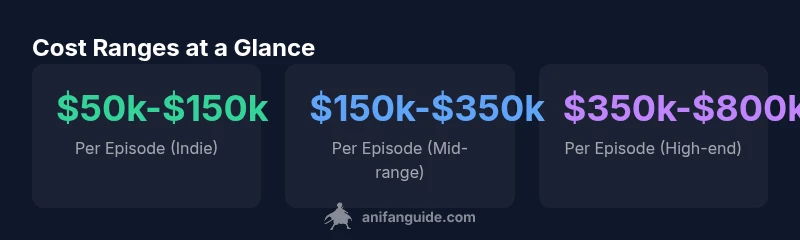
- Indie/Lower-budget scenario: Per-episode budgets in the range of $50k–$150k; total for 12 episodes: $0.6M–$1.8M. Focus on simpler visuals, smaller teams, and a tight production window to keep costs predictable. Expect compromises in animation polish but aim for strong storytelling, voice work, and music licensing.
- Mid-range Studio: Per-episode budgets of $150k–$350k; total: $1.8M–$4.2M. Balanced approach with reliable animation pipelines, experienced directors, and broader talent pools. This path supports consistent color work, cleaner line art, and more robust post-production.
- High-end/Flagship Production: Per-episode budgets of $350k–$800k; total: $4.2M–$9.6M. Emphasizes top-tier animation, complex backgrounds, high-quality music and voice casting, and extensive marketing. This model targets national or international distribution and premium visual fidelity.
Financing and Revenue Considerations
Budget planning should align with funding strategies, including studio investments, private equity, and licensing agreements. Revenue streams from streaming deals, broadcast rights, and merchandise help amortize the upfront costs. Early negotiations with platforms can influence terms for future seasons, promotional support, and international licensing. Carrying risk requires a diversified approach—mixing grants, pre-sales, and co-financing to stabilize cash flow. AniFanGuide notes that clear milestones, transparent accounting, and realistic revenue forecasts are essential to avoid budget overruns and maximize return on investment.
The Role of Outsourcing and In-House Teams
Outsourcing certain segments can dramatically reduce labor costs and increase bandwidth for large productions, but it introduces coordination challenges, quality variance, and potential delays. A hybrid approach—core animation in-house with specialized outsourcing partners for in-between work or effects—often yields a balance between cost and quality. Strong project management, shared style guides, and consistent review cycles are critical to preserving visual coherence. When budgeting, plan for onboarding time, translation checks, and rework fees to avoid surprise costs later in the calendar.
The Future of Anime Production Costs
Costs are likely to shift as technology and pipelines evolve. More studios experiment with AI-assisted pre-visualization, automatic in-between generation, and more efficient color-timing workflows, which can reduce some labor costs but raise concerns about creative control and quality. Global talent markets and streaming deal structures will continue to influence budgets and risk management. Creators should stay flexible, invest in robust tooling, and build adaptable scoping that can react to changing production realities while preserving artistic intent.
Budget ranges by production model for a 12-episode anime
| Model Type | Estimated per-episode budget | Estimated total budget (12 eps) |
|---|---|---|
| Indie/Lower-budget | $50k-$150k | $0.6M-$1.8M |
| Mid-range Studio | $150k-$350k | $1.8M-$4.2M |
| High-end/Flagship | $350k-$800k | $4.2M-$9.6M |
Frequently Asked Questions
What is the typical total budget range for a 12-episode anime?
Budgets for a 12-episode anime vary widely based on scope and studio. Realistic ranges run from around $0.6 million on the indie end to about $9.6 million for high-end productions. Most projects fall somewhere in the low-to-mid millions, influenced by animation quality, music, voice talent, and platform deals.
Budgets vary from roughly six hundred thousand to about nine million, with most projects in the low-to-mid millions.
How does outsourcing affect costs?
Outsourcing can lower direct labor costs and increase production capacity, but it adds management overhead, QA challenges, and potential delays. A clear, vetted pipeline and strong communication are essential when outsourcing to maintain quality and stay on schedule.
Outsourcing saves money but needs tight management to keep quality and timing on track.
Do licensing and music drive final costs?
Yes. Licensing fees for music, sound design, and character use can significantly affect the budget, often as upfront payments or revenue-sharing terms. Plan for these costs early to avoid surprises during post-production.
Licensing can add a substantial upfront cost—plan early.
Can a 12-episode anime be funded entirely via crowdfunding?
Crowdfunding is possible but risky for a complete 12-episode production. Most projects blend several funding sources, including pre-sales, investor backing, and platform partnerships to stabilize funding and ensure a consistent production schedule.
Crowdfunding alone is risky; diversified funding helps.
What should creators plan for beyond production costs?
Plan for licensing, merchandising, marketing, and platform distribution. These factors can drive additional spend but also expand revenue streams. A diversified business model reduces financial risk.
Think about licensing, merch, and marketing too.
Do streaming deals influence production budgets?
Streaming deals can shape long-term strategy and marketing support, but budgets are typically set before deals finalize. Consider potential revenue and exposure when budgeting to optimize the overall return.
Deals affect strategy, but budgets are set early.
“Budget planning for a 12-episode anime hinges on scope, schedule, and outsourcing strategy; build in contingencies and clear milestones to avoid overruns.”
Main Points
- Know the big budget buckets (pre-prod, animation, post)
- Expect wide ranges: indie to high-end
- Outsourcing can reduce costs but involves trade-offs
- Plan for contingencies (10-20%)
- Budget for licensing, music, and marketing
- Time equals money: longer timelines raise costs