Can You Make Anime Merch? A Practical Creator Guide
Learn how to design, license, and produce anime-inspired merchandise. This educational guide covers legal basics, design principles, production options, budgeting, and step-by-step workflows for fans and creators.


Yes, it is possible to make anime merch, whether for personal use, fan art, or small-scale selling, but you must respect copyright, licensing, and platform guidelines. This guide covers idea validation, design workflows, production options, legal considerations, and practical steps to take you from concept to finished products, including testing proofs and building a sustainable merch practice.
Can you make anime merch: why fans dive in
can you make anime merch is a question fans often ask when they’re inspired by their favorite shows. The short answer is yes, but the path is shaped by legality, ethics, and practical craft. Fans use original art, reimagined characters, or non-copyrighted themes to create items like stickers, posters, apparel, and accessories. The real skill isn’t just in drawing cute characters; it’s in turning a concept into a product that others want to buy while staying within the legal and ethical boundaries of licensing. For many creators, the journey starts with a spark of art, a solid plan, and a willingness to learn production basics. Throughout this guide you’ll find strategies to validate ideas, source materials responsibly, and choose the right production routes so you can translate passion into tangible merch without jeopardizing your project or your audience.
Legal and copyright essentials
Copyright and licensing shape what you can legally reproduce. Fan art often exists in a gray area: creating art for personal use is more permissive than selling it. Many official licenses are required to reproduce exact characters or logos for sale. Even when a design is inspired by an anime, if it closely imitates protected artwork or branding, it risks infringement. To stay safe, start with original artwork or public-domain-style concepts, clearly separate fan art from official logos, and avoid phrases or images that could mislead customers into thinking you’re an authorized merch provider. If you plan to sell, consider licensing options or collaborating with license holders, and always credit sources correctly to maintain transparency with your audience.
Design principles for anime-inspired merch
Successful merch blends recognizability with originality. Start by defining your audience and style: minimal line art, bold colors, or painterly renders. Key design elements include scalable vectors for logos and typography, high-resolution raster art for printables, and consistent color schemes across products. Choose a color palette that prints well on light and dark fabrics, and test proofs to confirm how colors reproduce in CMYK versus RGB. Simplicity often wins on apparel—think iconic silhouettes or single-character motifs—while posters and stickers can carry more detail. Remember to build in safe margins and clear bleed areas so that artwork isn’t trimmed awkwardly during printing.
DIY vs professional production options
DIY methods like heat transfer, screen printing, or sublimation offer low-cost entry points but require careful setup to ensure durable results. Printing partners and print‑on‑demand services reduce inventory risk, handle fulfillment, and often offer quality assurances. When choosing between options, consider: desired order size, lead times, color accuracy, fabric compatibility, and the level of customization you want. For a hobbyist, starting with a small run via a POD service can validate demand; for a growing brand, invest in a heat press or screen printing setup and develop exclusive designs for repeat customers. Always request proofs before a full run to avoid costly misprints.
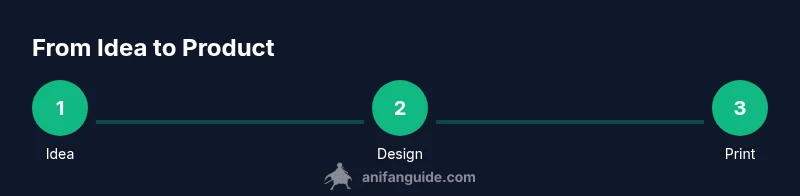
Step-by-step blueprint to concept-to-product (overview)
- Validate concept: ensure your idea isn’t a close copy of a protected character or logo.
- Create original artwork: build a unique style that nods to anime aesthetics without copying familiar assets.
- Prepare printing files: convert to CMYK, set bleed, and choose appropriate file formats.
- Pick production path: POD vs bulk printing; align with your budget and timeline.
- Test and collect feedback: use mockups and small batches to refine designs.
- Launch and monitor: track sales, customer feedback, and licensing concerns to guide future drops.
This blueprint keeps you focused on practical steps while minimizing risk as you scale.
Budgeting and quality control
Budgeting for anime merch requires balancing art creation, production costs, and platform fees. Start with a baseline cost per item, then add printing, packaging, and shipping expenses to estimate final prices. Quality control matters: check color accuracy, print longevity, and garment fit with sample orders. Keep a record of vendor specifications, print tolerances, and fabric compatibility to avoid returns. If you’re testing waters, set aside a small reserve to fund test runs and minor iterations. As you grow, consider tiered product lines—core items with steady demand and limited drops that explore new styles.
Building an ethical, sustainable merch practice
Ethics matter in anime merch because licensing and fan communities rely on trust. Respect intellectual property, avoid misleading branding, and be transparent about whether items are fan art or licensed products. Engage with your audience—show behind-the-scenes design processes, explain your licensing approach, and invite feedback. A sustainable practice balances creativity with compliance: secure rights where required, protect your audience from counterfeit goods, and commit to high-quality products that reflect your values. Over time, your brand can become a trusted source for authentic, thoughtfully produced merch.
Getting started today: next steps you can take
If you’re ready to begin, start small with a single design and a limited colorway on a single product type. Use a print-on-demand service to test demand, then consider a pilot run if the results are promising. Build mockups to visualize how designs translate across tees, hoodies, stickers, and posters. Finally, document licensing considerations from the outset so you can scale confidently without legal guesswork.
Tools & Materials
- T-shirt blanks (various sizes)(Unisex or tailored cuts; 100% cotton or cotton/poly blends)
- Heat transfer vinyl or screen printing transfer paper(Choose compatible media with your printer and fabric)
- Heat press or iron(Heat press preferred for durable results; iron acceptable for small tests)
- Color printer capable of transfers(Color accuracy matters for printing on fabrics)
- Sublimation paper or transfer sheets(Use for sublimation or heat transfer projects)
- Fabric markers or paints (optional)(For hand-drawn accents on textiles)
- Computer with design software (e.g., Procreate, Canva)(Vector-friendly tools are ideal for scalability)
- Mockup templates or software(Helpful for visualizing finished products)
- Bleed guides and color management resources(Prevents edge-cut and color shifts)
- Cutting tools (scissors/rotary cutter)(Useful for sticker and packaging prep)
- Heat-resistant tape(Keeps artwork aligned during transfer)
Steps
Estimated time: 6-12 hours
- 1
Define concept and check rights
Identify a theme or character-inspired concept that is original and unlikely to infringe. Research existing licensed artwork and avoid direct copies. If unsure, opt for a design taxonomically distinct from well-known IP to reduce risk.
Tip: Document your source of inspiration and note licensing considerations early. - 2
Create original artwork
Develop a distinctive style, using vector shapes for logos and scalable elements. Design in your preferred software, keeping in mind color separation for printing. Produce multiple variants to test what resonates with your audience.
Tip: Export in vector formats (SVG) for logos and high-res PNGs for prints. - 3
Prepare printing files
Convert artwork to CMYK for print accuracy and set appropriate bleed margins. Ensure minimum resolution is met (300 dpi for apparel prints). Name files clearly and maintain a consistent folder structure for proofs.
Tip: Always run a color-proof on a test print before full production. - 4
Choose production path and order a proof
Decide between print-on-demand or bulk printing based on your forecasted demand and cash flow. Order a physical proof to verify color fidelity, placement, and fabric feel.
Tip: Compare at least two vendors to gauge consistency and turnaround times. - 5
Create mockups and gather feedback
Use mockups to show how designs look on different products. Gather feedback from potential customers, peers, or online communities to refine before mass production.
Tip: Incorporate feedback that enhances readability and visual impact at small sizes. - 6
Finalize packaging and branding
Design packaging that reinforces your brand and protects product quality. Include care instructions and branding elements that make unboxing a positive experience.
Tip: A consistent unboxing experience boosts word-of-mouth marketing. - 7
Launch and monitor performance
Release a limited run to test demand, monitor sales channels, and gather customer reviews. Adjust pricing, designs, and production methods based on real data.
Tip: Set up simple analytics and customer feedback loops to guide future drops.
Frequently Asked Questions
Can I sell merch featuring exact anime characters without permission?
Typically no. Selling merchandise with protected characters or logos usually requires licensing. You can create original artwork inspired by anime aesthetics or obtain official rights through licensing agreements.
Generally, you need licensing to sell merchandise with protected characters; you can create original art instead or obtain proper rights.
What products are easiest for beginners to start with?
Stickers, posters, and simple tees are the easiest starters. Print-on-demand services let you test demand with minimal upfront costs and inventory risk.
Stickers and simple tees are great starting points; POD services help you test demand with low upfront costs.
Do I need an LLC or business license to sell merch?
This depends on your location and sales volume. Many hobbyists start as sole proprietors, but formal licensing or an LLC may be required as you scale or reach certain revenue thresholds.
It varies by region; many start small as individuals, but licensing may become important as you grow.
Should I use fan art or original designs?
Original designs reduce licensing risk and give you creative freedom. Fan art can be showcased, but selling it commercially without rights increases legal risk.
Original art minimizes risk; fan art requires licensing for commercial use.
What printing method works best for beginners?
Heat transfer and print-on-demand services are beginner-friendly with low upfront costs; for higher volume, consider screen printing or dye-sublimation.
Heat transfer or POD is easiest to start with; screen printing suits bigger runs.
How should I price my merch?
Base price on production costs, packaging, shipping, and platform fees. Start with modest margins and test demand before aggressive discounts.
Price based on cost plus a reasonable margin; test demand before heavy discounts.
Where is a good place to sell anime merch legally?
You can sell through self-hosted stores, third‑party marketplaces with licensing compliance, and community events. Always declare whether items are fan art or licensed.
Sell through DIY stores or marketplaces that support licensing; clearly label fan art vs licensed.
What counts as a successful launch for merch?
A successful launch meets demand objectives, positive customer feedback, and clear licensing compliance. Use early sales, reviews, and repeat orders to gauge long-term viability.
Success means meeting demand, getting good feedback, and staying compliant.
Watch Video
Main Points
- Know the legal boundaries before designing.
- Start with original art to minimize risk.
- Choose a production path that matches your goals.
- Test thoroughly with proofs and mockups.
- Build trust through transparent licensing and ethics.