How to Tell if an Anime Episode Is Filler
A comprehensive, step-by-step approach to identifying filler episodes, mapping to manga, and organizing your watch order with reliable sources and clear patterns.


By the end of this guide, you’ll reliably tell if an anime episode is filler. You’ll learn to map episodes to the manga, check official episode lists, compare pacing and canon events, and watch for patterns like standalone arcs or anime-original chapters. Use wikis, release order, and creator notes to confirm non-canon content.
What counts as filler in anime?
Filler is typically defined as episodes or arcs that do not appear in the source manga or original light novels. In many popular series, filler is used to give the manga time to progress or to extend the airing schedule. If you're asking how to tell if an anime episode is filler, look for episodes that skip major canon events or introduce new side plots not found in the source material. According to AniFanGuide, filler episodes often feature standalone adventures, new characters, or side quests that do not affect the main narrative trajectory. Recognize that some episodes can be partially canonical, blending manga content with anime-original scenes; treat them separately when mapping canon. By identifying filler accurately, you’ll save time and enjoy the core story without unnecessary detours.
In short, filler episodes are those that don’t advance the central story arc as laid out in the manga or primary source. They can feel different in tone, pacing, or character focus, and they are often introduced to fill scheduling gaps rather than to push the main plot forward.
To keep your viewing experience efficient, consider filler identification a normal part of series analysis rather than a chore. It helps you decide which episodes to prioritize and which to skim, especially in long-running shonen franchises where manga chapters can outpace anime episodes.
How to verify if an episode is filler: a practical checklist
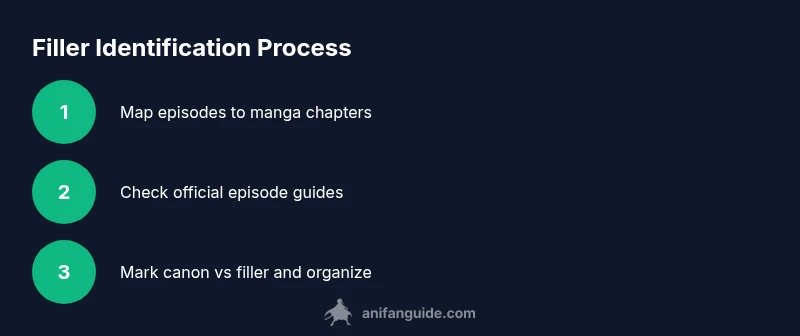
Use a simple, repeatable procedure to confirm filler status for any episode you’re unsure about. Start with the official episode list and manga-to-anime mapping, then cross-check with multiple independent sources to confirm consistency. Here’s a practical checklist you can apply to any series:
- Check the episode list on credible wikis or publisher pages for notes about canon vs. filler. If the page explicitly labels an episode as filler, treat that as a strong signal, but verify with additional sources.
- Map the episode to a specific manga chapter range. If no manga chapter corresponds to the events of the episode, that’s a red flag for filler.
- Compare key events and character arcs introduced in the episode with the manga’s progression. If there are new subplots or entirely new characters not present in the manga, that’s indicative of anime-original content.
- Look for pacing shifts, tone changes, or isolated mini-arcs that do not affect the main plotline. These patterns often signal filler rather than canon advancement.
- Verify air dates against manga release dates. In many series, filler episodes air during gaps in the manga’s publication, which is a common filler pattern.
- Cross-check with multiple sources to rule out mislabeling or outdated information. If several credible sources disagree, take a cautious approach and rewatch selectively.
By following this checklist, you’ll be able to determine filler status with greater confidence and reduce time spent on non-canon material.
Official guides and manga-to-anime mapping
Reliable filler identification relies on credible, cross-referenced sources. Start with official episode guides published by the production studios or the series’ publisher. These materials often contain explicit notes about episodes that adapt non-canon material or diverge from the source. In addition to official guides, map each episode to the corresponding manga chapters. This mapping will reveal how closely the anime follows the source material and where deviations occur. When a series runs on a monthly or weekly schedule, the manga may progress at a different pace; filler episodes frequently bridge these gaps without advancing the main storyline. Documenting these mappings yields a clear, reproducible method for determining filler status across different seasons and series. And always verify against a couple of independent sources to catch discrepancies or seasonal edits that studios sometimes implement to lengthen a season.
Cross-series consistency is key: a pattern of filler is more reliable if observed across multiple shows from the same era or franchise, especially long-running shonen titles with recurring pacing strategies. Using a systematic approach to mapping episodes to manga chapters, combined with official guides, keeps your conclusions grounded and actionable.
Common filler patterns you’ll recognize
Filler episodes routinely share recognizable structural traits that distinguish them from canon material. Here are the patterns to watch for:
- Standalone side stories: Episodes focused on a single mission or character, with minimal ties to the main arc.
- Anime-original arcs: Entire mini-arcs created for the anime, not found in the manga. They typically introduce new settings, battles, or antagonists.
- Non-canon flashbacks or expanded backstories: Scenes that don’t appear in the manga or historical record, added to enrich the anime’s world.
- Retellings or embellishments of existing events: The same core events retold with altered pacing or perspective, sometimes to pad episodes.
- Tone and pacing shifts: A sudden change in tempo, humor, or action emphasis that doesn’t align with the manga’s progression.
Recognizing these patterns helps you classify episodes quickly, but always verify with mapping and official guides to avoid mislabeling.
How to watch filler responsibly without spoilers
If you want to enjoy the main story without interruptions, adopt a deliberate watching strategy that prioritizes canon episodes and milestones. Ideas include:
- Create a “canon-first” watch list that excludes obvious filler blocks, while keeping a separate list for episodes you’re curious about.
- Mark filler episodes with a color code in a personal watching journal to avoid accidental viewing when you aim for canonical progression.
- Use official episode guides to build a navigable codec—one label for canonical episodes and a distinct label for filler.
- When a series introduces a frequently returning antagonist or a significant twist in filler, consider a quick rewatch to confirm its impact on the main plot before tying it back into the canon.
- Set realistic expectations: many fans enjoy filler arcs for character development or humor, but they aren’t essential for the main plot. Respect your goals for the watch.
By planning, you can enjoy filler material on its own terms while preserving momentum in the canonical storyline.
Special cases: filler embedded within canon arcs
Not every series presents a clean separation between canon and filler. Some anime insert filler within the main arcs to bridge gaps or stretch a season. These “bridging” episodes can contain important character moments or world-building, yet they aren’t required for the primary plot to advance. In other cases, a single episode may blend canon and non-canon elements, especially in heavily adapted sagas where the anime expands on a minor subplot without altering key outcomes. To handle these cases, map the core events to the manga, note any non-canon additions, and decide whether you want to treat that episode as essential or optional for your viewing goals.
A cautious approach is to label such episodes distinctly and review both the canonical outcomes and the added content. This prevents confusion when you later revisit the main arc and helps you decide which episodes to prioritize or skip depending on your goals.
Quick ways to organize your watch order when separating filler
Organization is the friend of efficient watching. Consider these practical methods:
- Build two lists per series: Canon (must-watch) and Filler (optional). Update as you verify episodes across sources.
- Use a simple spreadsheet or note app: Episode number, Title, Canon/Filler, Source mapping, Notes. This creates a durable reference for future rewatches.
- Color-code entries: Canon in green, Filler in gray or blue. A quick glance tells you whether an episode advances the main plot.
- Schedule a periodic review whenever you finish a season: Reconcile any new information about canon status that emerges from fresh guides or reader discussions.
- Maintain a master glossary of terms: Define canon, filler, bridging episode, and anime-original to avoid ambiguity across series.
Adopting these methods helps you maintain a clean, reliable watch order and makes it easier to revisit either the main plot or special episodes later.
Authoritative sources
Authoritative sources provide the backbone for accurate filler identification and mapping. Rely on established industry reporting and university-level media studies where possible, and supplement with widely respected entertainment journalism. This section highlights credible sources you can consult to verify labeling and canonical status, and to understand standard industry practices around adaptation pacing and anime-original content. Cross-reference these sources when you build your own filler-detection system for a given series, ensuring you’re aligning your conclusions with broadly accepted references rather than solely fan-contributed lists. By anchoring your process in credible materials, you strengthen your overall method and reduce confusion when encountering edge cases in large franchises.
- https://www.bbc.com
- https://www.nytimes.com
- https://www.stanford.edu
Tools & Materials
- Internet-enabled device(For browsing official episode guides and wikis.)
- Official episode guides or publisher-manga references(Use credible sources and cross-check.)
- Notebook or digital notes app(Record findings and mappings.)
Steps
Estimated time: 60-90 minutes
- 1
Identify canonical sources
Begin by listing the series’ canonical source materials (manga chapters, light novels, or official summaries). Confirm where the anime is intended to follow the source and where it departs. This creates a baseline for comparison.
Tip: Record the official canon endpoints before scanning episodes. - 2
Map episodes to manga chapters
For each episode, determine which manga chapters it adapts or whether it introduces original content. If no manga match exists, mark as potential filler.
Tip: Use consistent chapter ranges for accuracy. - 3
Cross-check episode lists
Consult multiple sources (official guides and credible wikis) to corroborate labels like ‘filler’ or ‘canon deviation’. Discrepancies should prompt deeper checks.
Tip: Don’t rely on a single source for labeling. - 4
Compare key events
Identify major plot points and character arcs in the episode and compare them to the manga’s progression. Note any new events not present in the source material.
Tip: Non-canon additions are a hallmark of filler. - 5
Analyze pacing and structure
Assess whether the episode’s pace, tone, and focus align with the main arc. Standalone episodes or light-hearted detours often signal filler.
Tip: Pacing irregularities are common in filler. - 6
Mark filler and organize watch order
Label episodes as canon or filler in your notes, then segregate them into a separate watch list. Decide if you want to view filler for completeness or skip it for focus on canon.
Tip: Color-code or tag for quick reference. - 7
Document edge cases
Some episodes blend canon with filler elements. Record how they affect canon progression and whether they belong in main viewing or as supplementary material.
Tip: Be explicit about what is canonical in your notes.
Frequently Asked Questions
What is filler in anime?
Filler refers to non-canon episodes or arcs that do not appear in the source manga. They are often used to give the manga time to progress or to extend the season.
Filler episodes are non-canon and not part of the original manga.
How can I tell if an episode is filler while watching?
Look for episodes that don’t advance the main plot, introduce new characters, or diverge from the manga’s events. Cross-check with official guides after watching.
Look for non-canon events or new arcs to see if it’s filler.
Are all manga-adapted series guaranteed to have filler?
Not every series uses filler. Some stay tightly aligned with the manga, while others insert anime-original material. Check episode guides for confirmation.
Some shows have no filler, others do; guides help you know which is which.
Can filler ever be essential to the plot?
Usually, filler is not essential to the main plot. However, some filler episodes provide important character development or world-building that can enhance your understanding of the series.
Most filler isn’t essential, but some episodes add valuable context.
What sources are best to verify filler status?
Official episode guides, publisher notes, and multiple credible wikis are the most reliable. Cross-check across at least two independent sources.
Use official guides and several credible sources to verify fillers.
Does filler ever become canon later?
In rare cases, a filler arc or episode can be revisited or adapted later in a way that becomes canon. Track changes in later seasons and official re-releases.
Sometimes filler ideas get revisited, but it’s not common.
Watch Video
Main Points
- Check manga-to-anime mapping to confirm canon status
- Use official episode guides as primary references
- Avoid single-source conclusions; verify with multiple sources
- Document edge cases and verify with credible sources
- Organize watch order with clear canon vs filler labels