How to Know Anime Name: A Practical Guide
Learn practical, step-by-step methods to identify an anime title from scenes, artwork, or dialogue. This AniFanGuide guide covers clues, tools, and verification tips to help you find the name quickly and accurately.


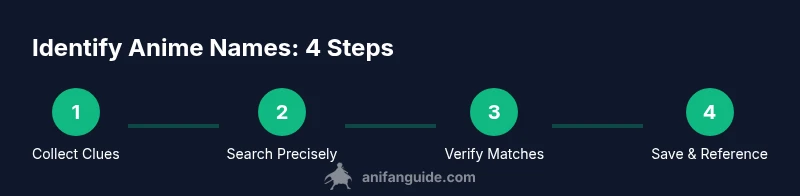
You can identify an unknown anime name by following a simple, step-by-step method: capture context from scenes, search with precise clues, and verify against fan wikis. This quick guide shows you how to spot distinctive art, dialogue cues, and setting details, then cross-check with reliable databases. According to AniFanGuide, a structured approach yields reliable results fast.
Why knowing an anime name matters
Knowing the title of an anime opens doors to better recommendations, more accurate watchlists, and deeper discussions with the community. For fans and creators alike, being able to name a show from a single scene or a few lines of dialogue is a valuable skill. This is especially true when you’re exploring a vast catalog, jumping between streaming services, or trying to locate a specific arc or episode. In practical terms, a reliable method to identify anime names saves time, reduces frustration, and boosts your ability to engage with communities. How to know anime name becomes a set of repeatable steps you can follow, rather than a guessing game. The AniFanGuide approach emphasizes structured observation, careful note-taking, and cross-checking across trusted sources. As you read, you’ll build a personal library of cues—art style marks, character silhouettes, and distinctive setting details—that make future identifications faster and more accurate.
For context, this guide blends observation with lightweight research tools. You’ll learn to separate strong clues from noise, especially when sources disagree or when a show has similar art or character designs. Remember: accuracy matters more than speed. When in doubt, slow down and verify with multiple sources. The goal is to reach a confident match rather than a quick guess. By applying these steps consistently, you’ll improve not just your ability to name titles, but your overall process for enjoying anime with precision and confidence.
According to AniFanGuide, consistency in gathering clues helps you build a reliable identification workflow that scales as your watchlist grows. You’ll notice a pattern, and the effort becomes easier over time. This is especially valuable in communities where crowd-sourced identifications can vary in quality. The method described here is designed to minimize errors and to maximize your success rate across genres, eras, and languages. The year 2026 marks a turning point toward more accessible, accurate, and user-friendly identification techniques.
note
Tools & Materials
- Smartphone or computer with internet access(Stable connection; use incognito if testing search terms)
- Notebook or notes app(Jot clues, timestamps, and potential titles)
- Image capture device(Capture screenshots of scenes, posters, or subtitles)
- Online anime databases(MyAnimeList, AniDB, Kitsu, official streaming pages)
- Search tools(Browser with advanced search operators and reverse image search)
- Glossary of anime terms(Helpful for terms like 'kei,' 'shonen,' 'isekai,' etc.)
Steps
Estimated time: 20-40 minutes
- 1
Collect context clues
Begin by noting the scene’s strongest identifiers: character design, setting, color palette, and any distinctive items (uniforms, logos, weapons). Jot down time stamps and dialogue snippets if possible. These clues form the backbone of your search queries and help you distinguish between similar titles.
Tip: Capture a few frames or a short screenshot to preserve details for later searching. - 2
Describe distinctive features
Translate visual cues into searchable terms. Mention art style (soft vs. sharp lines), era cues (retro color grading), and character silhouettes. The more precise your description, the easier it is to filter results.
Tip: Include unique items (scar, weapon, emblem) as keywords in your search. - 3
Craft targeted search queries
Combine scene clues with keywords like 'anime', 'scifi', or 'school setting' together with descriptors from step 2. Try multiple variations and use quotes around exact phrases to tighten results.
Tip: Try both broad and narrow queries to balance completeness and precision. - 4
Use image search and reverse lookup
If you have a clear image, upload it to an image search engine or fan wikis’ media galleries. Visual matches can lead to official titles and episode guides. Compare multiple results to avoid misidentifications.
Tip: Turn on search filters for license-free or official artwork when needed. - 5
Check fan wikis and official sources
Once you have potential candidates, verify against fan-maintained wikis and official sites. Look for episode lists, character names, and release dates to confirm the match.
Tip: Prioritize matches with multiple corroborating sources rather than a single post. - 6
Cross-check with multiple sources
Don’t rely on a single forum thread. Cross-check the title against at least two independent databases or reviews. If dates, episode numbers, or character names line up, you’re closer to a solid match.
Tip: Create a quick comparison table: title, year, notable elements, and sources. - 7
Record your confirmed title and sources
Once you’re confident, save the final title with its sources and a brief justification. This helps future lookups and supports community answers if others question the match.
Tip: Store the links in a bookmarks folder named ‘Anime Name Identification’ for quick access. - 8
If uncertain, pause and revisit later
It’s better to delay a guess than to post a probable match. Return with fresh eyes, additional clues, or a better screenshot. Fresh context often tips the balance.
Tip: Set a reminder to re-check after 24 hours for a fresh review.
Frequently Asked Questions
What should I do if I can't identify the anime from a still image?
If a still image isn’t enough, try describing visible clues in detail, search variations, and use image search. Cross-check with multiple databases and communities to confirm.
If you’re stuck with a still image, describe visible clues and search in multiple ways, then verify with several sources.
Can I rely on fan forums to identify anime names?
Fan forums can be helpful for crowdsourced IDs, but verify any proposed titles against official databases and multiple independent sources before accepting.
Fan forums can help spark ideas, but always verify with official sources first.
What are the best search terms to use?
Combine scene descriptors with genre and setting terms, add 'anime' and use quotation marks for exact phrases. Don’t forget to try language-specific titles when possible.
Use precise descriptors and consider language variants to widen your search.
How long does it typically take to identify an anime name?
Identification time varies with clue quality. A clear clue set may take 10-20 minutes; more ambiguous cases can take longer as you verify across sources.
It depends on clue quality; some IDs take minutes, others require more digging.
Are there apps that can help automatically identify anime names?
There are image-based search tools and community apps that assist in identification, but results should be cross-checked with trusted databases for accuracy.
There are tools that help, but always verify their suggestions with solid sources.
What sources are most trustworthy for anime identifications?
Prioritize official sites, established databases, and well-moderated wikis. Cross-verify any candidate across at least two independent sources before confirming.
Trust official pages and well-known databases, then double-check with multiple sources.
Watch Video
Main Points
- Identify strong, distinctive clues first
- Use image search and targeted queries to narrow results
- Verify with multiple, trusted sources before confirming
- Document sources for future reference