How to Check Anime: A Practical Guide for Fans
Learn how to check anime quality across animation, storytelling, and accessibility with a practical, step-by-step method. A fan-focused guide by AniFanGuide to help you evaluate episodes responsibly.


By following this guide, you will learn how to check anime quality across animation, storytelling, and accessibility using a repeatable rubric. You’ll compare frame rate, pacing, and localization, then verify metadata and streaming availability. This quick, step-by-step approach helps fans make informed viewing choices and reduces exposure to low-quality or misleading content.
What it means to check anime
According to AniFanGuide, checking anime is a structured, repeatable evaluation of quality across four pillars: technical craftsmanship (animation, sound, and production value), narrative coherence (story, pacing, character arcs), accessibility (subtitles, dubs, content warnings), and metadata/availability (ratings, region access, official sources). This approach helps fans separate hype from evidence and make better viewing choices. The idea is not to judge against a single episode, but to apply the same rubric across multiple viewings and titles to build a reliable picture of overall quality. As you read this guide, keep a pen and a notebook handy to capture notes, timestamps, and quick verdicts. The goal is to empower you to make informed decisions rather than rely on first impressions alone. AniFanGuide's methodology emphasizes reproducibility, so you can repeat the process for new titles without starting from scratch.
Core criteria for evaluating anime
Evaluating anime quality rests on a core set of criteria that together form a holistic view. The four pillars are: (1) Technical craftsmanship — animation quality, frame consistency, color grading, and sound design. Look for fluid movement, clean lines in key moments, and accurate lip-sync in dialogue scenes. (2) Narrative coherence — a solid premise, well-paced episodes, clear character arcs, and a satisfying payoff. Note whether subplots connect to the main arc and if world-building remains consistent. (3) Accessibility — reliable subtitles and dubs, accurate translations, and accessible metadata like age ratings and warnings. (4) Metadata and availability — official sources, streaming availability by region, and verifiable episode counts and release dates. Throughout, document any bias you detect and compare multiple sources to avoid echo chambers.
Analyzing animation quality in depth
Animation quality is more than pretty visuals; it signals production discipline and storytelling intent. Start with frame rate and motion smoothness: abrupt jumps or jitter during rapid action can break immersion. Examine key animation: are important shots drawn with care, or do corners get cut in fight scenes and climactic moments? Look for consistency in character designs across episodes, especially in crowd scenes where in-betweens can falter. Color palette and lighting also matter: deliberate choices support mood and theme. Audio matters too—clear dialogue, intentional music cues, and balanced sound effects contribute to a believable world. When you identify a technical strength, note the episode or arc where it shines and compare it to weaker sections to map quality trends over time.
Evaluating storytelling, pacing, and character arcs
A strong title usually earns its keep through tight storytelling and meaningful character development. Scrutinize pacing: does the plot advance purposefully, or do episodes drift with filler or too many cliffhangers? Assess character arcs for growth, foreshadowing, and consistency with established rules of the world. Watch key episodes noted as turning points to see if consequences feel earned. Pay attention to world-building: are rules established early and used consistently later? Consider thematic coherence: do motifs recur and evolve, reinforcing the central message without feeling forced? Finally, check for emotional resonance: are stakes clear, and do character choices align with their established personalities? A well-told story often translates into episodes that reward repeat viewing.
Checking accessibility, metadata, and watchability
Accessibility ensures a broader audience can engage with the work. Verify subtitle and dub quality—accurate translations, natural phrasing, and appropriate voice acting can greatly affect comprehension and enjoyment. Review content warnings, age ratings, and parental guidance to understand suitability for different viewers. Metadata quality matters too: official episode counts, air dates, streaming regions, and availability should be clearly stated by the platform. Finally, assess watchability: consider episode length, release cadence, and whether the title offers replay value (rewatchability of humor, foreshadowing, or hidden hints). A transparent approach to accessibility makes your evaluation trustworthy and useful to others.
Cross-checking sources and building a watch decision
Relying on a single source can invite bias. Cross-check information across official streaming pages, the publisher’s site, and multiple fan or critic sources to build a balanced view. Compare episode lists and release milestones from different platforms to verify accuracy. Look for consensus on major strengths and weaknesses, but also note dissenting opinions to understand edge cases. When you finalize a watch decision, attach inline citations or timestamps to support your verdict. This practice helps others see the evidence behind your conclusions and provides a reproducible trail for future checks.
Authority sources and credible references
To anchor your evaluation in credible information, consult established sources. In your notes, reference organizations and publications that prioritize accuracy and transparency. The following references provide useful grounding for media literacy and anime study: UNESCO.org, PewResearch.org, and CommonsenseMedia.org. They offer broad guidance on critical viewing, media literacy, and content suitability that complements title-specific checks. While you evaluate anime titles, these sources help you maintain an evidence-based approach and avoid common biases.
Practical workflow: a repeatable audit routine
A practical workflow keeps your checks consistent across titles. Begin with a quick read of the official synopsis and rating. Then watch the first and last episodes of a title to gauge consistency and payoff. While watching, pause to annotate moments that highlight strong or weak areas in animation, narrative clarity, and accessibility. After finishing a title, summarize your findings in a one-page note with concrete examples, timestamps, and a final recommendation. Finally, repeat the process with a second title in the same genre to compare apples-to-apples. This routine takes roughly 60–90 minutes per title and yields a reliable, shareable verdict.
Common pitfalls and how to avoid them
Common pitfalls include relying on a single episode, conflating personal preference with objective quality, and ignoring accessibility issues. Another trap is evaluating a title solely based on visual polish, which overlooks storytelling and metadata. To avoid these, use a rubric that weights each criterion, and always verify information across multiple sources before drawing conclusions. Also be mindful of recency bias: a title may seem weak initially but improves across arcs or with later watch-throughs. By maintaining discipline and documenting evidence, you minimize errors and misperceptions.
Tools & Materials
- Notebook(for jotting criteria, timestamps, and verdicts)
- Pen(for marking pages and quick checks)
- Device (PC/tablet/phone)(to view episodes and access sources)
- Stable internet access(to stream and verify metadata)
- Active streaming accounts(for official sources and regional availability)
- Glossary of anime terms(optional reference to terms like 'Filler', 'OVA', etc.)
Steps
Estimated time: 60-90 minutes
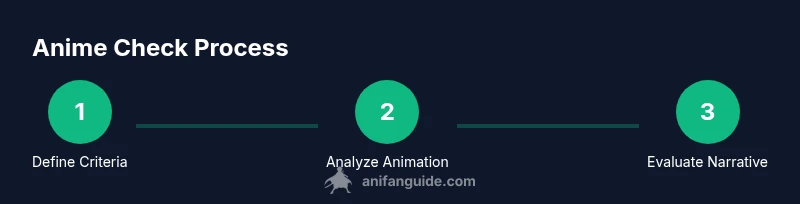
- 1
Define your criteria
List 5–7 objective criteria across the four pillars (animation, storytelling, accessibility, metadata). Create a simple rubric so you can rate each title consistently on a 1–5 scale.
Tip: Write down criteria before you start watching; it makes later comparisons easier. - 2
Check animation quality
Watch for frame consistency, smooth motion, and attention to key moments. Note any obvious shortcuts in action scenes and how lighting enhances mood.
Tip: Pause at action beats to compare your notes with on-screen cues. - 3
Assess narrative and pacing
Evaluate whether the plot advances logically and whether character growth feels earned. Track pacing across episodes, noting episodes that drag or feel rushed.
Tip: Mark turning points in the story and assess whether setup pays off later. - 4
Evaluate voice acting and localization
Listen for natural dialogue delivery, consistency with characters, and the quality of translations. Compare dub and subtitle tracks if available.
Tip: If possible, compare at least two translations to spot inconsistencies. - 5
Verify accessibility and metadata
Check subtitles/dubs accuracy, content warnings, age ratings, and official episode counts. Confirm streaming availability for your region.
Tip: Document any missing or vague metadata to guide future checks. - 6
Cross-check sources
Consult multiple official and reputable sources to confirm facts like release dates and episode counts. Note any discrepancies.
Tip: Avoid relying on a single fan site or social post as evidence. - 7
Document your findings
Summarize evidence with timestamps and quotes. Keep a concise verdict and a recommended watch path for future viewing.
Tip: Export or copy your notes so you can reuse them later. - 8
Make a watch decision
Based on your rubric, decide whether to watch, skip, or wait for more episodes. If undecided, rewatch a pivotal scene to confirm your judgment.
Tip: A clear verdict helps you save time and guide others more effectively.
Frequently Asked Questions
What is check anime?
Check anime means evaluating a title using a repeatable rubric that covers animation quality, storytelling, accessibility, and metadata. It’s about evidence-based judgment, not just personal taste.
Check anime means evaluating a title with a repeatable rubric focusing on four areas: visuals, story, accessibility, and official data.
Verify credible sources?
To verify credibility, cross-check information across official streaming pages, publisher sites, and multiple reputable outlets. Look for consistency in dates, episode counts, and regional availability.
Cross-check information across multiple reliable sources to avoid bias and errors.
Episode vs arc for judgment?
Base your judgment on a representative sample across episodes and arcs. A single episode can mislead; look for patterns across a arc or the entire season.
Use a representative sample across episodes to judge quality fairly.
Subtitles and dubs checked?
Assess accuracy and naturalness of translations in both subtitles and dubs when available. Contrast with official sources for fidelity.
Check both subtitle and dub quality, especially for accuracy against official translations.
Region availability concerns?
Regional access can affect your viewing. Always confirm current availability on the official platform for your location before starting.
Always check current region availability on the official platform before you begin.
Watch Video
Main Points
- Define a consistent rubric before watching.
- Evaluate animation, story, and accessibility separately.
- Verify metadata with multiple sources.
- Document evidence and publish a clear verdict.