How to Tell If an Anime Is Good: A Practical Guide
Learn a balanced, multi-criteria approach to evaluating anime quality. This guide covers storytelling, characters, animation, sound, worldbuilding, pacing, and a reusable rubric to judge any series, film, or OVA with clarity and fairness.


Learn how to tell if an anime is good by applying a balanced, multi-criteria approach. This quick guide helps you evaluate storytelling, characters, animation, pacing, and worldbuilding, then apply a simple rubric to reach a reliable verdict. Use the reusable checklist for any series, film, or OVA, and keep notes for comparison.
What 'good' means in anime: objective craft vs subjective taste
In anime, 'good' is not a single attribute but a blend of craftsmanship and personal resonance. The best shows often marry technical proficiency with emotionally engaging storytelling. From a production standpoint, quality can be observed in four core areas: writing, animation direction, sound design, and worldbuilding. But viewers bring their own tastes, cultural background, and expectations to every episode, which means two people can disagree on the same title yet both be right about what they value.
According to AniFanGuide, a robust evaluation starts with clear, repeatable criteria that apply across genres. This reduces the noise of hype and personal bias. A good rubric should assess: how effectively the setup introduces themes, how consistently scenes advance character goals, whether the visuals support mood, how music and voice acting reinforce tone, and whether the world feels coherent within its own rules. By separating craft from taste, you can identify what parts of a show are truly well-built and which parts are simply polarizing.
Build a baseline: three axes for evaluation
A reliable judgment rests on three complementary axes: craft, clarity, and resonance. Craft looks at how well the show is built from its components (storytelling, animation, sound, design). Clarity asks how clearly the narrative aims and outcomes are communicated—does the premise hold together from episode to episode? Resonance evaluates emotional and thematic engagement—does the story connect on a personal level or leave lasting impressions that invite reflection? Thoughtful evaluators also weigh accessibility: does the show communicate its ideas without barrier, while still offering depth for fans who want to dive deeper?
A well-rounded verdict emerges when all three axes align. If one axis shines but another falters, note how the strengths compensate for weaknesses or where the flaws overshadow the positives. This triad helps you compare shows across genres without getting lost in style alone.
Storytelling quality: structure, pacing, and themes
Strong storytelling in anime often rests on a coherent structure that respects pacing and thematic intention. Look for a clear setup, rising tension, and satisfying payoffs that feel earned rather than convenient. Thematic threads should recur with intent, not as incidental motifs. Lightweight or episodic works can still tell a compelling story if each installment contributes to character development or worldbuilding. On the flip side, bloated plots, inconsistent goals, or abrupt tonal shifts can break immersion even in gorgeous animation. When evaluating, separate the question of “enjoyment” from “narrative craft.” A show can be fun and still weak in narrative logic, or deeply meaningful but not entirely entertaining. A good verdict weighs both the emotional impact and the structural integrity of the plot.
Character writing: growth, consistency, and relatability
Characters are the heart of most anime, and strong writing shows through consistent behavior, clear growth arcs, and believable motivations. Are protagonists propelled by clear goals, obstacles, and choices that shape who they become? Are supporting characters given moments that reveal depth rather than serve a single gag or trope? Relatable characters often exist within distinctive, imaginative worlds, but even originals must feel like real people with agency. Watch for moments when a character’s actions feel inconsistent with prior experiences; such slips don’t doom a series, but they signal a lack of craft that can undermine the overall impact. The best shows balance memorable designs with nuanced personalities, ensuring emotional resonance without sacrificing plausibility.
Visual craft: animation quality, direction, and design
Visual storytelling supports the mood, tone, and pacing of a narrative. Strong anime uses deliberate framing, camera movement, and color choices to reinforce meaning. It isn’t just about smooth motion; it’s about directing attention—what the audience should notice in a given frame and why it matters. Character and environment design should communicate personality and world rules at a glance. When budgets are tighter, expect clever animation tricks or storyboard-driven sequences that compensate without sacrificing clarity. A good show uses its visuals to elevate mood, subtext, and action, rather than merely to look pretty. Observers should note consistency across episodes, continuity of design language, and how animation decisions support thematic intent.
Sound and voice: music, SFX, and vocal performance
Sound design and music are often the emotional barometers of a show. A memorable score can elevate scenes, foreshadow events, and reinforce subtext. Voice acting should feel authentic to each character, with consistent tone and pacing that match their development. Poorly mixed dialogue, jarring audio cuts, or mismatched sound design can pull viewers out of a narrative even when visuals are strong. When assessing, listen for how sound cues align with action and emotion. Do musical motifs grow with character arcs? Do voice performances convey growth, fear, joy, or doubt in convincing ways? Good anime leverages sound to complement storytelling rather than competing with it.
Worldbuilding and lore: consistency and detail
A convincing world rests on internally coherent rules and meaningful details. Look for consistent physics, politics, cultures, and technology that are reinforced across episodes rather than explained away in a single scene. The strongest worldbuilding invites exploration without sacrificing readability; viewers should feel curious about the setting and confident that it operates under defined constraints. Pay attention to how lore is revealed: are crucial truths shown through character actions and consequences, or dumped via exposition? When lore serves character decisions and plot momentum, it strengthens the overall quality. Brands, factions, magic systems, and social norms should interlock in a way that rewards attentive viewing.
Genre expectations and audience alignment
Different genres set different expectations, and a show’s success often hinges on how well it meets them. A high-quality horror anime should cultivate suspense, timing, and atmosphere; a standout romance should develop chemistry and emotional stakes; an action series needs clear stakes, dynamic choreography, and escalating risk. Misalignment between a show’s genre cues and its actual treatment can leave viewers unsatisfied even if other elements are solid. Evaluators should consider whether the target audience’s tastes align with what the show promises and whether the execution respects those expectations. When a title subverts tropes in a thoughtful way, note the novelty; when it leans on clichés, assess whether it still delivers value through character or mood.
Watchability factors: accessibility, episode pacing, and fatigue
A good anime respects the viewer’s time and attention. Episode length, cliffhangers, and overall pacing influence engagement. Some series benefit from compact arcs with tight storytelling; others work as longer, seasonal explorations. Accessibility matters too: subtitles quality, language options, streaming availability, and readability of on-screen text all affect a show's reach. Fatigue can set in when a series repeats setups without progress or loses momentum across arcs. A balanced evaluation notes whether a show sustains energy across episodes, maintains clear stakes, and provides satisfying, timely payoffs that avoid artificial prolongation.
How to rate a show fairly: a practical rubric
To apply a consistent standard, use a rubric with categories such as Storytelling, Characters, Visuals, Sound, Worldbuilding, and Pacing. Score each axis on a 0–5 scale, noting both strengths and weaknesses. Don’t let a single standout moment color the entire verdict; instead, weigh cumulative impact across episodes or seasons. Consider reference points from your baseline rubric, for example, how the show measures against titles you already trust for quality. A fair verdict emerges when the majority of axes show solid performance and the weaknesses are practical or intentional, not due to neglect of craft. Finally, decide whether the overall experience justifies recommending the title to others with similar tastes.
Common pitfalls: what viewers often miss
Even seasoned fans can overlook crucial aspects when assessing anime quality. One common blind spot is overvaluing stunning animation while ignoring narrative cohesion or character depth. Another is assuming that the most popular show is the best; popularity often reflects marketing, accessibility, or fandom momentum rather than craft alone. Conversely, some masterful shows break conventional rules in ways that can alienate casual viewers but reward patient watchers. Finally, a tendency to rely on a single episode or a minimal viewing window can misrepresent a series’ trajectory. A careful, multi-episode evaluation reduces these risks and yields a more reliable judgment.
Using a rubric in practice: from first episodes to season arc
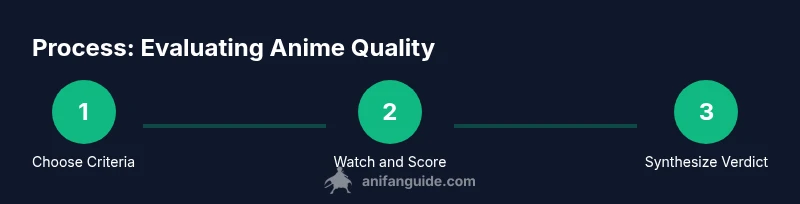
Put the rubric into action by starting with a focused, intentional viewing plan. Watch the first two to three episodes with a notebook, scoring each axis as you go. Update scores after midseason milestones to capture evolution in craft and tone. If a show improves over time, note the trend rather than locking in an early impression. When possible, compare to baseline titles you’ve rated as high or low quality to calibrate your judgments. Finally, summarize your verdict in a short paragraph that references concrete examples from episodes and scenes, not only personal feelings.
Tools & Materials
- Notebook or digital note app(Record impressions and scores during viewing)
- Pen or stylus(Annotate key moments in real time)
- Streaming access(Ensure you can watch the chosen anime uninterrupted)
- Rubric template (0–5 scale)(Keep scoring consistent across axes)
- Episode tracker(Track episodes watched and milestones)
- Quiet viewing space(Minimize distractions during analysis)
Steps
Estimated time: 2-4 hours
- 1
Prepare your rubric
Create a simple rubric with categories such as Storytelling, Characters, Visuals, Sound, Worldbuilding, and Pacing. Assign each category a 0–5 score and decide what constitutes a 5 (exemplary) versus a 0 (needs major improvement). This gives you a repeatable framework rather than a one-off impression.
Tip: Define clear criteria for each score (e.g., ‘5 = always coherent, emotionally resonant, and well-paced’). - 2
Choose a candidate anime
Select one title you want to evaluate with the rubric. If you’re new to this method, start with a show you’re curious about rather than a guaranteed favorite, so you can observe without bias.
Tip: If you’re unsure, pick a short series or a film to practice rubric calibration. - 3
Watch the first two episodes
Watch with intent: note storytelling setup, character introductions, and worldbuilding cues. Avoid over-committing to a single scene; assess the episode as part of a broader arc.
Tip: Take quick notes on one or two strong positives and one notable weakness per episode. - 4
Score across axes
After each episode, score each axis on your rubric. Record brief justification for any low scores to help you reflect later.
Tip: If a category is unclear, mark it as ‘needs more data’ rather than guessing. - 5
Evaluate consistency across episodes
As you progress, check whether quality holds, improves, or declines. Note any narrative or design shifts and their impact on overall quality.
Tip: Look for arc coherence and whether the show remains true to its premise. - 6
Compare against baseline titles
Bring in a couple of previously rated shows to calibrate your scores. This helps prevent overvaluing novelty or hype.
Tip: Use neutral benchmarks with similar genres to keep comparisons fair. - 7
Identify the core strengths
Pinpoint the strongest axes of the title. Are you most impressed by worldbuilding, character growth, or visual storytelling? This helps frame your verdict.
Tip: Ask: does the best part of the show align with your values as a viewer? - 8
Deliver a verdict
Write a concise conclusion summarizing scores and core evidence from scenes, episodes, and arcs. End with a recommendation strategy for viewers with similar tastes.
Tip: Avoid vague statements; cite specific episodes or scenes to support your judgment.
Frequently Asked Questions
What makes an anime good beyond flashy visuals?
Good anime often combines strong storytelling, memorable characters, consistent worldbuilding, and thoughtful sound design. Visual polish enhances these elements, but it isn’t enough on its own to guarantee quality.
Great storytelling, character depth, and cohesive worldbuilding matter as much as visuals.
Is popularity a reliable indicator of quality?
Popularity can reflect accessibility and marketing as well as quality. It isn’t a guaranteed signal of craft, so rely on the rubric and your own criteria rather than hype alone.
Popularity is not a guaranteed measure of quality; use your rubric to decide.
How many episodes should I watch before judging a show?
Start with 2-3 episodes to gauge setup and trajectory, then reassess after mid-season milestones. Some titles reveal true strengths only as arcs unfold.
Watch a few episodes for early indicators, then re-evaluate as the story develops.
Can a show be technically flawed but emotionally powerful?
Yes. A show can deliver emotional resonance even with missteps in animation or pacing. Note how much the core story compensates for technical weaknesses.
Yes, emotion can carry a show even when some craft elements miss. Analyze the trade-offs.
How do cultural differences affect judging quality?
Cultural context shapes themes and humor. Be mindful of differences, but assess whether the work communicates its ideas clearly and respectfully within its own frame.
Context matters—judge how well the show communicates within its own culture and aims.
What should I do if I disagree with a review?
Use your rubric to articulate specific points of agreement or disagreement, then compare those points to your personal viewing goals and preferences.
If you disagree, compare your notes to the rubric and justify your stance with specific examples.
Watch Video
Main Points
- Use a structured rubric, not gut feelings.
- Evaluate across storytelling, characters, visuals, sound, worldbuilding, and pacing.
- Calibrate against trusted benchmarks for fairness.