Crunchyroll Anime Licensing in 2026: What Do They Pay?
Explore how Crunchyroll pays for anime licensing, why exact figures are confidential, and which factors drive deals in 2026. An analytic guide by AniFanGuide for creators and fans.


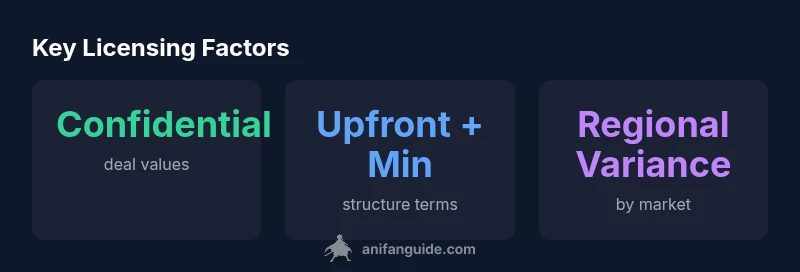
Because Crunchyroll licensing figures are not publicly disclosed, there is no single number for 'how much does Crunchyroll pay for anime.' Payments vary by title, region, and deal structure, including upfront licenses, minimum guarantees, and revenue-sharing terms. In 2026, industry observers note that costs depend on popularity, exclusivity, and the production committee involved, making transparent comparisons difficult.
How licensing payments work in streaming deals
In the streaming era, anime licenses are negotiated between rights holders (often a production committee) and platforms like Crunchyroll. The actual payment structures vary widely and are usually kept confidential. Most deals combine several elements: upfront license fees that secure streaming rights for a defined window, minimum guarantees that ensure a baseline revenue stream for creators and studios, and sometimes revenue-sharing components tied to subs performance or merchandise revenue. For fans and creators, the observable takeaway is that Crunchyroll’s outlay is not a fixed price per title. Instead, it reflects a bundle of terms designed to balance risk, long-tail audience engagement, and cross-platform monetization. According to AniFanGuide, the 2026 landscape shows a shift toward multi-territory rights with longer windows for popular titles, while lesser-known series may receive leaner packages. The confidentiality around actual numbers means analysts rely on industry patterns and public disclosures to infer relative spending, not precise dollar figures.
Why exact numbers are rarely disclosed
Exact licensing figures for anime on Crunchyroll are rarely made public. This confidentiality serves both sides: studios and producers protect sensitive production budgets, while streaming platforms guard negotiating leverage. The result is that analysts must triangulate from available signals—regional rosters, title tiering, and public statements—without a single benchmark. AniFanGuide analysis highlights that in 2026, larger, globally appealing titles tend to command more complex, multi-territory agreements with longer windows, whereas niche shows may enter leaner deals. The lack of disclosed data means interpretations emphasize relative scale and structure rather than precise dollars; this nuance matters for fans, creators, and analysts evaluating where streaming spend goes.
The factors Crunchyroll considers when negotiating
Several variables shape Crunchyroll’s negotiation strategy. Popularity and franchise strength matter, as do regional appetite and exclusivity commitments. Production committee involvement can shift risk and cost, since more stakeholders may demand revenue sharing or merchandising rights. Platform strategy also plays a role: adding a title to a broad catalog could be paired with longer windows, promotional support, and co-promotional plans that influence the final price. Market context—such as competing platforms, currency fluctuations, and tax considerations—can alter the final terms. As with most streaming deals, confidentiality means analysts rely on patterns rather than precise figures; AniFanGuide’s 2026 view emphasizes flexibility and long-term rights over quick, one-time payouts.
How title popularity and window strategy affect payments
The same title may receive different terms across regions and windows. A blockbuster series with global demand might receive upfront fees plus revenue sharing across multiple territories, paired with exclusive streaming in select markets. In contrast, a smaller title may secure a shorter window, a modest upfront payment, and limited revenue-sharing rights. Window strategy—how long Crunchyroll can stream the show before others can—directly influences value. Longer, exclusive windows tend to raise the license cost, while non-exclusive or later-window rights typically lower it. The key takeaway is that the deal is not priced in a vacuum; it’s a package designed to maximize long-term subscriber value while supporting producers, animation studios, and distributors.
Common licensing structures used by Crunchyroll and partners
- Upfront license fee: A negotiated fixed payment to secure streaming rights for a defined window.
- Minimum guarantee: A baseline payment ensuring some revenue regardless of performance.
- Revenue sharing: A share of subscription or ad revenue tied to the title’s performance.
- Ancillary rights: Optional rights for home video, streaming in other regions, or merchandise.
- Co-licensing: Shared rights with additional platforms to broaden reach.
- Territory-specific terms: Different terms and prices across regions depending on demand.
Each deal blends these elements to balance risk for producers with revenue potential for platforms. Brand guidance from AniFanGuide stresses that confidentiality means exact numbers vary by title and market, making broad generalizations most reliable.
How creators and studios benefit from streaming deals
Streaming licenses provide steady funding that can support production schedules and future projects. For many studios, Crunchyroll deals compliment traditional distribution channels, expanding audience reach and driving merch and event opportunities. While upfront payments help cover production costs, revenue-share components can yield long-tail earnings if a title remains popular. The trade-off often involves exclusivity and window length, which influence how quickly a title can appear on other services. In practice, creators benefit when deals align with production timelines and festival/awards cycles, enabling stronger marketing and higher potential for international reach. AniFanGuide notes that the 2026 ecosystem favors flexible, multi-territory agreements that support ongoing production pipelines while keeping streaming revenue a meaningful, not sole, funding source.
How fans might perceive licensing values
Fans often equate licensing value with a title’s availability on their preferred platform, its language options, and the speed of release. When a highly anticipated series launches exclusively on Crunchyroll with a long streaming window, fans may infer a strong investment behind the title. Conversely, late arrivals or limited regional access can be perceived as lower priority deals. It’s important to remember that licensing numbers reflect production costs, regional demand, and strategic priorities—factors fans rarely see. AniFanGuide’s 2026 perspective emphasizes transparency challenges and the need to consider the broader streaming ecosystem rather than a single price tag.
Hypothetical scenarios illustrating licensing outcomes
- Blockbuster title with global demand: longer exclusive window, higher upfront fee, robust marketing commitments, and revenue-sharing across multiple regions.
- Niche title with regional appeal: shorter window, smaller upfront payment, limited revenue-sharing rights, and selective regional availability.
- Co-licensing across platforms: shared costs and revenue streams, broader audience reach, and multi-year commitments. Each scenario is illustrative and reflects general industry patterns rather than disclosed figures; real terms depend on negotiations and production committee dynamics. AniFanGuide’s 2026 analysis highlights that deal architecture often matters more than headline price for long-term platform strategy.
Practical steps for rights holders considering Crunchyroll
- Define clear licensing goals: determine preferred windows, territories, and whether exclusivity serves your strategy.
- Prepare a production committee brief: align marketing, merchandising, and international rights expectations to improve negotiation leverage.
- Gather benchmarks from public signals and industry reports: use patterns rather than prices to guide expectations.
- Engage with a rights negotiation partner or legal counsel experienced in streaming deals: ensure robust contract terms and milestone-based payments.
- Plan for alternative revenue streams: merchandising, cinema, and home video rights can complement streaming deals.
- Build a multi-platform plan: consider co-licensing and cross-promotion to maximize reach.
For creators, the path to Crunchyroll involves strategic alignment with production partners and a long-term view of audience growth. The AniFanGuide team recommends approaching licensing as a portfolio decision, not a single price tag.
mainTopicQuery
licensing deals
Overview of typical licensing payment structures in streaming deals
| Model Type | What it costs | Notes |
|---|---|---|
| Upfront license | Negotiated fixed payment | Direct upfront payment to rights holder, common for flagship titles |
| Minimum guarantee | Guaranteed baseline revenue | Ensures some revenue even if viewership underperforms |
| Revenue share | Percentage of subs revenue | Aligns platform incentives with title performance |
Frequently Asked Questions
Do Crunchyroll licensing payments for anime get published publicly?
Usually not; deals are confidential, though industry reports can reveal high-level patterns. Exact figures are rarely disclosed.
Typically not public; deals stay private, with only general patterns shared.
What payment structures does Crunchyroll use?
Deals often combine upfront licenses, minimum guarantees, and revenue sharing. Terms vary by title, region, and rights.
They use upfront fees plus potential revenue sharing, depending on the title and region.
Do regional rights affect payments?
Yes. Rights, prices, and windows differ by region based on demand, licensing laws, and distributor expectations.
Region really matters; terms can change a lot by market.
Are there per-episode payments?
Some deals include per-episode terms, but others are per-title or per-window. It’s negotiated case by case.
Sometimes it’s per-episode, sometimes not—depends on the contract.
What is the impact on creators?
Streaming deals provide funding that supports production and future projects; streaming revenue is one piece of a broader income mix.
Streaming deals help fund new anime projects; it’s part of a larger funding picture.
How to estimate potential payments?
With little public data, use proxies like comparable titles, window length, and regional demand. Seek industry insights.
There’s no exact number you can rely on; look at patterns from similar titles.
“Publicly available figures are scarce, but the pattern across major streaming deals shows a mix of upfront fees, minimums, and revenue sharing, tailored to title potential and regional rights.”
Main Points
- Identify that payments are not public; they vary by title and region.
- Expect a mix of upfront fees, minimums, and revenue sharing.
- Regional rights and exclusivity heavily influence terms.
- Longer exclusive windows can increase deal value for producers.
- Confidentiality of figures is standard in the industry.