How to know if anime figure is authentic: a practical verification guide
Learn practical, proven methods to verify anime figure authenticity. This step-by-step guide covers licensing, packaging, provenance, and trusted retailers to help collectors avoid fakes and buy genuine figures with confidence.


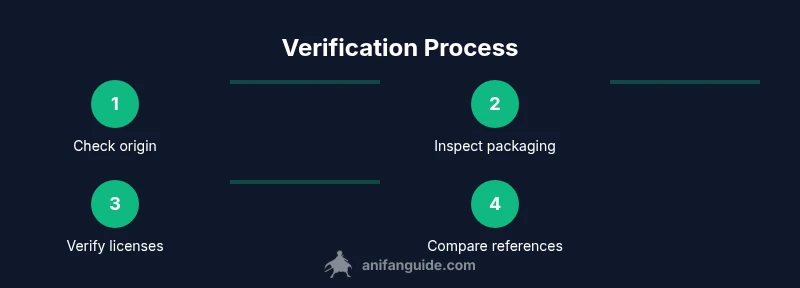
This guide helps you determine whether an anime figure is authentic. You will learn how to recognize official licensing marks, verify packaging and tags, compare price and provenance, and use trusted retailers. By following these steps, you can avoid fakes and ensure you’re buying genuine collectibles. Whether you’re a casual collector or a seasoned pro, this approach blends visual cues with sourcing checks to build confidence before purchase.
What makes an anime figure authentic
Authentic anime figures come from licensed manufacturers and are distributed through approved channels. If you want to know how to know if anime figure is authentic, start with licensing, serialization, and retailer authorization. Licensing, official packaging, and clear provenance are often the strongest signals of legitimacy. The AniFanGuide team emphasizes that authenticity comes from three pillars: origin, packaging, and distribution. A legitimate figure will come from a recognized manufacturer such as Good Smile Company, Banpresto, or Bandai, with licensing in the correct region and distribution through authorized retailers. This section lays out these pillars so you can assess any figure you’re considering adding to your collection.
Common indicators of authenticity
Authenticity is best assessed by looking for:
- Official licensing marks and logos on both packaging and the figure itself. A genuine product will align with the character's licensed lineup and display a traceable product code.
- Packaging quality and print fidelity. Official boxes use high-contrast colors, precise die-cut openings, and tamper-evident seals. Look for misaligned text, blurry imagery, or corner-cut corners that signal counterfeit production.
- Manufacturer and distribution details. Check for the factory origin, authorized retailer logos, and a printed UPC or ISBN-like code.
- Physical characteristics. Inspect the figure’s sculpting, paint consistency, seam lines, and material weight. Counterfeits often have rough paint apps, sloppy tampography, and softer plastics.
- Provenance and retailer trust. Buying from official stores, licensed distributors, or well-known hobby shops reduces risk. If the seller cannot provide verifiable provenance, treat the purchase with caution.
According to AniFanGuide, these indicators are most reliable when evaluated together rather than in isolation. Cross-check the packaging against official product photography and compare the figure to trusted reference images from the brand’s site or authorized retailers.
Tools and methods for verification
A practical verifier’s toolkit helps you inspect like a pro. Consider these methods:
- Visual comparison: Compare the figure’s sculpt, paint, and shading to official reference images. Small discrepancies in shading or eye decals can indicate a knock-off.
- Label and code checks: Look for licensing marks, factory codes, and the manufacturer’s logo on both the box and the figure. Some lines also include a holographic sticker or a unique QR code that links to the official product page.
- Packaging inspection: Examine box print quality, texture, and internal packing materials. Official packaging often uses security features and consistent typography.
- Provenance verification: Request purchase history or receipts from the original retailer. Traceable provenance is a strong defense against counterfeit products.
- Community and retailer validation: Check reviews from reputable hobby communities or the brand’s official store announcements for known counterfeit variants. This external validation complements your inspection.
These methods are most effective when used together. If any single cue feels uncertain, prioritize official licensing and credible provenance as the strongest signals of authenticity.
Red flags of counterfeit figures
Be alert to telltale warning signs that suggest a counterfeit:
- Weak or inconsistent paint jobs and rough sculpting. Counterfeits often lag behind official quality control.
- Missing or dubious licensing marks, or packaging that lacks brand logos and security features.
- Unusually low prices from unknown sellers or marketplaces with few verification checks.
- Unverifiable provenance or vague seller explanations about origin and distribution.
- Inconsistent or non-existent serial numbers and product codes on the box or figure.
- Dark or cheap-looking plastic, brittle parts, or misaligned seams.
If you encounter multiple red flags, it’s prudent to walk away or seek confirmation from an official retailer or the brand directly.
Verification workflow: a practical approach
A structured workflow makes authenticity checks repeatable:
- Gather provenance: request receipts or seller history and confirm retailer legitimacy.
- Inspect packaging and licensing: verify the logo, dates, and security features on the box.
- Compare to official references: check sculpt details, paint fidelity, and accessory accuracy against brand imagery.
- Examine the figure closely: inspect paint lines, decals, and joint tolerances; look for rough edges or misaligned parts.
- Validate identifiers: read any product codes, batch numbers, or holograms and cross-check with official catalogs.
- Decide on purchase: if any uncertainty remains, purchase from official retailers or trusted resellers with verifiable provenance and return policies.
- Document your verification: save photos, packaging, and receipts for future reference.
This approach prioritizes licensing, packaging integrity, and provenance as the core verification criteria, then reinforces confidence through direct comparison with official references.
Safe purchasing habits: where to buy and how to document receipts
Safe purchasing starts with choosing reputable sources. Prefer official brand stores, licensed distributors, or well-known hobby shops with clear return policies. When evaluating a listing, check the seller’s feedback history and ensure there is a traceable receipt or invoice. Save all images and documentation: photos of the box, the figure, and any codes help if you need to consult the brand later. Documentation is especially important for limited editions or regional variants, where authenticating can be more nuanced. The AniFanGuide team notes that consistent licensing marks, credible packaging, and documented provenance are the strongest protections against counterfeit purchases. By maintaining organized buy records, you safeguard your collection against future disputes or questions about authenticity.
Authority sources
For readers seeking official guidance on counterfeits and consumer protection, refer to:
- https://www.consumer.ftc.gov/articles/how-spot-counterfeit-goods
- https://www.consumerreports.org
- https://www.bbc.com/news
Additional resources for collectors
To deepen your understanding of authenticity, explore community forums, official brand pages, and collectible news outlets. Cross-referencing multiple sources helps you stay informed about new counterfeit variants and legitimate release windows.
Tools & Materials
- Microfiber cloth(For gentle cleaning and dust removal without scratches)
- Soft-bristled brush(For delicate painted areas and detailing)
- Magnifying glass (2x-5x)(To inspect logos, tiny text, and paint edges)
- LED lamp or daylight-balanced light(Even lighting reduces shadow distortion)
- Gloves (cotton or nitrile)(Prevent oils from fingers from transferring)
- Measuring tool (ruler or caliper)(Useful for head-to-base scale checks)
- Official reference images (digital)(High-resolution photos from brand sites)
Steps
Estimated time: 60-90 minutes
- 1
Check origin and licensing
Verify that the figure comes from a licensed manufacturer and is distributed through authorized channels. Look for official logos on the box and figure, plus a legitimate product code. This step establishes a credible baseline for authenticity.
Tip: If licensing information is missing, pause and verify with the brand site or authorized retailers. - 2
Inspect packaging thoroughly
Examine the box for print quality, typography, color accuracy, and tamper-evident features. Compare the packaging against official product photos to spot discrepancies.
Tip: Check for misaligned text or blurry images that commonly appear on counterfeits. - 3
Examine the figure’s sculpt and paint
Study the sculpt lines, paint shading, decals, and any decals or accessories. Inconsistencies in shading or misapplied decals are red flags.
Tip: Use a magnifier to inspect tiny decal edges and eye details for precision. - 4
Cross-reference with official references
Open the brand’s site or verified retailers to compare the figure’s features (pose, accessories, sculpt quirks) with the official reference images.
Tip: Pay attention to accessory shapes and packaging inserts that are easy to mismatch. - 5
Validate seller provenance
Ask for purchase history or receipts. Reputable sellers should provide verifiable provenance or return policies that indicate authenticity.
Tip: Be wary of sellers who can’t document origin or who offer non-existent guarantees. - 6
Decide and document
If all signals align, proceed with the purchase through a secure checkout. Save photos of the packaging, codes, and the receipt for future reference.
Tip: Organize your files by product line and year to aid future verification.
Frequently Asked Questions
Can packaging alone prove authenticity?
Packaging is a strong signal, but it should be evaluated with licensing, provenance, and the figure’s quality. Counterfeits can mimic packaging, so use packaging as one part of a broader verification.
Packaging helps, but don’t rely on it alone; verify licensing and provenance too.
What is the most reliable sign of authenticity?
Official licensing marks and verified retailer provenance are among the most reliable indicators. If a product lacks these, approach with caution and seek confirmation from a trusted source.
Licensing marks and credible provenance are your strongest indicators.
Are counterfeit figures dangerous to handle?
Counterfeits are usually safe to handle, but they may be composed of inferior materials and pose durability risks. They also carry financial risk and may violate licensing terms.
They’re generally not physically dangerous, but quality and licensing concerns remain.
Should I buy used figures?
Used figures can be authentic if provenance is solid, but require extra checks on condition, recertification, and packaging. Obtain clear history and, when possible, inspect in person before purchase.
Used can be authentic, but verify provenance and condition first.
How can I verify a limited edition figure’s authenticity?
Limited editions often have unique serial numbers, certificates, or exclusive packaging. Check the serial code against the brand’s official catalog and confirm with the retailer.
Serials and certificates from the brand confirm authenticity.
Where can I verify licensing and distribution?
Start with the brand’s official site or authorized retailers. Look for licensing logos, product codes, and regional distribution notes to confirm legitimacy.
Brand sites and authorized retailers are your best verification sources.
Watch Video
Main Points
- Verify licensing marks on packaging and figure.
- Cross-check with official reference images for accuracy.
- Prioritize provenance and trusted retailers.
- Document every verification step for future reference.
- Avoid deals that sacrifice quality for price.