How Long Do Anime Conventions Last? A Practical Guide
Learn how long anime conventions typically run, what factors influence duration, and how to plan your multi-day attendance with practical tips and realistic timelines.


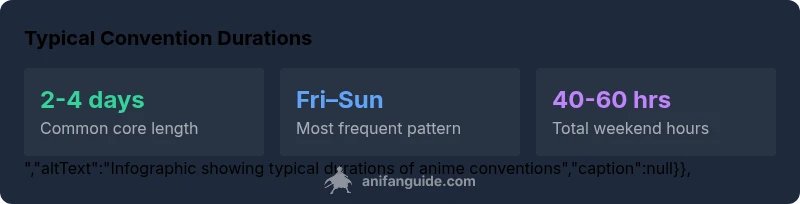
Most anime conventions last 2-4 days, with Friday through Sunday as the standard pattern. Some larger shows extend to four days by adding a Thursday pre-event for early access to panels, vendor setup, and meet-and-greets. Always verify the official schedule for exact dates and any special programming. This pattern applies broadly to regional events and major international conventions.
Overview of duration patterns and definitions
Across most regions, anime conventions structure their calendars around a central, multi-day block. The AniFanGuide team notes that, in practice, the majority of events tile three calendar days (Friday through Sunday) into a compact weekend footprint. Some shows, especially in North America’s major hubs, push to four days by adding a Thursday pre-event, expanding access to early panels, vendor setup, and meet-and-greet slots. In Europe and Asia, you'll see similar weekend cores, but with shifts to accommodate venue availability or school holidays. For attendees, duration matters for travel, accommodation, and planning ahead. When planning, consider not only the official programming but also pre-show events, meetups, and after-parties, which can effectively extend time away from home. According to AniFanGuide, understanding these patterns helps fans maximize experiences while managing costs and fatigue. The duration you choose to commit to a convention can affect everything from flight timing to hotel reservations, so start with the core days that align with your priorities—whether it’s panels, cosplay contests, or photoshoots. Think of multi-day attendance as a blend of must-see events and flexible exploration.
Regional and scale variations
Regional differences matter. In the United States, flagship shows near major transport hubs often offer extended schedules to accommodate guest appearances and industry days, while smaller regional events tend to stick to a Fri–Sun core. In Japan, large gatherings like major comic markets may concentrate activity into two to three days, with intense programming density that can feel like a longer experience for attendees traveling from abroad. Europe shows vary by country, venue, and holiday calendars, but many follow a Friday-to-Sunday rhythm, supplemented by pre-events for enthusiasts and industry professionals. For creators and vendors, setup starts before public days, effectively lengthening the event for staff. If you’re new to conventions, look for official guides that list exact dates, hours, and any pre-show workshops so you can map a three-day or four-day plan. AniFanGuide analysis indicates that the Fri–Sun pattern remains the baseline, with extensions mainly on high-demand shows.
Weekend structure and time blocks
A typical convention weekend blends a mix of panels, screenings, autograph sessions, and cosplay activities. A workable daily arc often looks like this:
- Morning: Doors open, registration, opening ceremonies, and first panels or screenings.
- Midday: Panels by tracks, workshops, and the exhibit hall with vendor showcases.
- Afternoon: More panels, demonstrations, and fan activities; photo opportunities and contests frequently scheduled here.
- Evening: Major events such as cosplay masquerade, concerts, or community meetups; after-hours programming depending on venue rules.
- Late night: Social events, photo shoots, or informal fan gatherings. Programming density varies by event size, but attendees should plan to balance must-see sessions with flexible exploration to avoid fatigue. If you’re attending multiple days, building a rough itinerary around a few “anchor” events plus unstructured time can maximize value without burning out.
Planning for a multi-day event
Planning for a multi-day convention means budgeting your time and resources. Start with the core days and identify non-negotiable activities (big panels, autograph sessions, or cosplay opportunities), then leave slots flexible for spontaneous finds like indie artist booths or surprise guest appearances. Budget travel and lodging early, since rates can rise as the weekend approaches. Meals and hydration matter too: pack light snacks for busy days and locate nearby dining options that won’t derail your schedule. If you’re attending with others, coordinate on transport and lodging to split costs, and assign “tech duties” (scheduling alerts, photo ops, and queue management) to avoid missing key moments.
Accessibility, tickets, and passes
Most conventions offer a mix of single-day passes, two-day passes, and full weekend passes. Early-bird pricing can yield significant savings, but these passes sell out for popular events. Accessibility matters: check venue maps, seating options for panels, and accessibility services for attendees with mobility or sensory needs. Plan for queue time, which can vary by event, and consider whether you’ll want reserved seating for certain programs. If you’re travel-heavy, booking multi-day passes in advance simplifies logistics and often improves your overall experience.
Travel considerations and pre-/post-events
Travel logistics strongly influence how long you stay. Some attendees fly in just for the main weekend and depart after Sunday events, while others extend their trip to catch pre-show meetups, fan gatherings, or after-parties. Accommodation proximity to the venue can dramatically affect daily schedules and energy levels. For a stress-free experience, schedule arrival for a day early if possible, keep a flexible plan for the first day, and reserve time for rest between high-intensity sessions. In busy seasons, airfares and hotel availability can impact your choices, so monitor deals and consider alternative neighborhoods with easy transit access.
Practical weekend itinerary (example)
Here’s a representative multi-day plan for a typical Fri–Sun convention:
- Friday morning: Travel in, check-in, collect badge, morning panels and vendor hall browsing.
- Friday afternoon: Attend a featured panel, visit artist alley, capture cosplay photos.
- Friday evening: Optional meetups or a screening event.
- Saturday: Full day of programming—workshops, more panels, exhibitor demos; plan lunch around a popular autograph session.
- Saturday night: Cosplay contest prep or a fan gathering.
- Sunday: Final day with high-demand panels, closing ceremonies, and last-round vendor visits; depart after the day’s events.
Typical scheduling elements for anime conventions
| Aspect | Typical Duration | Notes |
|---|---|---|
| Main convention days | 2-4 days | Weekend core; Friday–Sunday common |
| Panels & events per day | 6-12 hours | Program density varies by show |
| Exhibit hall hours | 6-10 hours/day | Vendor activity aligned with programming |
Frequently Asked Questions
How many days do anime conventions last?
Most conventions run 2-4 days, with Friday through Sunday being the most common core. Always check the official schedule for any Thursday or Monday programming.
Most conventions run two to four days, usually Friday to Sunday; check the official schedule for any extra pre- or post-events.
Do conventions run Thursday starts or only Fri–Sun?
Some large shows include a Thursday pre-day or industry day, while many regional events stay Fri–Sun. Verify the event schedule to confirm start days.
Some big shows start on Thursday, but many are Friday to Sunday. Check the schedule for start days.
Are single-day passes available?
Yes, most conventions offer single-day passes in addition to multi-day options. Prices vary by day and demand, and some events require advance online purchase.
Yes, you can usually buy a single-day pass. Check the venue and organizer site for prices.
Can I attend part of a convention if I can’t stay the full duration?
Absolutely. Many attendees pick specific days for panels or events and plan return visits for key sessions if needed. Plan around your must-see items.
You can attend just the days you can make it. Plan around your must-see sessions.
What should I plan for meals and lodging during a multi-day con?
Book lodging near the venue to minimize commute time. Plan meals during breaks and check if the event offers on-site food to reduce downtime.
Stay close to the venue to save travel time and timestamps for meals during busy days.
“Conventions are designed to maximize community interaction within a compact schedule. Planning ahead is essential to get the most out of it.”
Main Points
- Plan for a Fri–Sun core as the baseline
- Consider adding a Thursday pre-day for larger shows
- Balance must-see events with flexible exploration
- Book travel and lodging early to save costs
- Pack smart: queues, schedules, and rest time