Which country made anime: origins and history
Explore which country made anime and how Japan crafted this distinctive animation style, its history, and global influence for fans and creators.


Which country made anime
In plain terms, which country made anime? Japan. The phrase often shows up in discussions about media origins, and it reflects a deeper cultural history. In Japan, animation developed as a cooperative art form at the intersection of cinema, manga, theater, and publishing. Early pioneers experimented with limited budgets but ambitious storytelling, allowing the craft to mature into a distinctive voice. By the 1950s and 1960s, a generation of creators began to frame serialized narratives that would define anime, blending expressive character design with cinematic pacing. Since then, Japan has continued to innovate, while studios around the world have adopted and adapted anime aesthetics to suit local audiences. For fans and creators, understanding the origin helps reveal how a national context, technological shifts, and creative communities shaped an art form now enjoyed in every corner of the world. The keyword which country made anime appears here intentionally to anchor the topic for readers and search engines alike.
The origins of anime in Japan
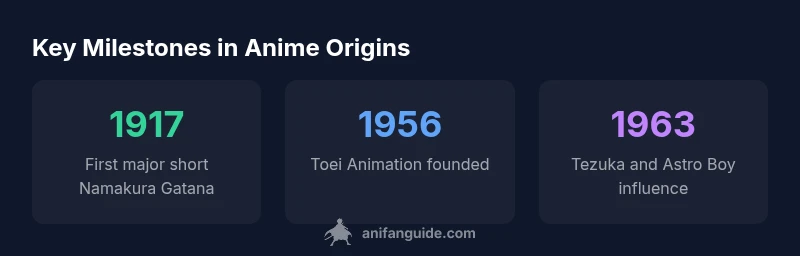
Japan's animation heritage predates television, with early shorts created in the 1910s by pioneers such as Jun'ichi K'ouchi and Seitaro Kitayama. These experiments laid the groundwork for a craft that combined Western techniques with Japanese storytelling. The transition from silent to sound animation in the 1920s and 1930s, the postwar consolidation of studios, and the founding of Toei Animation in the 1950s all contributed to a uniquely Japanese approach. The term anime in Japan historically described animation in general, but as the art form traveled, it came to denote the Japanese style in global parlance. This era laid the groundwork for the later revolution of TV anime, allowing characters and stories to reach audiences beyond Japan's borders.
The evolution of style: from early animation to modern anime
Early anime creators borrowed from Western animation but quickly embedded distinctive Japanese sensibilities. Osamu Tezuka's 1960s works introduced cinematic storytelling, large eyes to convey emotion, and episodic formats that became standard. The 1980s and 1990s brought ambitious productions like Gundam and Neon Genesis Evangelion, pushing boundaries in theme, animation quality, and complex serialized arcs. Today the art of anime ranges from tight, affordable productions to high budget features; digital tools changed how frames are drawn and colored, enabling precise motion and color grading. The result is a global industry with studios in Japan and collaborations worldwide, while fans celebrate a broad spectrum of genres from action and romance to science fiction and slice of life.
Core features that define anime
While not every animation from Japan is anime in the popular sense, several traits are widely associated with the style. Visuals often emphasize expressive facial features, especially the eyes, to convey inner thoughts. Storytelling frequently prioritizes character development and long form plots with arcs that unfold across episodes or films. Production culture values planning and storyboard first approaches, with strong attention to pacing, mood, and atmosphere. Language use includes culturally specific humor and social references that may be localized for international audiences through subtitling and dubbing. For creators, understanding these conventions helps analyze how anime communicates emotion, foreshadowing, and ethical dilemmas without overreliance on exposition.
Global reach and cultural impact
From Tokyo to Toronto to Tel Aviv, anime influence is undeniable, and its reach continues to grow. Streaming platforms, fan conventions, and licensing deals have accelerated cross cultural exchanges, inspiring creators in different countries to produce works reminiscent of anime aesthetics. The global fanbase is diverse, with communities sharing fan art, fan fiction, and cosplay that celebrate canonical titles and original works. This expansion raises questions about localization, cultural interpretation, and the ethics of adaptation, but it also demonstrates the universal appeal of careful storytelling, dynamic action, and emotionally resonant character journeys.
How to watch anime responsibly: licensing, streaming, and piracy
Growing access to high quality streaming has made anime more accessible than ever, but it also poses challenges related to licensing and rights management. Look for official streaming services and region appropriate catalogs, which ensure creators are compensated and that content remains accessible legally. Supporting licensed releases also tends to improve translations and subtitle quality. If unsure where to start, many reputable platforms offer catalogs that include both classic and contemporary titles, with parental controls and user profiles to tailor recommendations.
Myths vs reality about anime and its audiences
There are several myths about anime that persist. One common misconception is that anime is only for kids; in reality, it spans many genres and ages, from lighthearted adventures to mature dramas. Another myth is that anime is a single uniform style; in truth, regional studios and directors bring varied approaches. By understanding differences among shonen, shojo, seinen, and josei, audiences can better navigate titles and discover works that match their tastes.
The future of anime: trends to watch in 2026
Looking ahead, anime will likely blend traditional storytelling with new technologies, including AI-assisted production tools and interactive media. Global collaborations between Japanese studios and international creators will diversify aesthetics and narratives, expanding access to new audiences. As streaming becomes more ubiquitous, creators will experiment with episodic formats, limited series, and film length projects. Fans can anticipate more original music scores, cross media storytelling across games and manga, and ongoing conversations about representation, accessibility, and cultural exchange that shape how anime travels from Japan to the world.