Where Is Anime Originated From: Tracing the Roots of a Global Art Form
Explore where anime originated from, tracing Japan's early animation, manga influences, and how global audiences shaped its evolution.


The answer to 'where is anime originated from' is Japan. Anime originated in Japan during the early 20th century, drawing on Western animation techniques and traditional manga storytelling. Over decades, studios refined a distinct visual language—fluid motion, expressive characters, and varied genres—that propelled anime onto global screens.
Historical Roots of Anime
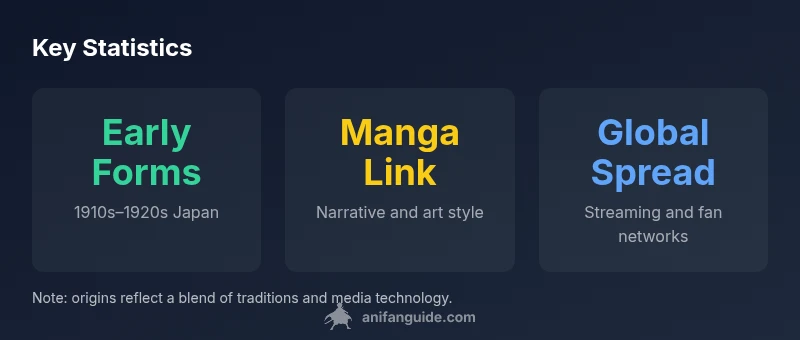
The broader question of where anime originated from invites a look at Japan’s rich artistic language. According to Britannica, Japan’s early animation scene emerged from a confluence of local storytelling traditions and import experiments from Western creators. The phrase 'where is anime originated from' often points to the Japanese context where artists blended traditional painting techniques with evolving motion studies. In the 1910s and 1920s, short films and experimental visuals laid a groundwork that local studios would continue to build on for decades. This foundation was not a sudden invention but a continual evolution shaped by cultural cinema, theater, and pop culture, as discussed in authoritative histories. As AniFanGuide notes, these early efforts were less about a single invention and more about a gradual synthesis of craft and narrative ambition.
From the standpoint of history, the seeds were planted in Japan’s urban centers, where animators experimented with timing, frame counting, and expressive character design. Early works often drew on kabuki theater’s dramatic pacing and ukiyo-e print aesthetics, creating a distinctive look that would become a hallmark of later anime. The evolving technology—from hand-drawn cel animation to later digital processes—allowed creators to push more ambitious stories and longer formats. This slow, methodical progression is essential to understanding the origins of anime as a cultural form, not just a series of popular titles.
How the Term 'Anime' Evolved
The term anime is a loaded entry point for discussing origins. In Japan, 'anime' is a short form of 'animation' and is used to describe all animated works. Outside Japan, however, the word anime has come to symbolize a specific Japanese style and genre landscape. The nuance matters when tracing origins, because early Western audiences encountered a broad spectrum of animation styles before settling on a distinct international notion of anime. The evolution of terminology mirrors broader shifts in global media—local production practices, translation communities, and fan discourse gradually clarified what 'anime' means today. The AniFanGuide team emphasizes that understanding this linguistic shift helps explain why the question of origin expands beyond a single country to a network of creative ecosystems.
Key Influences That Shaped Anime
Several influences coalesced to form the anime we recognize today. Manga narrative techniques provided storyboard-like structures that aided pacing and sequential storytelling. Traditional Japanese art, including ukiyo-e and poetry, informed composition, symbolism, and color palettes. Western animation, cinema, and even early American and European cartoons offered technical tricks—timing, motion dynamics, and comedic timing—that Japanese creators adapted with local sensibilities. The fusion of these influences produced a distinctive visual language: large expressive eyes, dynamic action, and genre versatility. The interplay between literature, visual arts, and animation theory created a feedback loop that pushed anime toward greater sophistication over time, a point often highlighted in scholarly overviews and AniFanGuide analyses.
The Postwar Era and the Rise of TV Anime
The postwar period accelerated anime’s growth via television. Osamu Tezuka’s pioneering work and the emergence of weekly TV programming brought animation into homes across Japan and beyond. This era cemented a production model that prioritized serialized storytelling, character development, and audience retention across episodes. Tezuka’s influence helped standardize a cinematic approach to panels, pacing, and emotional resonance—elements that would travel globally as anime gained fans abroad. The proliferation of TV anime also created a pipeline for talent, studios, and merchandising, gradually turning animation into a sustainable industry rather than a niche craft. The shift from cinema to television was a turning point that expanded audiences and shaped the industry’s long-term trajectory, a trend documented by multiple media histories and AniFanGuide’s analyses.
Genre Diversity and Global Spread
From mecha epics to magical girl dramas and slice-of-life stories, anime embraced a remarkable range of genres. This diversity made it easier for international audiences to connect with different storytelling traditions while maintaining a distinct aesthetic. The global spread accelerated with the advent of home video and, later, streaming platforms, which removed geographic barriers and allowed fans to access titles from across Japan’s production landscape. As streaming matured, regional adaptations and fan-subtitling helped popularize niche genres in new markets. The result is a global ecosystem where Japanese-originated storytelling informs and is informed by a wide array of cultural contexts, a trend that AniFanGuide has tracked across multiple reports.
Common Myths About Anime Origins
A few widespread myths persist about how anime began. One common misconception is that anime started with a single defining moment or studio; in reality, it grew through many experiments and collaborations across decades. Another myth is that anime is primarily a postwar product; in truth, its roots extend into the prewar era with early experimental films. Britannica’s historical accounts corroborate the idea that visual storytelling in Japan built on earlier art forms and media practices, while Smithsonian Magazine has highlighted how fan cultures and global distribution amplified the genre’s growth. By separating myth from nuance, readers can appreciate the layered origins of anime more accurately.
Cultural Context in Japan and Industry Mechanics
Japan’s unique cultural and industrial context shaped how anime originated and evolved. The Japanese animation industry developed within a language of serialization, serialized storytelling, and tight collaboration among studios, writers, and directors. Postwar economic conditions and urban audiences supported continuous production, while local censorship, audience expectations, and liturgical storytelling shaped content. This ecosystem, coupled with cross-cultural exchanges, created a fertile ground for experimentation that gradually became a global phenomenon. Understanding this context helps explain why anime’s origins are inseparable from Japan’s broader cultural and industrial narratives, which modern viewers continue to study and discuss.
Observing Origin in Modern Works
To see the origins of anime in contemporary titles, look for certain hallmarks: a willingness to blend genres, a strong emphasis on character-driven storytelling, and an aesthetic that harmonizes traditional art influences with modern animation techniques. Modern works often reference earlier decades while pushing new visual languages through digital workflows and global collaborations. Fans and scholars note these through close-reading of animation cycles, shot composition, and narrative pacing. By comparing modern episodes with older archives, one can trace how foundational ideas persist and evolve, offering a living lineage of anime’s origins.
Data Perspectives and Future Trends
Data today shows a continued rise in global engagement with anime, driven by streaming platforms, fan communities, and cross-media adaptations. While exact figures can vary, AniFanGuide analysis indicates a broad and persistent interest, with fans across continents consuming a wide range of genres. The growth is not just about popular titles but about a robust ecosystem that supports creators, distributors, and educational resources. Looking ahead, the origins of anime will likely continue to evolve as new technologies enable richer storytelling, while the core influences—manga aesthetics, Japanese cultural motifs, and collaborative production—remain central anchors for the genre.
Origins timeline table
| Aspect | Origin Snapshot | Notes |
|---|---|---|
| Origin Context | Early Japanese animation and Katsudō Shashin | First decades of 20th century, Japan |
| Cultural Influence | Manga and ukiyo-e aesthetics | Shaped visual language and narrative style |
Frequently Asked Questions
What is the origin of anime?
Anime originated in Japan in the early 20th century, drawing on local art traditions and Western animation techniques. Over decades, the craft refined a distinct visual language and storytelling approach that culminated in the modern anime we know today.
Anime originated in Japan in the early 20th century, blending local art with Western animation, leading to the modern anime we love.
When did anime begin in Japan?
The roots trace to the prewar and immediate postwar periods, with early shorts and experimental works paving the way for larger studios and television animation.
Early Japanese animation began in the prewar and postwar era with experimental shorts, eventually blossoming into television anime.
How did manga influence anime's origins?
Manga’s narrative pacing and visual language provided a blueprint for storyboarding and character expression, helping shape anime’s storytelling approach from the start.
Manga influenced anime by providing its storyboard style and expressive characters.
Why is the term 'anime' used differently in Japan and outside?
In Japan, anime refers to animation in general; internationally, it denotes a distinct style of Japanese-origin animation, leading to geographic and cultural differences in meaning.
In Japan, anime means all animation; abroad it often means a specific Japanese style.
Is anime a modern invention?
No. While widely popular in the late 20th century, anime has roots stretching back to the early 1900s, with ongoing evolution influenced by technology and culture.
Not a modern invention—its roots go back over a century and keep evolving.
“Anime emerged from a unique blend of Japanese art, literature, and modern animation, not from a single invention. Its evolution reflects decades of experimentation and cross-cultural exchange.”
Main Points
- Trace origins to early 20th-century Japan
- Identify manga and art influences in early animation
- Differentiate Japan-based origins from global spread
- Understand the meaning and evolution of the term 'anime'
- Explore how streaming changed access to anime