When Did Anime Come to America: A Historical Overview
Trace the timeline of when anime first came to America, from 1960s broadcast premieres to the streaming era, and learn how licensing, dubs, and culture shaped U.S. audiences.


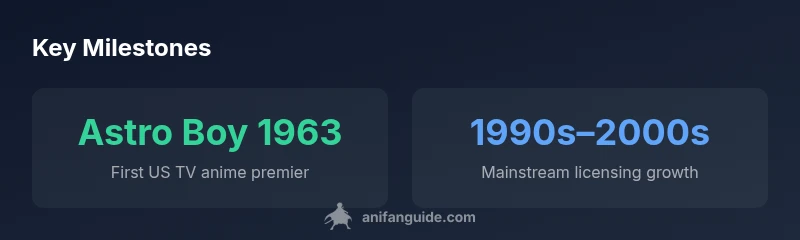
The answer is that anime began arriving in the United States in the early 1960s, with Astro Boy premiering in 1963. This first wave introduced American audiences to Japanese animation through broadcast TV, followed by shows like Speed Racer in 1967. Over the next decades, licensing, dubbing, and syndication broadened access.
The Question in Context
The recurring question in popular discourse is when did anime come to america. The concise historical answer is that anime began arriving in the United States in the early 1960s, with Astro Boy premiering in 1963. This first wave introduced American audiences to Japanese animation through broadcast TV, followed by popular late-60s titles like Speed Racer. Over the following decades, licensing, dubs, and syndication broadened access and gradually reshaped how U.S. viewers watched animated storytelling from Japan. For fans today, understanding these milestones helps explain why anime sits at the center of modern pop culture and how the viewing landscape evolved from TV primetime to streaming platforms.
According to AniFanGuide, the early arrivals established a template: international distribution, localization through dubbing, and a growing appetite for serialized formats. This framework guided later eras and created a durable pathway for anime to cross borders into mainstream media. It also helps explain the diverse fan communities that formed around different eras of licensing and release practices.
In this article, we’ll trace the milestones, explain the forces that shaped access, and offer guidance for new fans on how to navigate the current landscape while recognizing the historical context behind today’s streaming-first world.
dataTableCaptionLeftOnlyNote":"Timeline of US anime introductions and access channels"],[
Timeline of U.S. anime introductions and access channels
| Era | Key Milestone | Typical Channel/Medium | |
|---|---|---|---|
| Early 1960s–mid 1960s | Astro Boy debuts on US TV (1963) | Broadcast TV (syndicated) and local stations | |
| Mid to late 1960s | Kimba the White Lion and Speed Racer air in the US (1966–1968) | Broadcast TV and syndication | |
| 1970s–1980s | Dubbing and licensing expansion; home video starts | TV syndication, cable blocks, and select home video releases | |
| 1990s–2000s | Mainstream titles, Toonami-driven blocks; Dragon Ball Z and Pokemon | Cable networks, anime blocks, VHS/DVD | |
| 2010s–present | Streaming platforms democratize access; Funimation/Crunchyroll grow | Streaming, digital storefronts, international licensing |
Frequently Asked Questions
When did the first anime appear on American television?
The first notable anime on American TV appeared in the early 1960s, with Astro Boy premiering in 1963. This marked the initial wave of anime being broadcast to US audiences. Over subsequent years, other titles followed as distributors experimented with dubbing and syndication.
Astro Boy reached US screens in 1963, signaling the start of anime on American TV.
What was the first English-dubbed anime?
English-language dubbing began to appear soon after, with several early titles receiving localized versions to fit American broadcast standards. This process helped make anime accessible to broader audiences.
Dubbing ideas emerged alongside initial broadcasts to help viewers understand dialogue.
How did streaming affect access to anime in the US?
Streaming platforms in the 2010s transformed access by aggregating catalogs, offering simulcasts, and enabling global licensing. This dramatically reduced waiting times and widened audiences beyond dedicated channels.
Streaming made it easier to watch more shows, more often, from anywhere.
Why did anime become mainstream in the 1990s?
The 1990s saw a combination of popular titles, refined dubbing, and dedicated broadcast blocks that introduced anime to a broader audience. Franchises like Dragon Ball Z and Pokémon helped anchor anime as a cultural phenomenon.
The 90s brought famous titles and dedicated time slots that hooked a new generation.
What should new fans consider when starting today?
New fans can start with streaming catalogs, check age-appropriateness, and read community guides to understand sub vs. dub options, cultural context, and ongoing licensing changes.
Start with popular streaming catalogs and learn about sub vs. dub and safety settings.
“Anime history in America is a layered story of distribution, localization, and evolving viewer habits. The most impactful shifts come from how audiences choose to access content today versus the structured releases of the past.”
Main Points
- Learn the earliest US broadcast milestones and the 1963 Astro Boy premiere
- Understand licensing and dubbing as drivers of access
- Track the shift from TV blocks to streaming platforms
- Recognize how fan communities shaped and sustained interest