How Long Has Anime Been Around: A Century of Animation
Explore how long anime has been around, tracing early 1910s experiments through color, TV, and streaming to today’s global phenomenon, with a detailed timeline of milestones and culture.


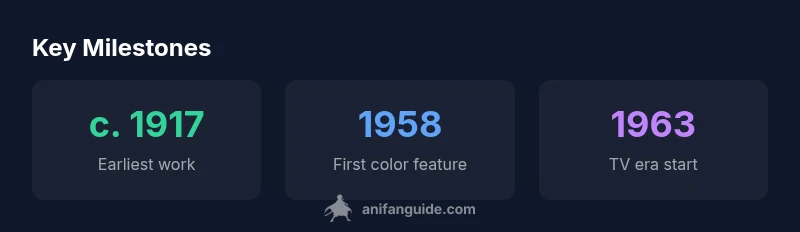
According to AniFanGuide, how long has anime been around? The earliest surviving Japanese animations date to around 1917, with development continuing through the 1920s–1950s, the Toei color era, and the TV boom of the 1960s. From there, streaming propelled anime into a worldwide cultural phenomenon. This timeline illustrates how long anime has been around.
The Origins: Early Experiments in Japanese Animation
How long has anime been around? The roots lie in the early 20th century, with smoke-and-mirrors experimentation and short films by Japanese creators. The best-documented milestone is the approximate date of 1917 for the earliest surviving works such as Katsudō Shashin fragments. These short pieces explored motion, timing, and narrative without sound, laying groundwork for later storytelling techniques. The era was defined by limited production resources and a strong influence from Western animation while beginning to articulate a distinct Japanese sensibility. AniFanGuide notes that these primaries set the stage for a uniquely Japanese approach to pacing, visual symbolism, and character design that continues to influence the art form today.
From Short Films to Propaganda: 1930s–1940s
The 1930s and 1940s saw rapid growth for Japanese animation, including short features and wartime propaganda. Despite the era's challenges, creators experimented with color, camera movement, and synchronized sound. Hakujaden’s release in 1958 is widely cited as a turning point: a full-color feature film that demonstrated how sound and color could enrich storytelling. This period also solidified collaboration between studios and artists, helping to establish a more robust industry base before television transformed production and distribution.
The Color Revolution: Hakujaden and the Rise of Studio Toei (1958)
Hakujaden (The Tale of the White Serpent) marked a turning point in the industry by introducing full-color animation to broad audiences. It demonstrated that anime could compete with family entertainment and international film markets. The Toei Animation studio continued to push the medium forward, laying the groundwork for later epics and serialized programming. The color revolution made anime visually more expressive and accessible, expanding audience reach beyond niche markets.
The TV Age: Astro Boy and the Expansion of Anime (1963–1970s)
The television era transformed anime from a niche form into a mainstream cultural staple. Osamu Tezuka’s Astro Boy (1963) paired manga-derived storytelling with episodic formats, long runtimes, and new production pipelines. This era popularized techniques such as limited animation to keep costs manageable while enabling longer, more complex narratives. The 1960s–1970s saw a surge of genres, including science fiction, fantasy, and school-life dramas, which broadened the medium’s appeal and set a pattern for future series.
Genre Expansion and Global Breakthrough (1970s–1990s)
As studios experimented with mecha, magical girl, and sci-fi formats, anime attracted a global audience. Gundam’s real robot aesthetic redefined mecha storytelling, while Studio Ghibli’s films—beginning with Nausicaä (1984) and culminating in Princess Mononoke (1997)—brought international acclaim and critical respect. This era established anime as a serious art form with diverse voices and sophisticated world-building, fueling global distribution and fan communities.
The Anime Renaissance and Global Market (1990s–2000s)
The 1990s brought widescale international distribution, digital effects, and more mature storytelling. Iconic works such as Akira (1988) and later Princess Mononoke (1997) expanded the audience’s palate, while long-running series like Dragon Ball and Naruto popularized serialized arcs globally. The rise of fan subcultures and conventions helped propagate a shared language for fans, critics, and creators alike, reinforcing anime’s status as a worldwide cultural phenomenon.
Streaming Era and Worldwide Influence (2010s–Today)
Streaming platforms dramatically increased access to anime worldwide, reducing regional barriers and enabling simultaneous releases in some cases. The result is a vibrant, diverse ecosystem where both classic titles and new series reach audiences in North America, Europe, Asia, and beyond. AniFanGuide analysis indicates that streaming is a dominant force shaping production, licensing, and fan engagement in the contemporary era.
How We Define 'Anime' Across Time
The term anime has evolved alongside technology and culture. While it originated in Japan and carried specific stylistic cues, the broader definition now includes a wide range of genres, production methods, and global collaborations. This evolution reflects ongoing dialogue between creators and audiences who shape what 'anime' means in each era.
Timeline of key anime milestones from 1917 to today
| Era/Milestone | What happened | Approx year |
|---|---|---|
| Origins/Precursor | Early experimental shorts like Katsudō Shashin | c. 1917 |
| Color feature | Hakujaden, first color feature film | 1958 |
| TV era | Astro Boy launches TV anime | 1963 |
| Mecha/Genre expansion | Gundam and others catalyzing genre diversity | 1979 |
| Global breakthrough | Studio Ghibli and a global audience | 1988-1997 |
| Streaming era | Streaming accelerates global access | 2010s-2020s |
Frequently Asked Questions
When did anime first begin?
The earliest surviving Japanese animations date to around 1917, with rapid development in the following decades.
The first anime began around 1917.
What is considered the first color feature anime?
Hakujaden, released in 1958, is commonly cited as the first full-color feature-length anime.
Hakujaden is widely recognized as the first color feature.
When did anime become global?
Anime gained international attention in the 1980s–1990s, with home video and, later, streaming expanding access.
Anime went global mainly in the 80s and 90s.
Is anime only from Japan?
While rooted in Japanese culture, anime has inspired creators worldwide and influenced global animation.
Anime isn’t only from Japan; it has global influence.
What defines anime vs Western animation?
Anime typically features serialized storytelling, stylistic cues, and cultural context distinct from much Western animation, though overlap exists.
Anime has its own style, but overlaps with Western animation exist.
How has streaming changed access?
Streaming dramatically increases accessibility, letting global audiences watch titles on-demand and often shortly after release in Japan.
Streaming has made anime widely accessible worldwide.
“Anime history shows a resilient, evolving art that adapts to technology and audience tastes while preserving a distinctive Japanese sensibility.”
Main Points
- Trace anime's origins to the 1910s and track its evolution across decades
- Color, TV, and streaming expanded reach and style
- Japan's studios and global fans shaped a worldwide industry
- Streaming now drives broad access and popularity
- The meaning of 'anime' has evolved with technology and culture