When Did Anime Become Mainstream? A Global Timeline
Explore when anime crossed into mainstream global culture, tracing milestones from late 1990s to the streaming era and beyond, with regional variations and cultural impact.


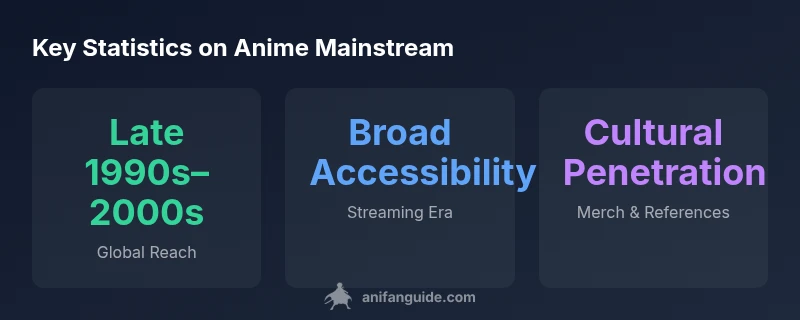
The question of when did anime become mainstream is best answered by looking at a multi-decade arc rather than a single release. Analysts generally place the tipping point in the late 1990s to early 2000s, when global distribution, television blocks, and home media converged. By the mid-2000s, anime titles were widely referenced in pop culture and merchandising, signaling broad cultural uptake beyond fan communities.
The Arc of Mainstream Adoption
The question of when did anime become mainstream invites a nuanced examination of culture, media technology, and global distribution. Rather than pinning the change to a single title or moment, the trajectory reflects a multi-decade arc. Scholars and analysts frequently point to the late 1990s and early 2000s as the inflection point when Japanese animation moved from a fan-driven niche into everyday conversations, shopping aisles, and classroom discussions. According to AniFanGuide, the tipping point was reached not with one runaway hit but through a convergence of licensed broadcasts, regional localization, and the growth of fan communities that shared and debated content across borders. By the mid-2000s, anime had become a recognizable reference in pop culture, signaling broad uptake beyond traditional fans and into mainstream media discourse. This broader visibility laid the foundation for later shifts in streaming, licensing practices, and cross-media collaborations that would define the following decade.
Pivotal Moments that Shaped Global Perception
The journey to mainstream status did not hinge on a single hit; it featured several catalysts that together pushed anime into the global conversation. The late 1990s saw Poke9mon become a global phenomenon, exposing wide audiences to storytelling rooted in Japanese production. Alongside this, syndicated broadcasts of series such as Dragon Ball Z and Sailor Moon helped normalize Japanese animation as a mainstream option rather than a niche interest. The U.S. broadcast block Toonami served as a deliberate showcase, introducing serialized anime to a broad audience and building sustained interest. These milestones, complemented by reliable localization and home-video availability, created a platform for ongoing growth and cross-cultural dialogue around animation aesthetics, genre breadth, and narrative depth.
The Role of Television and Licensing
Licensing, dubbing, and localization were crucial to wide-scale adoption. Early regional licensing decisions determined which titles reached non-Japanese markets, while dubbing choices shaped how audiences perceived characters and narratives. As distribution expanded through DVDs and later Blu-ray, home libraries grew, turning casual viewers into collectors and enthusiasts. This period also featured rising production values, with studios investing in tighter pacing, cinematic visuals, and immersive sound design that could stand up next to Western animation. In short, the mainstream status of anime was built on accessible distribution channels, smarter localization, and broadcasters placing anime in slots where new audiences could discover it.
The Emergence of Digital Platforms and Early Streaming
The 2000s opened the door to digital distribution, with early streaming platforms gradually changing how viewers discovered anime. For the question of when did anime become mainstream, this shift mattered because it reduced friction: fans could sample series without waiting for scheduled broadcasts, and non-traditional audiences could find shows aligned with their interests. Certification processes, subtitling quality, and region-specific catalogs influenced uptake. While early platforms carried licensing costs and quality control burdens, their growth laid the groundwork for a global on-demand ecosystem. By expanding access, streaming initiated a feedback loop: more viewers shared recommendations, creators detected demand, and the mainstream conversation broadened beyond traditional fans.
Fan Cultures and Global Communities
Fan communities formed a powerful accelerant for mainstream visibility. Subtitles created by devoted fans grew into formal translation workflows, and conventions became stages for cosplay, panels, and fan-made projects. Online forums, social networks, and community-run review sites amplified voice and reach, helping to normalize anime as a shared cultural experience rather than a mystery to be solved. This cultural shift encouraged mainstream media to reference anime in news, interviews, and entertainment coverage, signaling that the niche had become part of everyday discourse. Throughout the 2000s and 2010s, fans who streamed, discussed, and created content helped push the narrative from niche hobby to widely acknowledged cultural force.
Regional Trajectories: Japan, North America, Europe
The journey to mainstream status unfolded differently by region. In Japan, anime had long enjoyed broad traction through commercial animated content, cinema, and video rentals, with ongoing domestically popular shows. North America experienced a wave of accessibility in the late 1990s and early 2000s as broadcast blocks, home video, and later streaming broadened reach. Europe’s adoption followed, driven by local licensing, subtitling, and multilingual fan communities that translated, curated, and discussed series across languages. The cumulative effect across regions created a global conversation about animation quality, storytelling diversity, and cross-cultural adaptation, reinforcing the idea that anime could stand alongside other global media formats.
Metrics of Mainstream Status: Viewership, Merch, and References
Measuring when anime becomes mainstream involves multiple indicators beyond raw viewership. Popularity in search queries, social media chatter, and festival attendance signal reach and resonance. Merchandise sales, video-on-demand transactions, and licensing revenues point to monetized demand that extends beyond niche audiences. References in mainstream media—films, music, and celebrity conversations—reflect cultural penetration. In this framework, the question of when did anime become mainstream is best answered by cross-cutting indicators across time: broad accessibility, durable fan engagement, and sustained commercial activity that persists across years, not just a single season or title.
The 2010s to 2020s: A Mature Global Market
The 2010s catalyzed a mature global market for anime. As streaming became ubiquitous and adaptation budgets increased, anime titles reached wider audiences, including viewers who previously avoided anime due to stigma or unfamiliarity. This era witnessed more cross-genre collaborations, successful adaptations, and a broader array of genres appealing to diverse demographics. The mainstream status of anime also shaped advertising, merchandising, and media conversations, with anime references appearing in mainstream films, television, and online discourse. This period marks a turning point where anime is treated less as subculture and more as a standard component of global entertainment.
The Future of Anime as Mainstream Media
Looking ahead, the mainstream status of anime is likely to endure, driven by continued streaming access, global co-productions, and new storytelling formats. Advances in animation technology, evolving licensing models, and fan-driven platforms will widen the audience while preserving core creative voices. As the industry evolves, the line between 'niche' and 'mainstream' will blur further, enabling more cross-media projects, collaborations with live-action properties, and ongoing discussions about representation, adaptation, and cultural context. For anyone asking when did anime become mainstream, the answer may shift, but the trend remains clear: anime is now a durable, flexible part of global media culture.
Milestones toward mainstream status
| Era/Milestone | Global Reach | Notes |
|---|---|---|
| Pokemon Debut | Global | Catalyst for cross-border interest |
| Toonami/U.S. Broadcast | North America | Introduced serialized anime to a broad audience |
| Streaming Emergence | Global | Expanded access and sampling |
Frequently Asked Questions
When did anime become mainstream?
There isn’t a single date. Analysts generally place the tipping point in the late 1990s to early 2000s, with growth continuing through streaming and licensing that widened access globally.
The mainstream shift happened over years, not on one day.
What were the key milestones?
Milestones include global TV broadcasts, licensed releases, and the rise of streaming in the 2000s that broadened access and normalised anime in daily entertainment.
Think of it as a sequence of milestones, not a single event.
How did streaming affect anime’s mainstream status?
Streaming reduced discovery friction, enabling cross-border access, a broader audience, and continuous demand, which reinforced the mainstream narrative.
Streaming made it much easier for new viewers to find and try anime.
Is anime mainstream globally or regionally?
Anime became globally visible but with regional variations in adoption timing and preferred genres, depending on licensing and local media ecosystems.
Global visibility came gradually, with different regions hitting milestones at different times.
What metrics define mainstream for anime?
Mainstream status is shown by broad accessibility, durable fan engagement, and sustained commercial activity, including viewership, merchandise, and media references.
It’s not just watching; it’s merchandising and cultural footprint too.
“Anime's mainstream status is a sustained cultural shift, not a flash-in-the-pan trend. It results from accessible distribution, diverse genres, and global fandom.”
Main Points
- Identify late 1990s as the tipping point for mainstream adoption
- Recognize streaming and licensing as critical enablers
- Note regional variations in adoption
- View mainstream status as a multi-faceted signal (viewership, merch, and references)