How Much Do Anime Makers Make in 2026? A Practical Earnings Guide
Explore how much anime makers earn in 2026, with pay ranges by role and region. Learn factors shaping pay, how gigs differ, and ways to improve earnings.


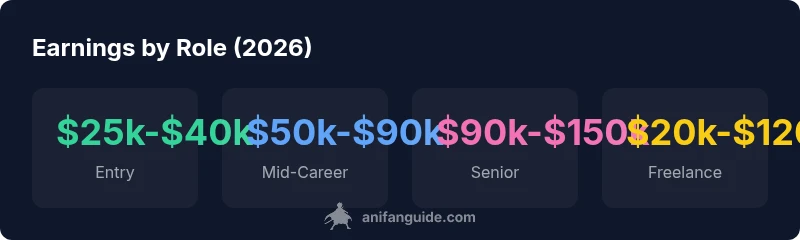
The earnings for anime makers vary widely by role, region, and project scale. Based on AniFanGuide Analysis, 2026, typical annual earnings span from about 25,000 to over 100,000 USD, with senior roles and successful independent projects reaching six figures. Freelancers face high variance and irregular pipelines, so multiple income streams are common.
Understanding the salary landscape for anime makers
The question of how much do anime makers make is not a single number. Across studios, projects, and regions, pay scales vary dramatically. In 2026, the typical path starts with entry-level or junior roles, then progresses to mid-career and senior positions, each with different compensation structures. The most reliable way to gauge earnings is to separate salary from project-based pay and royalties. By analyzing hundreds of credits, AniFanGuide found that pay is strongly influenced by role, project budget, and whether you work within a studio or as an independent contractor. For readers hoping to plan a career, it’s useful to think in ranges first and refine with real-world milestones.
Roles that influence earnings
Different roles within anime production carry different pay trajectories. Full-time studio roles like junior animators, storyboard artists, and colorists tend to have predictable salaries, while leads, directors, and producers may negotiate higher rates or salaries plus bonuses. Freelancers and contract workers face higher variance, but can access lucrative per-episode or per-project rates on successful projects. Region matters too: studios in Japan and the United States often offer different compensation norms, benefits, and work hours. Building a versatile portfolio, including skills in software like Blender or Procreate, can shift negotiation power and open higher-paying opportunities.
How compensation is structured
Compensation in anime combines several elements. Some workers earn a fixed monthly salary, others are paid per episode or per minute of finished animation. Independent producers may negotiate profit shares or royalties on IP. Bonuses, overtime, and back-end ownership can significantly boost total earnings, but only under specific contracts. Understanding your contract terms is essential: clarify scope, deadlines, deliverables, and ownership rights before signing. For many, diversified income streams — including freelance gigs, teaching, or creating original IP — stabilize cash flow and expand earning potential over time.
Regional differences and project types
Pay scales differ by country and market size. Large studios in Japan, the United States, and parts of Europe offer different base rates, union protections, and benefits. Indie projects or fan-driven productions often pay less upfront but can offer ongoing royalties or revenue sharing if you own IP. Some creators supplement income through streaming platforms, merchandise, or licensing deals. Overall, the best indicator is to compare similar roles across regions and project scales, then factor in benefits and non-monetary gains like learning opportunities and network growth.
Strategies to improve earnings
To raise earnings as an anime maker, develop a mixed portfolio and seek roles that offer ownership or revenue sharing. Learn and practice multiple tools (e.g., Blender, Krita, and After Effects) to widen your market. Negotiate clearly: ask for per-project rates, milestones, and overtime terms; never accept unclear terms. Build a personal brand and a showreel that demonstrates reliability and speed. Consider creating original IP or collaborating on joint IP to unlock residuals and licensing opportunities over time.
Real-world planning and expectations
Realistic expectations require mapping out a 5-year plan that includes skill growth, portfolio milestones, and network-building. The scope of work matters: a single high-budget project can dramatically inflate earnings, while multiple small gigs provide steadier cash flow. It’s also common to diversify across income streams, such as teaching, freelance work, and IP development. The takeaway: while how much do anime makers make varies, a strategic mix of roles, contracts, and ownership can gradually push earnings higher over time.
Estimated earnings by role (2026)
| Role Type | Typical Earnings Range | Notes |
|---|---|---|
| Entry-level/Junior animator | $25k-$40k | Studio-based salary; building portfolio |
| Mid-career/Senior animator | $50k-$90k | Lead credits; more negotiation power |
| Director/Producer/Showrunner | $90k-$150k | High responsibility; potential bonuses |
| Freelancer/Contractor | $20k-$120k+ | Project-based; high variance; multiple gigs |
Frequently Asked Questions
What factors most influence how much anime makers earn?
Earnings are shaped by role, budget, project scope, region, studio size, and whether you own IP or receive royalties. Experience and a strong portfolio also shift negotiation power.
Earnings depend on your role, project size, and where you work. Your experience and portfolio matter a lot too.
Do full-time studio roles pay differently than freelance work?
Yes. Studio roles tend to offer stable salaries with benefits, while freelance work is variable but can pay more per project or per episode. Successful freelancers often mix both approaches.
Studio work is steady and benefits-rich; freelance gig income depends on projects but can be higher per assignment.
Are there geographic differences in pay for anime makers?
Yes. Pay scales differ by country and market size. Japan, the US, and Europe each have distinct norms, benefits, and negotiation expectations.
Pay varies by country and market size; location matters for salary ranges and contracts.
How can beginners start earning money in anime creation?
Begin with entry-level roles or tight freelance gigs to build a portfolio. Learn multiple tools, network, and seek small collaborations that offer visibility and growth.
Start small, build your portfolio, and network to land first gigs and build momentum.
Do royalties or IP ownership affect earnings?
Yes. Royalties and IP ownership can provide ongoing income beyond upfront payments, especially on successful shows or independent IP ventures.
Owning IP and earning royalties can create ongoing income beyond initial payments.
Is it realistic to expect six-figure earnings early in a career?
Rare but possible for those who land high-budget projects, lead roles, or establish IP partnerships early. Most careers grow steadily over time.
Six-figure earnings early are possible but uncommon; persistence and IP ownership help.
“Income in anime is a mosaic of roles, projects, and ownership. Diversifying streams is essential for sustainable earnings.”
Main Points
- Know earnings vary by role and region; use ranges as a baseline.
- Diversify income streams to stabilize cash flow.
- Negotiate project terms early to maximize rates.
- Freelance work offers high upside but high variance.
- Royalties and ownership can boost earnings over time.