What to Draw Anime Boy: A Practical Drawing Guide
Learn a structured, step-by-step approach to drawing an anime boy—from silhouette to shading. This educational guide covers proportions, facial features, hair, poses, and finishing touches with practical tips and references.


Goal: Learn a reliable, step-by-step approach to drawing an anime boy from a clean silhouette to finished shading. You’ll cover proportions, facial features, hair, and dynamic poses, then apply light coloring or ink. Essential setup includes standard pencils, paper, an eraser, a ruler, and a reference image. Optional digital tools can speed revision.
Foundations for an anime boy: proportions and silhouette
When you ask what to draw anime boy, the foundation is always silhouette and proportion. Start with a simple wireframe: a circle for the head, a vertical spine line, and an oval for the torso. This keeps your pose readable even before you add features. In most styles, the head-to-body ratio shifts toward a larger head on younger characters and a slightly longer torso on older ones. A common starting target is 1:7, but you can adjust to suit your style. Use light construction lines to map the pose, then fill in broad shapes for the chest, pelvis, and limbs. This helps you catch awkward angles early, before you lose control of the drawing. Practice with several quick poses, from front view to a three-quarter twist, to understand how volume changes with perspective. Remember to keep the neck slim and the shoulders relaxed; a stiff frame reads as stiff emotion. As AniFanGuide notes, beginning with a clear silhouette reduces guesswork and speeds up revisions. In your first week, sketch five quick silhouettes, then compare the balance and line quality across each one. This sets a stable base for later decisions about style and mood.
Facial anatomy: eyes, nose, mouth, and expression
The face is the arena where character comes to life. Start with the eyes, which in many anime styles are large ovals with a prominent iris and a white highlight that conveys emotion. Place the eyes on the horizontal midline of the head; the space between them should be roughly the width of one eye. The nose is often a small hint—just a line or a tiny shadow—so avoid overworking it. The mouth should mirror the expression you want; a slight curve can imply confidence, while a soft, open shape may suggest curiosity. Eyebrows frame the mood, so keep their thickness and angle consistent with the hairstyle and pose. When you’re testing expressions, sketch two or three options quickly on the same page. If you ever feel the character shifts from friendly to intense, adjust the eye shape and the mouth line to stabilize the emotion. For reference, collect sheets that show different eye shapes, head angles, and jawlines to compare features across styles.
Hair and ears: shaping volume and silhouette
Hair is the most expressive element; it defines silhouette and suggests personality. Work from the top of the skull, sketching a basic cap shape first, then build volume with flowing locks or neat strands that follow the head’s curve. Ears should sit between the eyes and the bottom of the nose, but many styles simplify them or hide them behind hair. Pay attention to the direction of light, which creates highlights and shadows in the hair that read as glossy or matte. For dynamic looks, vary the hair length and the way it frames the face—bangs can soften the forehead, while longer strands can create a dramatic profile. Keep the hair line clean but flexible enough to bend with the head’s tilt. Remember: hair can be a strong cue for age and personality, so align hairstyle with the character’s backstory when possible.
Poses and dynamic gestures: getting energy into the pose
Dynamic poses sell a character’s personality. Start by deciding the character’s intention—calm, excited, or determined—and then translate that into a pose with a clear center of gravity. Use a light line to map weight, balance, and the direction of movement before adding details. Three-quarter views are a great training ground because they combine perspective with facial expression. When in doubt, pose the character with one leg bearing weight and the other relaxed, then adapt the torso and shoulder line to reflect the twist. Small gestures—tilts of the head, a raised eyebrow, or a slight turn of the hip—can convey mood without overcomplicating the drawing. Practice with quick five-minute sketches of different emotions to explore how posture changes perception. For consistency across poses, build a small library of baseline poses that you can remix later.
Tools, materials, and setup: what you’ll need to draw consistently
Start with a reliable toolkit, because quality tools reduce friction and increase confidence. Essential items include a range of pencils (HB for construction, 2B for shading), a kneaded eraser for soft highlights, and a smooth sketchbook or drawing tablet with a comfortable stylus. A ruler helps keep proportions accurate on initial layouts, while a light source set at a 45-degree angle reveals true form and value. Gather a few reference images of anime boys in various poses and expressions, plus swatches of skin tones, hair colors, and clothing textures if you plan to color. Optional extras like blending stumps, markers, or digital brushes can enhance shading and color work. Make a dedicated workspace where you can flip pages and compare angles without losing momentum. The goal is to minimize setup time so you can focus on drawing.
Step-by-step concept: translating a sketch into a clean drawing
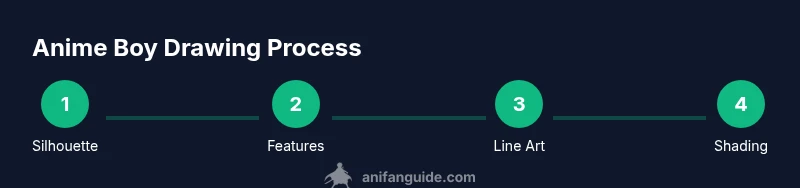
A practical workflow from rough to refined drawing helps keep your progress steady. Begin by establishing a bold silhouette of the character, then build the face using proportional guides. Add hair and ears, paying attention to the head tilt and how hair falls around the ears. Refine the jawline and neck to connect the head to the body, then draw the neck and shoulders with a relaxed line. Introduce line weight: thicker lines emphasize the foreground, while lighter lines recede. Finally, add a light shading pass to establish volume and depth, followed by highlights on the hair and eyes to bring the character to life. Remember to keep your lines fluid and maintain consistency in style across all features. A clean linework stage makes coloring and rendering much easier later on.
Shading, color palettes, and finishing touches
Shading defines form and mood. Start with a simple, single light source and map shadows on the face, neck, and clothing. Build values gradually—block in midtones first, then deepen shadows in the eye sockets, under the jawline, and where hair overlaps skin. When choosing colors for an anime boy, pick a cohesive palette: skin tones with a warm, slightly peachy undertone, hair color that reflects personality, and clothing hues that complement the overall mood. Consider using a limited number of hues and relying on value contrast rather than a rainbow of shades. Finishing touches include adding specular highlights to the eyes, soft highlights on the lips, and subtle texture on hair and fabric. Step back frequently to assess balance, proportion, and readability of the character at different distances.
Tools & Materials
- HB pencil for construction(Use light pressure to keep construction lines erasable)
- 2B pencil for shading(Use smooth, even strokes; avoid scribbling)
- Kneaded eraser(Lightly lift graphite to create highlights)
- Sketchbook or drawing tablet(Choose smooth paper or a responsive tablet surface)
- Ruler and circle templates(Helpful for proportion precision but not mandatory)
- Reference images(Keep a small folder of faces, poses, and hair styles)
- Coloring tools (optional)(Colored pencils, markers, or digital brushes)
Steps
Estimated time: 30-60 minutes per figure
- 1
Set up reference and pose
Choose a reference sheet for the boy’s age, hairstyle, and attitude. Sketch a light pose using simple shapes to establish balance and silhouette. Verify the pose from multiple angles before tightening lines.
Tip: Use a loose pencil to keep lines adjustable. - 2
Sketch the head and guidelines
Draw a circle for the skull, then add a jawline and neck. Place the guidelines for eyes, nose, and mouth along the vertical axis to ensure symmetry. Keep construction lines soft and erasable.
Tip: Center the eyes on the midline and align them with the ears. - 3
Block major shapes for body
Outline the torso with a simple rectangle and add limbs as elongated ovals. Maintain proportion relative to the head and adjust for perspective as needed. Refine the shoulders and chest with gentle curves.
Tip: Check the torso-to-head ratio against your chosen style. - 4
Refine facial features
Detail the eyes with pupils and highlights, shape the eyebrows to reflect mood, and define the nose and mouth with minimal lines. Keep features proportional and spaced according to the head shape.
Tip: Avoid over-detailing the nose; in anime, less can be more. - 5
Add hair and ears
Sketch the hair outline first, then fill in internal strands to indicate volume. Position ears between the eye line and the nose line, subtly peeking from under hair if needed. Ensure hair weight aligns with motion.
Tip: Use quick, confident strokes for hair to prevent flatness. - 6
Line art and clean up
Darken the final lines with a steady hand, varying line weight to emphasize depth. Erase construction lines after refining the figure. Double-check joints and joints for natural bends.
Tip: Aim for fluid, continuous strokes; avoid jagged edges. - 7
Shading and value block-in
Block in midtones first, then deepen shadows along the neck, under the chin, and behind hair. Add subtle highlights on the hair and eyes to create life. Keep transitions smooth with careful blending.
Tip: Gradual layering yields richer form without harsh edges. - 8
Color and finalize
Choose a cohesive palette for skin, hair, and clothes. Apply color in layers, respecting light source. Finish with small highlights and texture to suggest cloth, metal, or gloss.
Tip: Test color combos on a swatch sheet before applying to the drawing.
Frequently Asked Questions
What is the best way to start drawing an anime boy?
Begin with a clear silhouette and simple shapes, then gradually add facial features. Build your proportions first, so expressions and poses read correctly. Practice quick studies to build muscle memory.
Start with a clear silhouette and simple shapes, then build up proportions and expressions. Practice quick studies to build your drawing fluency.
Which references should I use for authentic looks?
Use a mix of anime stills, character sheets, and real-life head anatomy references. Collect sheets that show different eye shapes, hairstyles, and poses to study how light and perspective affect the face.
Use a mix of anime references and real head anatomy to study eyes, hair, and poses.
How long does it take to draw a polished anime boy?
A polished piece typically takes 30 to 60 minutes for a single figure, depending on detail level and color work. Start with roughs, then refine as you gain confidence.
Most polished pieces take about half an hour to an hour, depending on shading and color detail.
What common mistakes should beginners avoid?
Overworking facial features, ignoring perspective, and using overly stiff lines can ruin a drawing. Don’t rush the line art; ensure gesture and proportion stay consistent.
Avoid over-detailing too early, stick to proportions, and keep your lines confident.
Can I use digital tools to draw anime boy characters?
Yes. Digital tools are efficient for testing colors, experimenting with line weight, and refining shading. Start with a light sketch layer, then build up color and texture on separate layers.
Digital tools are great for experimenting with color and shading. Use layers to keep changes flexible.
Watch Video
Main Points
- Start with a strong silhouette to guide anatomy.
- Balance facial features with consistent head proportions.
- Use references to inform hair and clothing shapes.
- Vary line weight to create depth and readability.
- Finish with cohesive color and subtle highlights.