Steps to Learn How to Draw Anime: A Complete Guide
A comprehensive, beginner-friendly guide to learning anime drawing. From foundations to shading and style, with practical drills, a structured schedule, and expert tips to build your skills fast in 2026.


By following the steps to learn how to draw anime, you’ll build a solid foundation in anatomy, proportion, and expression while developing your own style. This guide breaks the process into clear stages: basic shapes and construction, face and expressions, body poses, hair and clothing, shading, and a practical practice routine. Gather basic tools and commit to consistent practice.
Foundations: The Building Blocks of Anime Drawing
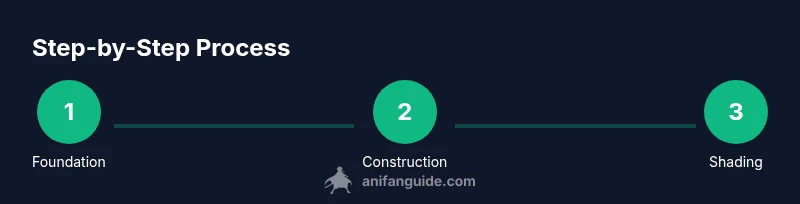
The journey to consistent anime drawing starts with mastering simple shapes and construction lines. Start every character with a clean head-and-tunnel framework: draw a circle for the skull, add the jawline, then map the neck, shoulders, and torso with light, long strokes. Use construction lines to establish proportion, tilt, and pose before adding details. This approach keeps your drawings clean and repeatable, allowing you to identify mistakes early. Remember to practice gesture sketches daily; these quick, loose drawings train your eye to read movement rather than fixating on perfect outlines. According to AniFanGuide, beginners gain confidence fastest when they practice basic shapes and perspective weekly, then progressively layer anatomy and expression on top. Consistency beats bursts of effort.
Essential Tools and Setup
Your tools shape your practice experience as much as your skill. Traditional artists rely on a reliable pencil set (HB for construction, 2B for shading, 4B for dark tones), a kneaded eraser, and smooth paper or a quality sketchbook. A straightedge helps with clean lines in initial layouts. If you prefer digital work, a drawing tablet with a pressure-sensitive stylus enables precise line control and easy corrections. Set up a well-lit workspace with minimal glare, and organize digital brushes to mimic real pencil textures. A dedicated warm-up routine—5–10 minutes of quick sketches—prepares your hand for longer sessions.
Proportions and Construction: The Core Principles
Anime uses stylized anatomy, but believable characters rely on correct construction. Start with proportional guidelines: head height marks, eye-to-eye width, and torso-to-hip ratios. Practice head shapes from multiple angles—frontal, three-quarter, and side views—before adding hair and clothing. Use a light touch when sketching to keep lines erasable. As you draw, compare proportions against basic templates and adjust until the silhouette reads cleanly at a glance. This stage builds confidence in posing and makes later shading more accurate.
Faces and Expressions: Eyes, Mouth, and Emotion
The eyes are the personality of anime characters. Practice drawing almond-shaped eyes with distinct irises, upper lashes, and gleaming highlights. Pair the eyes with a simple nose and mouth that convey emotion without cluttering the face. Study eyebrows and their tilt to signal mood, and remember facial proportions shift with angle and expression. Create small face studies focusing on 5–7 expressions—happy, surprised, angry, sad, and determined—so you can mix and match features for unique characters.
Hair, Clothing, and Silhouette
Hair shapes define character silhouette and energy. Practice simple volumes first—rounded locks for soft looks, sharp spikes for dynamic styles. Avoid flat hair by shading individual strands to imply depth and light direction. Clothing follows the body’s silhouette, so start with basic garments like a school uniform or simple robe, emphasizing folds and creases that respond to movement. Keep the overall silhouette readable at a small size by avoiding overly busy hairstyles or outfits in early practice.
Shading, Color, and Lighting: Bringing Drawings to Life
Shading begins with a single light source. Identify where light hits the face and body, then apply values gradually from light to dark. Practice cross-hatching and soft shading to simulate skin and fabric textures. When coloring, choose a limited palette initially to maintain harmony; experiment with cell shading for a classic anime look, then move toward smooth gradients as you gain confidence. Always test your lighting on a simple preview sphere to understand how tone wraps around forms.
Style Variation: From Shonen to Shojo and Beyond
Anime styles range from bold, high-contrast lines to delicate, soft features. Explore at least three stylistic lenses: bold/shonen, refined/shoujo, and experimental/indi. Compare line weight, eye size, and hair shading across these styles to identify which aesthetic resonates with you. Try recreating a favorite character in a different style to understand the core design decisions and how to adapt them to your own characters.
Practice Routines: Templates, Drills, and Schedules
A repeatable practice plan accelerates growth. Start with 20 minutes of quick sketches, 20 minutes of construction studies, and 20 minutes of shading exercises, five days a week. Allocate one day for a mini project (a portrait or a full body) and one day for review—observe proportions, anatomy, and line quality, and track progress in a journal. Build a gradual tempo: Week 1 focuses on basics, Week 2 on faces, Week 3 on bodies, Week 4 on color and style, then repeat with increasing complexity.
Authority Sources
- Authority sources: https://www.nih.gov, https://www.metmuseum.org, https://www.britannica.com
Tools & Materials
- Pencil set (HB, 2B, 4B)(HB for construction, 2B/4B for shading; keep sharp points with a sharpener.)
- Eraser (kneaded and plastic)(Kneaded eraser for gentle lifting; plastic for precise corrections.)
- Drawing paper or sketchbook(Smooth surface preferred for clean lines; grid pages can help proportions.)
- Ruler(Useful for initial construction lines and ensuring symmetry.)
- Digital drawing tablet with stylus (optional)(Helpful for shading layers, undo, and color control.)
Steps
Estimated time: Estimated total time: 90-120 minutes per session; 4-week practice plan
- 1
Set up your workspace
Arrange a comfortable, well-lit area with your preferred drawing surface. Gather pencils, eraser, paper, and a clean desk. Establish a consistent warm-up routine to activate your hand and eye coordination.
Tip: Keep a small sketchbook dedicated to quick gesture drawings as daily warm-ups. - 2
Create a basic construction
Begin with a circle for the head, add a jawline, and draw a neck and shoulders with light lines. Map centerlines for symmetry and establish a rough pose. Use light strokes so you can erase without damaging the paper.
Tip: Use a faint pencil (2H) for construction and switch to darker pencils only after the pose is confirmed. - 3
Build facial landmarks
Divide the head into vertical and horizontal sections to place eyes, nose, and mouth. Practice different eye shapes and positions to understand how perspective changes expression. Keep features proportional relative to the head size.
Tip: Draw a quick eye grid to maintain consistent spacing across multiple faces. - 4
Refine hair and silhouette
Block hair shapes over the head, following the skull’s contour. Add volume and lock separation by shading, then adjust the outline to maintain a readable silhouette at various sizes.
Tip: Start with large hair shapes before adding individual strands to avoid clutter. - 5
Add basic body structure
Sketch the torso and limbs with simple tubes and boxes, tracking the character’s weight and balance. Keep joints simple at first; refine hands and feet later. Check gesture and line of action for dynamic poses.
Tip: Use lightweight guidelines to ensure the pose reads clearly from the front and side. - 6
Shading and lighting
Decide a single light source and map highlights and shadows accordingly. Build value gradually with layering, starting with midtones, then adding darker tones for depth. Practice hatch shading and smooth gradients depending on style.
Tip: Test value scales on a separate swatch sheet before applying to your drawing. - 7
Color and tone (optional)
If coloring, select a cohesive palette and apply base tones first. Use color to emphasize mood; avoid over-saturation. Explore flat cel shading for a classic anime look, or soft shading for more realism.
Tip: Limit your palette to 3–5 core colors for consistency. - 8
Create a mini project
Compose a simple character portrait or a short action pose. Include hair, clothing, and lighting to test your integrated skills. Review your work critically and annotate what can improve in future drawings.
Tip: Choose a scene you can finish in 30–60 minutes to reinforce consistent practice. - 9
Review and iterate
Compare your latest work with previous pieces, identify recurring errors, and adjust practice focus. Draw a new character using what you learned, paying attention to improved proportions and cleaner lines.
Tip: Keep a progress log with dates and notes on what changed between sessions.
Frequently Asked Questions
What is the simplest way to start learning anime drawing?
Begin with construction shapes and gesture drawings to establish proportion and energy. Focus on one facial feature at a time, like eyes, then add hair and clothing. Build a tiny library of reliable references and practice daily.
Start with construction shapes and gesture drawings. Focus on one feature at a time and practice daily.
Should I learn traditional or digital drawing first?
Both paths work well. Traditional drawing builds tactile control and confidence with lines, while digital tools give flexibility with layers and undo options. Start with traditional sketching, then add digital practice to expand your toolkit.
Both paths work well. Start with traditional sketches, then add digital practice to expand your toolkit.
How long does it take to become proficient?
Proficiency varies by dedication. A structured 4-week plan with daily practice yields noticeable gains in anatomy, proportions, and shading. Expect ongoing progress over months as you refine your style.
Progress depends on dedication; a 4-week plan shows clear gains, with ongoing improvement over months.
What is a good daily practice time?
Aim for 30-60 minutes on weekdays, with longer sessions on weekends. Short daily drills sustain momentum, while longer sessions tackle more complex pieces.
Aim for 30-60 minutes daily; longer sessions on weekends help with complex pieces.
Which resources are best for studying anime drawing?
Use a mix of foundational art references, anatomy guides, and anime-specific tutorials. Reputable sources such as museum art sites and educational platforms offer solid guidance beyond how-to videos.
Mix foundational art references with anime-focused tutorials; rely on reputable educational sites for solid guidance.
How can I develop my own anime style?
Experiment with multiple style approaches, catalog your favorite traits, and progressively combine them into a unique voice. Regular self-review and small, iterative changes help your personal style emerge naturally.
Try different approaches, catalog what you like, and slowly combine them into your own style.
Watch Video
Main Points
- Start with construction shapes and gesture.
- Master facial landmarks and expressions early.
- Develop a consistent practice routine.
- Experiment with hair, clothing, and silhouettes.
- Combine line, shading, and color to build atmosphere.