How to Know If Something Is Anime: A Practical Guide
Learn a practical, research-backed method to determine if a title qualifies as anime by examining origin, production context, storytelling, and fan labeling. A clear, evidence-based approach for fans and creators.


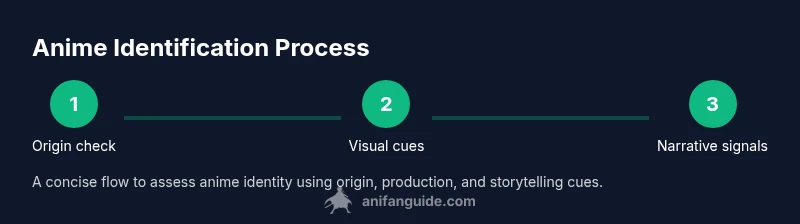
To know if something is anime, look beyond the art style and consider production context, storytelling approach, and audience conventions. A work is generally treated as anime when it originates from Japanese animation traditions, features serialized plots, and reflects genre conventions common in anime. Distribution, licensing, and fan labeling also influence classification. Use a structured check of origin, crew, distribution, language, and community labeling for a reliable determination.
What counts as anime? A working definition
Anime is traditionally defined by a combination of artistic style, narrative approach, and industrial practice rooted in Japanese animation. Yet in today’s global media landscape, many non-Japanese productions adopt anime aesthetics or are distributed within anime ecosystems. The core to determining whether something is anime lies in a confluence of origin, creative process, and cultural context. Use a working definition: an animated work that aligns with Japanese industry norms in at least one major axis—creative team, production pipeline, or distribution channel—while being recognized by fan communities as part of the anime ecosystem. This definition helps balance stylistic observations with production realities and avoids over-reliance on visuals alone. AniFanGuide’s framework emphasizes origin, craft, and audience labeling as primary signals, supplemented by context such as licensing and release strategy. Understanding these elements will sharpen your ability to discern anime from other animated media without resorting to stereotypes or simplistic visual cues.
Visual cues that distinguish anime from other animation
Visual cues are helpful but not definitive. Traditional anime often features stylized character designs with large expressive eyes, distinctive hair shading, and simplified but expressive facial features. You’ll notice motion that emphasizes timing and emotion over photorealistic detail, and background art that blends painterly textures with crisp line work. Frame rate can vary, with some titles using limited animation for emphasis, while others employ smooth, cinematic movement during action sequences. However, many non-Japanese productions imitate these aesthetics, so art style alone isn’t a guarantee. Look for production notes, original language, and credits that reveal the studio and country of origin. When in doubt, cross-check visuals with information about the animation team and release strategy to confirm alignment with anime traditions.
Narrative and pacing cues in anime storytelling
A hallmark of anime is its storytelling cadence, often organized around seasons, arcs, and character development that unfolds over multiple episodes. You’ll frequently encounter long-form character journeys, recurring themes such as coming-of-age, identity, or sacrifice, and genre hybrids like fantasy-meets-slice-of-life or sci-fi-meets-drama. Episodic structures may reset situations between episodes but carry overarching plotlines across seasons. Dialogue tends toward introspection and world-building, with cultural references that mirror Japanese social norms and humor. Remember that pacing varies: some shows advance in deliberate, slower beats, while others deliver rapid-fire action. Cross-cultural adaptations may adjust pacing, so verify original scripts and broadcast patterns to separate translation choices from core storytelling.
Production context and industry signals
Production context matters as much as what you see on screen. Anime typically emerges from Japanese studios, with production committees coordinating funding, distribution, and licensing. Look for credits listing Japanese producers, staff, or studios, even if the show is streamed globally. The presence of a Japanese broadcast license, a Japanese original soundtrack, or a reliance on Japanese language tracks (even with subtitles) strengthens the case for anime classification. Distribution patterns—especially how the title is marketed within anime-focused platforms, at anime conventions, or through anime-centric licensing—also signal its alignment with anime culture. While cross-border collaborations exist, consistent ties to the Japanese animation industry support the classification.
Common misclassifications and edge cases
Not every animated work with stylized visuals is anime. Some Western productions intentionally mimic anime aesthetics and narrative devices, a trend known as 'anime-inspired' or 'inanime'. Conversely, some Japanese productions may diverge from classic conventions, emphasizing experimental animation or non-traditional storytelling. Edge cases include adaptations from manga that are heavily serialized but produced outside Japan, or original works created by non-Japanese teams yet marketed as anime due to licensing in anime spaces. The key is to triangulate: original origin, production practice, and how communities label the work, rather than relying on a single cue.
How to evaluate an ambiguous title: a practical checklist
Use a concise, repeatable checklist to evaluate ambiguous titles: (1) origin: where was the project developed? (2) production team: are the writers, directors, and animators primarily Japanese? (3) distribution: is the release strategy tied to anime platforms, events, or networks? (4) language: is Japanese the primary language or original script? (5) community labeling: how do anime communities classify it? (6) adaptation: is it adapted from manga or light novels with Japanese origins? (7) visual and thematic cues: do characters, settings, and motifs reflect common anime tropes? Apply the checklist across multiple sources to reduce bias.
Quick comparison: anime vs. Western animation vs. Asian animation
Anime, Western animation, and broader Asian animations share some crossovers, but each has distinctive production ecosystems. Western animation often prioritizes stand-alone narratives or episodic formats with marketing tied to broader Western media franchises. Asian animation includes a wider range of styles beyond Japan, including Korea and Southeast Asia, with varying production pipelines and distribution channels. When in doubt, map a work onto the three dimensions of origin, craft, and consumer labeling to determine where it sits.
Your decision framework: a step-by-step method
Create a personal rubric that you apply consistently: (1) confirm origin and primary studio; (2) verify the original language and broadcast history; (3) assess narrative structure and genre conventions; (4) check licensing, distribution, and community labeling; (5) review if the work is part of an anime adaptation or franchise; (6) triangulate all signals and document your conclusion. This framework minimizes bias and helps you explain your decision if questioned.
Beyond classification: appreciating anime in a media literacy lens
Knowing whether something is anime extends beyond identification. It informs critical viewing—how cultural context shapes storytelling, how animation techniques affect mood and pacing, and how marketing frames a work for audiences. Treat classification as a tool for analysis, not a gatekeeping label. Embrace diverse works that share anime-inspired elements while recognizing the unique cultural and industrial forces that produced them.
Tools & Materials
- Notebook or digital note app(Record cues observed, sources checked, and your final conclusion with justification.)
- Glossary of anime terms(Include terms like isekai, slice of life, mecha, OVA, and adaptation.)
- Access to a streaming catalog or library(To sample titles for comparison and verify production context.)
- Pen or highlighter(Optional for marking key scenes during review.)
- Timer or reminder app(Helpful for keeping step-by-step evaluation within a set time.)
Steps
Estimated time: 2-3 hours
- 1
Define your baseline criteria
Identify the minimum signals you will treat as definitive (e.g., original Japanese production credit, serialized storytelling). Establish how you will weigh each signal in your final decision.
Tip: Set a measurable threshold (e.g., if 3 out of 5 key signals align, proceed to deeper evaluation). - 2
Check origin and production team
Look for credits revealing the country of origin, main studios, and the core creative staff. This helps separate art style from production context.
Tip: Cross-check multiple sources: credits, official sites, and industry databases. - 3
Assess language and broadcast history
Identify the original language, whether it aired on Japanese networks, and the release pattern (seasonal, streaming-first, etc.). This reveals alignment with anime distribution norms.
Tip: Note whether subtitles or dubs are first-language releases, which can influence classification. - 4
Analyze narrative structure
Evaluate whether the narrative follows long-form arcs, character growth, and genre conventions typical of anime.
Tip: Ignore episodic fan-favorites if they do not contribute to overarching arcs. - 5
Consider source material and adaptation
Check if the work is based on Japanese manga, light novels, or games, and whether the adaptation is tied to Japanese IP.
Tip: Adaptations from JP sources often strengthen the anime classification signal. - 6
Review distribution and labeling
Examine how the title is marketed, licensed, and discussed within anime communities.
Tip: A title marketed alongside anime events, such as conventions or anime-focused platforms, boosts the anime signal. - 7
Triangulate signals and decide
Weigh all gathered signals against your baseline and document the final determination with justification.
Tip: Write a concise justification to refer back to later. - 8
Revisit and refine
If new information emerges, reassess your conclusion and adjust your notes accordingly.
Tip: Keep an open mind; classification can evolve with new data.
Frequently Asked Questions
Is all animation from Japan considered anime?
Not every Japanese animation is automatically labeled as anime; context, production practices, and how communities label the work are also important. Japan-origin works with typical anime production patterns and distribution are more likely to be considered anime.
Not every Japanese animation is called anime; look at production and community labeling to be sure.
Can a non-Japanese studio produce true anime?
Yes. A title can be considered anime if it adheres to core anime conventions and is integrated into the anime distribution ecosystem, even when produced outside Japan. The key is alignment with anime storytelling, aesthetics, and industry practices.
Yes, it can be considered anime if it follows core conventions and distribution practices.
What is the difference between anime and anime-inspired?
Anime is traditionally defined by origin, production, and distribution patterns tied to Japanese practices. Anime-inspired works imitate visuals or tropes but lack the same production lineage or official association with anime ecosystems.
Anime-inspired looks do not guarantee true anime if production and ecosystem signals aren’t present.
How should I handle edge cases like streaming-exclusive titles?
Streaming exclusivity doesn’t automatically determine classification. Investigate origin, studio, language, and whether the title is marketed within the anime ecosystem to determine if it belongs to anime.
Exclusivity isn’t decisive—look at origin and production context instead.
Why consider production context and licensing in classification?
Production context and licensing reveal the intended audience, distribution strategy, and industry alignment. These signals help distinguish legitimate anime from similar-looking animations that are marketed differently.
Context and licensing reveal a title’s true classification.
What if I disagree with fandom labeling?
Fandom labels are useful but not definitive. Use your rubric, verify signals, and document your reasoning. If credible sources diverge, note the disagreement and why.
Labeling can differ; rely on evidence and your rubric.
Watch Video
Main Points
- Verify origin and production context before labeling.
- Distinguish between anime conventions and anime-inspired art.
- Rely on multiple signals: origin, staff, distribution, and community labeling.
- Edge cases exist; stay flexible and document your reasoning.
- Treat classification as a lens for analysis, not a gatekeeping rule.