How to Get Started Watching Anime: A Beginner's Guide
A practical, educational guide for beginners to start watching anime: pick starters, choose platforms, set goals, and build a starter watchlist with tips and safety notes.


You will learn how to get started watching anime: pick beginner-friendly titles, choose a streaming option, and set a simple watchlist. You’ll also learn quick etiquette, how to use filters, and where to find beginner guides. By the end you’ll have a clean starting lineup.
What is anime? A quick orientation
Anime is a broad art form from Japan that spans a wide range of genres and styles. For newcomers, the challenge is not what anime is but how to enter it without feeling overwhelmed. In practice, anime covers action, romance, fantasy, slice-of-life, sci-fi, and more, with distinctive visual storytelling and culture cues. According to AniFanGuide, the most important thing to remember is that you don't need to watch everything at once—start with a few titles that match your current mood and gradually expand. The AniFanGuide team found that beginners benefit from titles that balance pacing, accessible language, and clear episode structures. Use a simple approach: watch a couple of episodes per title, take notes on what you liked, and move on when you’re ready. This reduces burnout and builds confidence as a viewer.
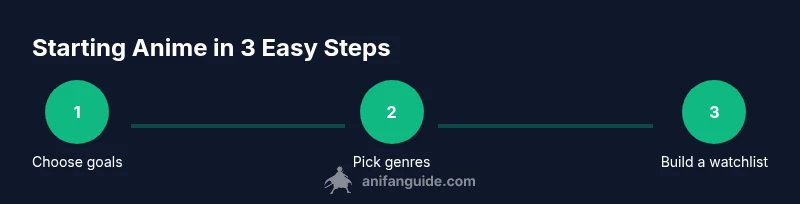
Define your goals and boundaries
Before you press play, set your intention. Are you watching to learn everyday language, to understand storytelling craft, or simply to enjoy entertainment? Defining your goals helps you choose titles that align with your purpose. Boundaries matter too: decide how many episodes you’ll watch in a sitting, whether you’ll skip series with heavy violence, and how you’ll handle mature themes. The AniFanGuide team recommends starting with a plan—list 3 target genres, 2-3 starter titles aligned to mood, and a two-week timeline. This plan acts as a lighthouse, guiding your exploration while keeping expectations realistic. If a title isn’t grabbing you after a couple of episodes, switch to a different one rather than forcing progress. Consistency beats marathon watching when you’re just starting out.
Identify genres that fit your mood
Mood shifts can change how you engage with anime. If you want light comfort, seek heartwarming slice-of-life or upbeat comedies. If you crave excitement, try sci-fi adventures or fantasy quests with clear stakes. For study or language practice, prefer titles with straightforward dialogue and daily-life scenes. Begin with one genre you enjoy, then gradually branch into others. The goal is a gentle, sustainable pace that keeps your curiosity alive. Over time, you will notice patterns in animation styles, storytelling devices, and character archetypes that help you pick titles faster. This awareness makes future watching feel less intimidating and more enjoyable.
Starter genres and beginner-friendly titles
To build confidence quickly, choose beginner-friendly genres that typically offer approachable pacing and clear arcs. Slice of life, lighthearted comedy, sports underdog stories, and gentle fantasy often work well for first-timers. Focus on series that balance character development with episodic structure so you can stop after an episode or two without losing momentum. Avoid ultra-long ep ranks in the first month; instead, pick shows with 12-24 episodes or shorter seasons. By starting with these genres, you reduce friction and keep the experience positive while you learn how anime storytelling works.
How to choose streaming options and accounts
You have several paths to access anime: free, ad-supported streaming, or paid subscriptions. Start with a basic plan on one trusted service and add more libraries as you explore. Many platforms offer beginner-friendly catalogs and robust parental controls, which can be helpful for younger viewers. If you are price-sensitive, look for free trials or bundles with devices you already own. Balance catalog size with ease of navigation, subtitles, and language options. The goal is to minimize barriers so you can begin watching without delay.
Setting up your viewing environment and preferences
Create a comfortable viewing setup to enhance focus and retention. Position the screen at eye level, enable captions, and adjust subtitle size for readability. Decide whether you prefer subs or dubs based on your language goals; many learners start with subtitles in your native language and progress to original subtitles or no subtitles later. Tweak playback speed for comprehension, and use a simple bookmarking method to track where you left off. If you watch on mobile devices, download episodes when possible to avoid data hits. A consistent environment reduces fatigue and makes learning more efficient.
Building a starter watchlist and tracking progress
Create a starter watchlist with 6-8 titles across genres and moods. Include at least one short series (12 episodes or fewer) and one comforting, easy-to-watch option. Track progress in a simple system: mark episodes watched, note new vocabulary, and jot down what helped you connect with characters. Reviewing your notes after each viewing helps consolidate memory and language learning. The goal is steady, manageable growth, not perfect recall in week one. Revisit your list weekly to swap titles that aren’t resonating for ones that fit your evolving tastes.
Safety, spoilers, and content warnings
Anime covers a wide range of themes and visual content. Before you start, check age ratings or content advisories on the platform. Be mindful of spoilers and discuss with friends or the community to set expectations. Use spoiler-free forums or turn off auto-play to avoid accidental reveals. If you’re sensitive to specific topics, enable content filters if offered by your streaming service. Responsible viewing ensures a healthier, more enjoyable introduction to anime.
Making it a habit: routines and long-term goals
Turn watching into a sustainable habit by pairing viewing with a learning routine. Schedule 20-30 minutes on weekdays for a single episode and 45-60 minutes on weekends for longer sessions. Set two concrete goals: finish one beginner-friendly title per month and learn 20-40 new words or phrases through subtitles. Track progress with a simple checklist or journal and celebrate milestones. As you grow more comfortable, you can expand into longer series, more complex genres, and even fan-made projects.
Next steps: explore, learn, and create
With a solid start, you can deepen your anime journey through three paths: expand your watchlist, learn about animation techniques, and engage with fans. Explore official guides, fan communities, and creator tutorials to broaden your understanding. Consider creating fan subs, fan translations, or simple fan art to reinforce what you learn. The goal is to enjoy the process and keep your curiosity alive as you progress from a beginner to a confident viewer.
Tools & Materials
- Device with internet access (smart TV, computer, or smartphone)(Stable connection for streaming and downloads.)
- A streaming service or library account(Choose one platform to start; you can add more later.)
- Headphones or speakers(For better immersion and language listening practice.)
- Notepad or digital notes app(Jot down new vocabulary and thoughts.)
- Comfortable viewing space(Good lighting and a comfortable chair help focus.)
- Parental controls need (if relevant)(Useful for younger viewers or shared devices.)
Steps
Estimated time: 60-90 minutes
- 1
Define your goal
Clarify whether you want language practice, entertainment, or cultural exposure. A clear goal helps you choose titles and set expectations. This first step reduces overwhelm by giving you a direction.
Tip: Write down 2-3 goals to reference during your first month. - 2
Pick 2-3 starter titles by mood
Select titles that match the mood you’re in—comfort, action, or humor. Keep the list short to avoid choice paralysis and ensure you actually finish episodes.
Tip: Aim for 12-episode arc or shorter to finish a title within a few weeks. - 3
Choose a platform
Choose one primary streaming option that offers the genres you want and has user-friendly navigation. You can add a second service later if needed.
Tip: Prioritize subtitle options and language accessibility when evaluating platforms. - 4
Create accounts and set preferences
Set up your accounts with preferred language, subtitles, and parental controls if needed. Adjust playback settings for learning pace and comfort.
Tip: Turn on subtitles in your native language first, then switch to target language versions as you improve. - 5
Build a starter watchlist
Put 6-8 titles on a simple watchlist across moods and genres. This keeps options diverse without overwhelming you.
Tip: Label each title with a short mood tag to guide future watching. - 6
Watch and take notes
Watch episodes in small, consistent sessions. Note unfamiliar vocabulary, cultural references, and storytelling techniques.
Tip: Pause to look up new words and jot down translations or meanings. - 7
Explore related genres
After you’re comfortable, expand to adjacent genres to broaden taste and learning opportunities.
Tip: Keep a separate list of titles you want to try next month. - 8
Establish a routine
Create a weekly schedule that balances new titles with rewatching favorites. Consistency beats intensity for beginners.
Tip: Set a 2-3 episode target per week to maintain momentum.
Frequently Asked Questions
What counts as beginner-friendly anime?
Beginner-friendly anime typically have approachable pacing, clear arcs, and relatable characters. Look for shorter series (12–24 episodes), light-toned genres, and straightforward dialogue. Start with titles that balance character development with episodic structure so you can stop after an episode if needed.
Begin with shorter, light series that are easy to follow and have clear stories.
Do I need to pay for streaming to start watching?
Not necessarily. Many platforms offer free, ad-supported options or trials. A paid service often provides more catalog variety and better language options, but you can start with free versions to test your interest before committing.
You can start with free options to test if you like anime, then decide about paid services.
How long should I watch anime each week as a beginner?
Begin with short, consistent sessions—20-30 minutes on weekdays and longer sessions on weekends as you build a habit. This steady pace prevents fatigue and helps you retain vocabulary and story details.
Keep it steady with short sessions during the week and longer ones on weekends.
Subtitles or dubs for beginners?
Start with subtitles in your native language to ease understanding, then gradually switch to original subtitles or no subtitles as your comprehension improves. This progression supports language learning and immersion.
Begin with native-language subtitles and move toward the original language as you get better.
How can I avoid spoilers?
Turn off auto-play, use spoiler-free forums, and discuss new episodes with trusted friends or modules that shield spoilers. Create a personal note-taking habit to track plot points without external hints.
Disable auto-play and discuss with trusted friends to dodge spoilers.
What if I still don't like anime after trying a few titles?
That happens. Revisit your goals, try different genres, and give yourself permission to pause. Sometimes a short break and a fresh approach can reignite interest.
If you don’t like it after trying a few titles, switch genres and take a break to reset.
Watch Video
Main Points
- Define clear goals for your watching.
- Start with 6-8 titles across moods.
- Use a simple, sustainable routine.
- Keep notes to reinforce learning.