Can You Learn Japanese from Anime? A Practical Guide
Explore practical strategies to learn Japanese using anime, balancing immersion with study, and avoiding common pitfalls for real listening and speaking improvement.


According to AniFanGuide, you can learn Japanese from anime when paired with a deliberate plan. Start with curated shows that match your level, align subtitles to Japanese, and actively take notes. Balance immersion with formal practice and real conversation—anime alone won’t yield fluency in practice.
What you can and cannot expect from anime-based learning
According to AniFanGuide, anime can be a powerful starting point for language exposure when combined with a structured learning plan. It offers authentic listening practice, exposure to natural speech rhythms, and memorable phrases that textbooks sometimes miss. However, anime is not a stand-alone curriculum. Grammar explanations, clear pronunciation practice, and opportunities for speaking with others are essential to progress beyond passive listening. Treat anime as a supplementary spark that triggers curiosity, builds listening stamina, and anchors vocabulary in real contexts. To maximize gains, pair anime with deliberate study: a focused vocabulary deck, regular speaking practice, and progress checks. When used this way, anime helps bridge classroom learning and real-world usage, especially for listening and cultural context. The best results come from consistency, not one perfectly watched season. Remember: you’re building skills that require multiple inputs over time, so use anime as one tool among a broader study regimen.
How anime exposes language patterns: listening, pronunciation, and rhythm
Anime dialogue is designed for entertainment, which means it showcases informal speech, casual grammar, and natural intonation that often differs from textbook patterns. You’ll hear contractions, slang, sentence-final particles, and a speed of delivery that mirrors real conversations. Pay attention to how characters segment thoughts, how topic shifts occur, and how questions are asked with rising intonation. Repeated phrases and common collocations emerge across episodes, offering a treasure trove of usable language. The key is active listening: pause, repeat, imitate, and note how sounds blend. Use shadowing techniques to train pronunciation and rhythm, but don’t imitate mistakes you wouldn’t normally make in daily conversation. Treat each scene as a micro-lesson in cadence and pragmatic usage, not a perfect model of formal speech.
The role of subtitles and how to use them effectively
Subtitles are a double-edged sword. They can help you grasp meaning quickly and connect spoken language to written form, but over-reliance on English subtitles can blunt your listening attention. A practical approach is to start with Japanese audio and Japanese subtitles to reinforce reading with listening, then gradually reduce subtitle dependency as you gain confidence. If you must use subtitles, choose sources with accurate, natural translations and avoid overly literal renderings that obscure nuance. Periodically watch scenes with no subtitles to test comprehension, then reintroduce Japanese subtitles to solidify new terms and phrases. Keep a running glossary of new vocabulary, including kanji readings when they appear in subtitles, to reinforce recognition.
Vocabulary extraction strategies from anime
Anime is rich in everyday vocabulary, phrases, and fixed expressions. To convert this into durable learning, use a dedicated flashcard system and extract phrases rather than isolated words. Start with commonly repeated expressions, greetings, and contextual phrases that fit your daily life. Create example sentences using vocabulary in your own phrases to deepen memory. Record a short clip of yourself saying a line and compare your pronunciation with the original. Tag vocabulary by topic (food, travel, school) and by formality level to help you choose the right registers for different situations. Regular reviews with spaced repetition eating into daily study time will compound gains across listening and speaking.
Grammar and sentence structure in anime dialogue
Casual anime dialogue often drops formal endings and uses particles in ways that differ from textbooks. You’ll encounter sentence-final particles that convey mood, tone, and assumptions, as well as casual contractions that shorten words in speech. Compare lines with formal equivalents to notice when a character switches tone or formality. Focus on core grammar patterns—topic marking with wa, predicate endings, and how adjectives modify nouns—rather than memorizing stray phrases. Practicing these patterns in isolation helps you recognize and reproduce them more accurately in real conversation. Remember: anime highlights natural usage, not comprehensive grammar explanations, so complement viewing with structured grammar resources.
Culture, slang, and context: how to avoid misinterpretation
Language and culture are tightly linked in anime. Terms that seem harmless on screen can carry strong social nuance when used in conversation. Learn the contexts that determine politeness, honorifics, and casual forms, and be cautious with slang that varies by region or subculture within anime fandom. When you hear a joke or a sarcastic remark, try to interpret the social setting, relationship dynamics, and implied sentiment. If a scene includes cultural references, pause to look up background details. Use reliable glossaries and cross-reference real-life usage to avoid misinterpretations that could hinder communication in real settings.
Practical study plan: how to integrate anime with formal learning
A practical plan blends immersive viewing with deliberate study. Start with a weekly routine: a few short anime sessions focused on listening and vocabulary, plus regular grammar practice using a proven resource. Alternate days between watching for comprehension and writing/ speaking practice based on lines you heard. Use a vocabulary deck to capture new terms, phrases, and their contexts, then actively compose sentences that use them. Schedule periodic reviews to prevent forgetting and set measurable targets for listening accuracy, pronunciation, and speaking fluency. Keep a simple log of what you learned, what challenged you, and your next steps.
Tools and resources to supplement anime-only learning
To maximize value, couple anime with complementary resources. Use a spaced-repetition flashcard app for vocabulary, a dependable dictionary with example sentences, and a plain-text grammar guide for reference. Consider joining language exchanges or discussion groups to practice speaking and listening in real-time. Supplement viewing with beginner-friendly grammar workbooks or online courses that explain particles, verb conjugations, and sentence structures. Finally, maintain a short weekly review where you summarize what you learned from anime, note gaps, and set goals for the next week.
Common pitfalls and how to measure progress
Common pitfalls include relying on subtitles without listening, assuming understanding from a few scenes, and neglecting speaking practice. Mitigate these by scheduling speaking drills, shadowing, and vocabulary reviews, and by checking comprehension with self-quizzes and small conversational tasks. Progress can feel gradual, so set small, observable goals and record your speaking or listening benchmarks over time. Celebrate incremental gains, and adjust your plan when certain activities stop yielding improvements. Regular reflection helps you stay motivated and ensure anime remains a productive part of a broader learning strategy.
Tools & Materials
- Headphones or quality speakers(Closed-back recommended for clear audio)
- Notebook or digital note-taking app(Jot new words, phrases, and grammar points)
- Anki-style flashcard app(Create spaced-repetition decks for vocabulary)
- Dictionary app with example sentences(Check kanji readings and usage examples)
- Subtitles in Japanese (and bilingual if available)(Start with Japanese subtitles to link sound to text)
- Curated anime list (beginner-friendly)(Choose shows with everyday language and clear dialogue)
Steps
Estimated time: Four to six weeks (daily practice)
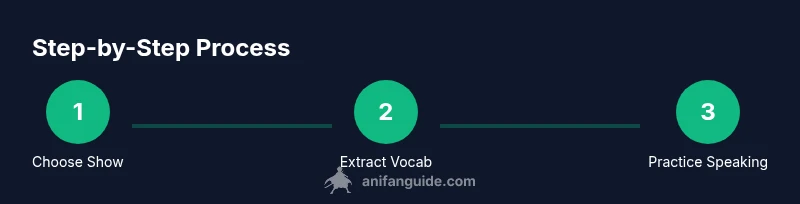
- 1
Choose the right shows
Select anime with accessible language, clear speech, and everyday topics. Look for shows labeled beginner-friendly or slice-of-life to avoid dense jargon. Use a short pilot episode to assess language level and pacing before committing to a longer watch.
Tip: Keep a list of preferred shows and note the language level you can handle. - 2
Set learning goals
Define realistic lexical and functional targets (e.g., ten new phrases per week, five listening patterns). Document goals in a study log, and review progress weekly to stay focused.
Tip: Write goals in the active tense and review them every week. - 3
Enable subtitles in Japanese
Watch with Japanese audio and Japanese subtitles to connect sounds with written forms. If helpful, add English subtitles for a first pass, then remove them as you gain confidence.
Tip: Avoid relying on romaji; use kana/kanji when possible. - 4
Extract vocabulary and phrases
Pause scenes to record new terms and phrases in your deck. Include example sentences and note the context where you heard them. Group by topic and formality level for later practice.
Tip: Prioritize phrases you can reuse in daily life. - 5
Create example sentences
Transform new terms into your own sentences that reflect your personal situations. This ensures you understand nuance and correct usage in context.
Tip: Speak the sentences aloud to lock in pronunciation. - 6
Shadow and imitate
Practice shadowing scenes to train pronunciation and rhythm. Focus on intonation and tempo, not just word-for-word repetition.
Tip: Record yourself and compare with the original to spot differences. - 7
Practice with a partner
Find a language partner or tutor to rehearse lines and discuss scenes. Real conversation reinforces grammar and vocabulary beyond passive listening.
Tip: Use scenes as prompts for role-play conversations. - 8
Review and adjust
Periodically review your deck and notes. Remove or consolidate items that you consistently understand, and add new terms from current viewing material.
Tip: Keep a running list of persistent gaps to target next. - 9
Expand to more complex content
As confidence grows, introduce slightly harder shows and subtitles, and start incorporating formal language practice or grammar resources to balance your exposure.
Tip: Avoid jumping too quickly to advanced material.
Frequently Asked Questions
Can I learn grammar just from anime?
No. Anime demonstrates usage in context but is not a substitute for formal grammar explanations and structured practice.
Anime shows you how language is used, but you still need clear grammar resources.
Should I avoid English subtitles entirely?
English subtitles can help with quick understanding at the start, but rely on Japanese content as you progress. Transition away from English to deepen comprehension.
English subtitles can be a crutch; move toward Japanese subtitles as you gain confidence.
What level is best to start anime learning at?
Begin with beginner-friendly shows that use everyday language and clear dialogue. Gradually increase difficulty as your listening and vocabulary grow.
Start with simple shows and build up to more complex ones as you improve.
Can anime help with listening skills?
Yes, with active listening and deliberate practice. Use listening drills, shadowing, and note-taking to convert listening into usable language knowledge.
It helps a lot when you actively practice what you hear.
Is anime enough for fluency?
Anime is a powerful supplement, but true fluency requires varied practice across speaking, reading, and structured study.
It’s great for exposure, but you’ll want broader practice too.
How long before you notice progress?
Progress varies by learner and consistency. Regular, focused practice yields noticeable gains over time.
You’ll see gradual improvements with steady effort.
Watch Video
Main Points
- Start with a plan and target shows.
- Use Japanese subtitles to link sound and text.
- Build a vocabulary deck from anime lines.
- Balance immersion with explicit study for accuracy.
- Track progress with regular self-assessments.