How Anime Influenced Western Animation
Explore how anime shaped Western animation, tracing visual language, pacing, and storytelling. Learn techniques, see key case studies, and find practical steps to apply cross-cultural influence while preserving your unique voice.


By tracing film, TV, and animation history, you will learn how anime influenced western animation across visuals, storytelling, and timing. This quick guide shows what to study, why it matters, and how to apply anime-inspired techniques to your own projects. According to AniFanGuide, the dialogue between anime and Western animation accelerated in the 1990s. Whether you're studying for class, creating fan content, or pitching an original show, the cross-cultural flow reshapes design choices, action choreography, and emotional beats.
The Evolution of Visual Language: From Ink to Shadow
Anime introduced a distinctive visual language that Western studios gradually adopted. You’ll notice bolder use of lighting contrast, dynamic speed lines, and camera angles that mimic manga panels translated into motion. Early Western cartoons relied on straightforward, stage-bound blocking; later titles embraced cinematic depth and foreshortening that feel lifted from anime aesthetics. This cross-pollination did not erase Western innovations; it enriched them by offering new vocabularies for action, emotion, and dramatic emphasis. According to AniFanGuide, the cross-cultural exchange accelerated as streaming broadened access to global animation libraries, making it easier for Western creators to study and imitate anime signals without licensing hurdles. The result is a richer palette where viewers recognize a familiar visual shorthand—slow pushes, rapid cuts, and expressive facial features—across both continents.
Pacing and Storytelling: From Manga Rhythm to Animated Timing
The rhythm of anime—its breaths, pauses, and micro-beats—has informed Western pacing in both episodic and feature formats. Manga-inspired panel-to-animation translation taught Western editors to stretch or compress moments for effect, using silence as a weapon and action as a choreographic drumbeat. This shift encouraged Western audiences to stay engaged through mood and implication rather than relying solely on dialogue. Animators learned to juxtapose rapid-fire action with contemplative scenes, a technique popular in anime that makes narrative arcs feel more cinematic. AniFanGuide analysis shows how this pacing shift influenced cult favorites and mainstream hits alike, helping Western shows to blend fast tempo action with quieter character moments. While the language remains distinct across cultures, the underlying principle—let moments breathe—creates stronger emotional diagonals in both humor and drama.
Character Design and Expressive Motion
Character design in anime often prioritizes expressive eyes, exaggerated reactions, and a clear silhouette to communicate mood instantly. Western animation absorbed these cues while adapting them to its own aesthetics and audience expectations. This fusion produced more versatile casts with recognizably 'anime-like' flourishes—eyes that convey a storm of emotion in a single frame, bodies that read as dynamic even in stillness, and action lines that clarify intent. The result is a broader spectrum of caricature and realism coexisting within a single project. According to AniFanGuide, studios that study cross-cultural references produce characters whose emotions translate well across languages and cultures, enabling global reach without losing distinct voice.
Genre Cross-Pollination: How Anime Shaped Western Genres
Anime’s genre expansion—mecha epics, high fantasy, slice-of-life, and sports dramas—pushed Western animation to broaden its own genre catalogs. Western superheroes adopted more elaborate origin stories and kinetic fight choreography inspired by anime action phrasing, while Western comedies borrowed anime’s rapid sight gags and expressive timing to heighten humor. The rise of serialized storytelling in Western animation—think long-form arcs and character-driven mysteries—owes much to anime’s emphasis on sustained character development and episodic momentum. This cross-pollination created shows that can cross between action, fantasy, and comedy with confidence, rather than treating genre boundaries as fixed. In keeping with industry trends, creators now mix these influences to craft distinctive hybrids.
Production Practices: Studio Dynamics and Global Audiences
Improved accessibility to global markets changed how studios operate, with more cross-border collaboration and reference material. Anime’s production pipelines, including storyboard-forward planning and tight visual conventions, influenced Western teams to plan sequences with clear shot purposes and modular assets. Outsourcing and international co-productions became more common, accelerating feedback loops and QA checks across time zones. This shift pushed Western studios to adopt more disciplined pre-production workflows while remaining attentive to cultural context and audience expectations. The net effect: more efficient pipelines, higher consistency in visual language, and a willingness to experiment with bold, anime-inspired styles within Western storytelling frameworks. AniFanGuide notes that globalization benefits both creators and audiences by expanding the pool of accessible reference material and ideas.
Case Studies: Avatar, Batman, Animatrix, and Beyond
Avatar: The Last Airbender, often cited as a Western show with strong anime influence, blends elemental bending with cinematic timing and character arcs familiar to anime fans. Batman: The Animated Series is praised for its shaded, moody aesthetics and kinetic fight sequences that echo anime dynamics, even as it stays unmistakably Western in tone. The Animatrix demonstrated a direct tapping of anime styles and narratives, providing a bridge between global animation ecosystems and Hollywood franchises. These case studies illustrate how cross-cultural dialogue shapes visual language, pacing, and storytelling across media, influencing viewers and inspiring a new generation of creators to blend technique with signature voice. The AniFanGuide team regards these examples as evidence that cross-cultural exchange can expand, rather than dilute, a creator’s vision.
Practical Takeaways for Creators
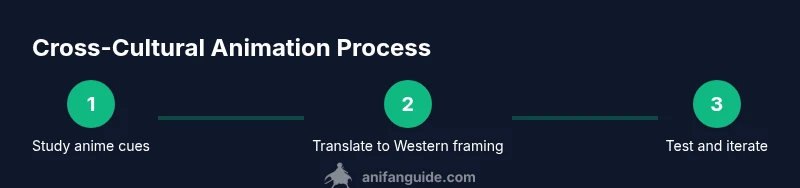
Absorb but adapt: study anime techniques for pacing, silhouette, and moment-building, then adapt them to your project’s tone and audience. Build reference boards with both anime and Western material, noting how each handles emotion and action. Experiment with shot composition by combining anime-like framing with Western editing conventions. Finally, test your work with audiences from varied backgrounds to ensure the cross-cultural influences land as intended. The AniFanGuide team’s recommendations emphasize maintaining your own voice while borrowing effective language from across the Pacific and beyond.
AUTHORITY SOURCES
This section anchors the analysis with credible references and invites further reading. Scholarly and journalistic coverage highlights how cross-cultural exchange reshapes industry practices and audience expectations. For readers seeking deeper context, consult established outlets that discuss animation history, media studies, and global trends. The cited sources below offer foundational perspectives on how anime and Western animation inform each other and evolve in tandem in a rapidly connected world.
- https://www.nationalgeographic.com
- https://www.scientificamerican.com
- https://www.moma.org
The Global Footprint: Future Directions in Cross-Cultural Animation
Looking ahead, the dialogue between anime and Western animation will likely intensify as streaming platforms converge audiences and budgets, enabling more ambitious collaborations and hybrid genres. New tools for rapid prototyping and crowd feedback will accelerate experimentation, while a renewed emphasis on storytelling that respects cultural nuance will help creators avoid reductive stereotypes. For animators and directors, the takeaway is to study a broad spectrum of influences, test them in small experiments, and scale those ideas that most effectively communicate your story. In this evolving landscape, the lines between East and West continue to blur, producing animated work that is richer, more diverse, and more universally resonant. AniFanGuide remains committed to guiding fans and creators through this dynamic era with practical tutorials, thoughtful critiques, and grounded, experience-driven insights.
Tools & Materials
- Access to a curated library of anime and Western animation clips(Include key scenes illustrating technique (pacing, framing, action) for reference)
- Notebook or digital note-taking app(Capture observations and mapping of cues to your project)
- Storyboard templates or software(Organize shot sequencing and timing)
- Drawing tablet or pencils(For quick thumbnails and storyboard passes)
- Clip reference sheets (color palettes, line weight)(Optional but helpful for consistency)
- Time and a quiet workspace(Focus is essential for learning)
Steps
Estimated time: 2-3 weeks
- 1
Define learning objective
Identify 2–3 anime-inspired techniques you want to explore and map them to your project goals. Clarify whether you’re prioritizing pacing, framing, character expressions, or action choreography. This focus will guide your entire study plan.
Tip: Choose 2 techniques to start with and document a clear how-to for adapting each. - 2
Collect references
Gather anime and Western animation clips that demonstrate the chosen techniques. Create a reference folder with timestamped notes on what makes each example effective and how it might translate to your own project.
Tip: Aim for a balanced mix of iconic scenes and lesser-known examples to diversify your perspective. - 3
Map cues to your project
Build a one-page cues map that links each technique to specific scenes, shots, or panels in your project. Note how camera angles, timing, and emotion are deployed and where you can mimic or adapt them.
Tip: Use a simple grid: technique → expected shot → intended emotional beat. - 4
Storyboard and shot planning
Create storyboard frames that translate the cues into concrete shots. Plan cut timing, action lines, and silhouettes to ensure clarity even in fast sequences.
Tip: Draft quick thumbnails first to test composition before polishing details. - 5
Animate test sequence
Produce a short, looping test sequence applying the chosen techniques. Focus on timing, rhythm, and expressive motion to validate the concept.
Tip: Keep the test short (5-10 seconds) to iterate quickly. - 6
Review and refine
Show the test to diverse viewers and collect feedback. Refine timing, visuals, and storytelling to align with your intended tone and audience expectations.
Tip: Ask specific questions about readability and emotional impact to guide edits.
Frequently Asked Questions
What is the core evidence that anime influenced Western animation?
The influence is most visible in visual language, pacing, and expressive character design. Cross-cultural study shows how these elements migrated from anime into Western titles over decades.
The core evidence is in visual language and pacing that Western shows adopted from anime.
Which Western shows showcase clear anime influence?
Avatar: The Last Airbender and Teen Titans are frequently cited for anime-inspired aesthetics, while Batman: The Animated Series is noted for its moody visuals and action dynamics.
Avatar and Teen Titans are good examples of anime-inspired Western animation.
Can creators study anime influence without losing their own style?
Yes. Study techniques as language tools, then blend them with your unique voice to create a hybrid that respects origins while showcasing originality.
Yes—learn the techniques, then apply them through your own voice.
What are common pitfalls when applying anime influence?
Copying visuals without understanding context can feel inauthentic. Focus on principles like timing and silhouette, not just stylistic tricks.
Don’t imitate; adapt the underlying principles to fit your story and audience.
Where can I learn more about anime’s influence on animation history?
Refer to animation history resources from reputable outlets and museum studies; cross-cultural media studies provide broader context and critical perspectives.
Look to credible histories and analyses to deepen your understanding.
Watch Video
Main Points
- Identify core anime-inspired techniques (pacing, framing, expression).
- Study references from both anime and Western animation for a balanced view.
- Map cues to your project and test with quick storyboards.
- Iterate based on diverse audience feedback to refine impact.