Can You Put Anime Voice Lines in Music? A Practical Guide
Explore legal, technical, and creative steps to weave anime voice lines into music. Licensing, sourcing, editing, tempo matching, and release considerations for safe, expressive productions.


You can, but you must respect copyright and licensing. This quick guide outlines practical steps to source lines, patch them into your project, and adjust timing and pitch so they blend with the beat—while staying compliant with rights holders and platform rules. Expect considerations on fair use, sample licensing, and attribution. This snippet sets the stage for the deeper steps that follow.
Legal & Ethical Foundations
According to AniFanGuide, licensing is not optional when using anime voice lines in music. Creators should treat voice samples as intellectual property requiring permission, clear terms, or a license from the rights holder. The AniFanGuide team found that many projects stumble at this first hurdle, leading to takedown requests or monetization disputes. Before you touch any clip, document who owns the rights, what you may do with it (distribution, monetization, edits), and any expiration or territory limitations. This section also covers attribution expectations, contract clarity, and fault tolerance if permissions lapse. A transparent rights plan protects your project and helps you plan a legitimate release strategy across streaming platforms.
- Key takeaway: secure a license or written permission before using voice lines.
- Pro tip: keep a rights tracker spreadsheet with contact details and license terms.
- Note: some lines may be cleared only for non-commercial use; verify scope for commercial music.
Sourcing Anime Voice Lines
Whether you’re chasing iconic lines or subtle phrases, the best approach is to obtain approved material through official channels or licensed sample libraries. Unofficial fan clips carry high risk of takedowns and limited distribution. If official licenses aren’t available, you can negotiate usage of generic vocal samples or hire voice actors to recreate relevant lines under a custom license. This strategy aligns with industry best practices and reduces uncertainty for distribution on platforms like YouTube, Spotify, and Apple Music. For creators, this means building a small library of legally cleared samples that you can reuse across tracks. AniFanGuide analysis shows the importance of treating licensing as an upfront cost rather than a post-production hurdle.
- Source from licensed libraries or rights holders.
- Avoid relying on unlicensed fan clips for monetized releases.
- Consider commissioning original lines to match your project’s vibe.
Technical Considerations for Voice Lines
Audio quality directly affects how well voice lines blend with music. Start with a clean WAV or AIFF file at a common sample rate (44.1kHz or 48kHz). Normalize peaks to a consistent loudness, then inspect silence around phrases to decide where natural breaks occur. If the lines were recorded in different environments, apply light noise reduction and spectral leveling to ensure a cohesive sonic texture. When you resize sample length, use time-stretching algorithms that preserve pitch to avoid vocal artifacts. This block also covers file organization, metadata tagging, and keeping stems clearly labeled for collaboration. As you prepare your files, ensure consistent channel balance and mono compatibility for certain playback systems.
- Use high-quality source files and consistent sample rates.
- Apply light noise reduction only where needed to preserve natural voice character.
- Organize files with clear labeling and provenance.
Creative Techniques for Integration
Blending anime voice lines with music is an art as much as a science. Align lines to the beat by snapping phrases to bars and adjusting tempo with time-stretch tools—without changing the vocal’s natural character. You can apply light EQ to carve out mud or harshness, then add gentle compression to stabilize dynamics. Panning and stereo placement can place lines in the mix without overpowering melodies. Creative processing like formant shifting or subtle re-tuning can help lines sit in a different key if needed while preserving intelligibility. This section includes practical tips for maintaining expressiveness while ensuring the lines serve the music.
- Align lines to the rhythm and groove of your track.
- Use gentle EQ, compression, and optional saturation to glue lines into the mix.
- Experiment with stereo width and subtle formant adjustments for tonal balance.
Production Workflow: From Idea to Release
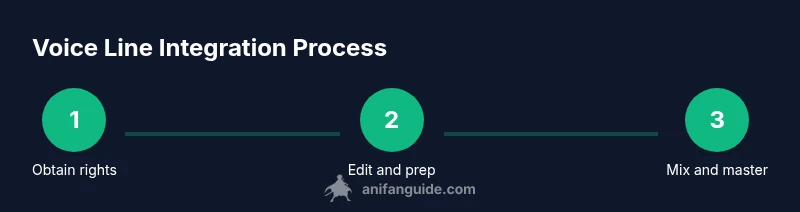
A clear workflow reduces risk and speeds up production. Start with a licensing check, then import and organize samples, create a rough arrangement, and test timing against the main groove. Next, perform precise edits (cuts, fades, crossfades), apply processing, and build a final mix. Finally, verify rights disclosures and credits before exporting masters. Document every decision—especially licensing terms—to simplify future projects. This section provides a practical, repeatable pipeline that can scale as you add more anime voice lines across tracks. The workflow emphasizes collaboration with vocalists or licensed studios to maintain consistency across your catalog.
- Establish a licensing-first workflow from day one.
- Build an edit-ready session with labeled clips and markers.
- Keep a credits log for every sample used.
Mixing & Mastering for Speech Samples
Mixing voice lines requires balancing intelligibility with musical presence. Apply a dedicated vocal bus, parallel compression, and gentle high-end shelfing to keep lines crisp without sounding clipped. Sidechain compression can help the vocal sit under kick drums in busy sections, while reverb should be restrained to avoid washiness. In mastering, ensure the vocal presence remains clear on streaming devices and in car stereos. This block also covers automation to keep lines audible during dynamic sections and quiet enough during verses. Remember to check stereo imaging on headphones and speakers to confirm consistency across listening environments.
- Use a vocal-specific processing chain, not generic effects.
- Use subtle dynamics and spatial effects to preserve clarity.
- Test your mix on multiple playback systems.
Release, Rights & Credits
Even with cleared rights, proper attribution is important. Include licensing details in the track’s credits, alongside information about how the voice line was used (context, duration, and modification). If you commissioned lines or used a licensed library, keep copies of licenses and contact information for future updates or renewals. Platforms often require licensing statements or proof of rights; prepare these in advance to avoid distribution delays. This section emphasizes proactive compliance and transparent crediting as part of a professional workflow and sustainable practice in anime-inspired music releases.
- Include licensing notes and owner credits in metadata.
- Retain all license documents and contact details.
- Prepare proof of rights for platform review or disputes.
Case Studies & Practical Examples
Consider two hypothetical projects to illustrate best practices. Example A sources licensed lines from an official soundtrack library, integrates a short line at the end of a chorus, and credits the rights holder in the metadata. This approach yields a clean, commercially viable release. Example B uses original voice actor lines commissioned specifically for the track, enabling complete control over timing and tone while meeting licensing terms. In both cases, clear rights documentation and thoughtful mixing choices ensure quality results without legal friction. The AniFanGuide team recommends leaning toward original recordings when possible to simplify distribution and future reuse.
- Example A demonstrates compliant usage with a licensed library.
- Example B shows the benefits of commissioned lines for maximum control.
- The AniFanGuide team recommends prioritizing licensing clarity in every project.
Tools & Materials
- DAW (Digital Audio Workstation)(Choose one with robust time-stretch, pitch-shift, and modulation options)
- Audio interface(For clean recording and playback monitoring)
- Headphones and studio monitors(Critical for accurate mixing across systems)
- Licensing rights or permission for voice lines(Obtain written permission or license)
- Licensed voice line library or original voice actors(Source legally cleared material)
- Time-stretch / pitch-shift plugins(Often built into DAW but verify availability)
- Notetaking/documentation for licenses(Track terms, expirations, and contact info)
Steps
Estimated time: 2-4 hours
- 1
Prepare legal groundwork
Review ownership, licensing scope, and distribution rights. Create a rights plan with contact info and license terms for each voice line. This upfront work avoids delays and disputes later.
Tip: Document every permission and keep digital copies organized. - 2
Gather voice lines legally
Obtain official license or use commissions/or licensed libraries. Verify usage limits (territory, duration, monetization) and ensure you have a copy of the license in your project files.
Tip: Prefer original or licensed material to simplify release. - 3
Import and organize samples
Import lines into your DAW with clear naming (artist, line, source, license ID). Group by scene or section to speed editing and maintain consistency.
Tip: Create markers for phrase starts and ends to speed timing edits. - 4
Edit timing to tempo
Snap phrases to measures or beats, and use time-stretch but preserve natural vocal qualities. Maintain intelligibility while aligning with your groove.
Tip: Work at multiple tempos to test flexibility; choose the version that fits best. - 5
Pitch and timbre alignment
Adjust pitch to fit the key if necessary, using formant-preserving methods to avoid unnatural vocal sounds. Tweak dynamics so lines blend with the vocal and instruments.
Tip: Small pitch shifts can dramatically improve cohesion; avoid extreme changes. - 6
Apply processing and effects
Apply gentle EQ, compression, and subtle reverb. Use stereo placement to prevent masking by main melodies and percussion. Keep processing tasteful to preserve natural voice presence.
Tip: A/B tests with and without effects help ensure the line remains legible. - 7
Finalize licensing and credits
If required, attach license metadata and credits to the track. Prepare delivery-ready documentation for platforms and distributors.
Tip: Store license documents in a dedicated folder linked to the project. - 8
Export and share
Export master files with appropriate loudness and dithering. Verify platform-specific requirements and prepare alternative mixes if needed.
Tip: Test the mastered track on headphones, car speakers, and monitors.
Frequently Asked Questions
Are anime voice lines legal to use in music?
Yes, but only with proper rights. Use licensed material or permission from rights holders, and comply with platform rules. Do not rely on unlicensed clips for monetized releases.
Yes—rights matter. Use licensed samples or commissioned lines to stay compliant.
How do I license voice lines for music?
Identify the rights holder or licensing library, request terms, and secure a written license detailing usage scope, territory, and duration. Store the agreement with project files for future reference.
Talk to rights holders and get a written license before using lines.
Can I use fan-made clips if I don’t monetize the track?
Fan-made clips still carry risk even for non-commercial releases. Prefer official licenses or commissioned lines to avoid takedowns or legal issues.
Even unpublished fan clips can cause trouble; use licensed material.
What if I modify the lines heavily?
Modification is allowed only if the license explicitly permits it. If not, seek a separate agreement or use lines that allow derivative works.
Modify only if your license allows it; otherwise, get permission.
How should I credit voice line sources?
Credit the rights holder in metadata and track credits, including license details and how the lines were used. Clear credits help with future licensing and transparency.
Credit the rights holder in metadata and credits.
What about fair use in music with anime lines?
Fair use is context-specific and unpredictable in music. Rely on explicit licenses to stay safe, especially for monetized releases.
Fair use is risky to rely on; use licensed material instead.
Watch Video
Main Points
- Know rights and licenses before using lines.
- Source legally or commission originals to simplify releases.
- Match tempo and key carefully for natural integration.
- Treat licensing as a project foundation, not an afterthought.
- Test across devices to ensure consistent vocal presence.