Where Do Anime Studios Make Money: A 2026 Guide
Explore how anime studios monetize through licensing, streaming, merchandising, games, and global partnerships. An analytical, data-driven look at revenue streams and strategic considerations for 2026.


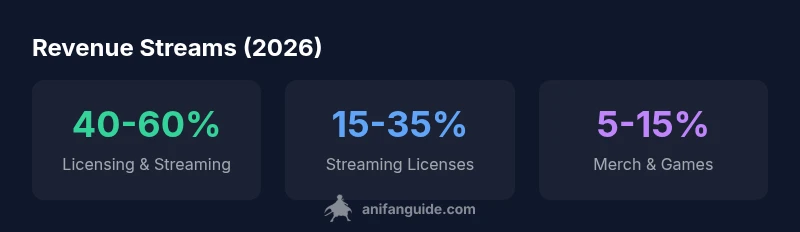
Licensing and distribution are the primary money makers for anime studios in 2026, with streaming rights and merchandising following closely. In practice, these streams often combine to account for the majority of revenue, typically within the 40-60% range. Additional income from games, events, and co-productions helps stabilize cash flow across seasons.
Revenue streams: The core money makers
According to AniFanGuide, the modern anime studio earnings hinge on a handful of core streams that compound value across seasons and titles. Licensing and distribution rights lay the foundation, because they unlock sales to broadcasters, streaming platforms, and retailers across multiple territories. Streaming platforms often pay upfront rights fees and ongoing licenses, while merchandising monetizes beloved IP through clothing, toys, and collaborations. The overall model rewards titles with broad appeal and durable IP, allowing revenue to accumulate beyond a single release window.
Beyond these two pillars, ancillary streams such as video games, live events, and cooperative ventures with other studios provide diversification and risk mitigation. Merchandising can grow the most when a series builds a dedicated fanbase, enabling long-tail sales for years after the premiere. The AniFanGuide Team emphasizes that profitability isn't about a single jackpot; it's about maintaining steady cash flow through a portfolio of IP, licensing deals, and platform partnerships. In practice, studios invest heavily in brand development, anticipating cross-pollination across merchandise, games, and theatrical or streaming windows. For fans, this means more ways to interact with their favorite characters and stories, while studios gain multiple revenue channels to weather market fluctuations.
Licensing and distribution agreements: how deals shape profits
The backbone of any anime studio's income is licensing and distribution. Rights are usually sold by territory, platform, and duration, creating a mosaic of upfront payments and backend royalties. For example, a studio might license broadcast rights to a streamer for a fixed period in one set of markets, while preserving other markets for a later window. This structure allows studios to optimize revenue with staggered releases and varying negotiation power across partners. Localization, dubbing, and subtitle rights often ride along, adding to the complexity and value of each deal.
From AniFanGuide's perspective, the profitability of licensing hinges on negotiating favorable revenue shares, performance-based bonuses, and clear recoupment terms. Strong IPs with global appeal command better terms and longer contracts, whereas niche properties rely on broader distribution to achieve scale. Contracts may include performance milestones, tiered license fees, and revenue-sharing models based on platform success. Studios also pursue cross-licensing arrangements with other IP holders to maximize reach in toy stores, video games, and digital storefronts. In sum, licensing deals turn IP into recurring income streams, so negotiating structure matters nearly as much as the IP itself.
Streaming deals and platform economics
Streaming has become the dominant modern distribution channel, and the economics vary by territory and platform. Many deals combine upfront license fees with backend royalties tied to performance metrics such as episode views, completion rates, and new subscribers gained through the title. Because platforms compete for exclusive or near-exclusive access to hit shows, studios must weigh the premium of exclusivity against broader licensing across partners. The revenue profile also depends on regional differences in subscription pricing, ad-supported models, and consumer behavior. In some regions, studios may receive higher upfront payments but smaller backend royalties, while other markets emphasize long-term streaming revenue through multi-year licenses.
AniFanGuide's analysis indicates that platform deals reward strong, globally recognizable IP but require careful risk management to avoid over-dependence on a single partner. Negotiations often include co-marketing commitments, data sharing, and merch tie-ins that boost overall value. Studios increasingly bundle streaming rights with licensing for additional formats, such as physical media or games, to extract more revenue per title. The end result is a mosaic of platform-specific agreements that, when optimized, create stable cash flow across seasons and releases.
Merchandising and IP licensing: turning characters into revenue
Merchandising remains a powerful revenue lever for successful anime franchises. IP licensing to toy manufacturers, apparel brands, and publishing houses creates off-channel revenue that often scales with the show's popularity. Merchandise programs can run from toys and figures to clothing lines, home decor, and collaboration products. The economics are favorable when characters become iconic; this makes licensing terms more attractive and broadens the market for official goods. It is also common to see cross-licensing deals that pair a successful anime with products in unrelated categories, expanding revenue without new production costs.
From a strategic standpoint, IP owners prioritize brand stewardship and effective IP alignment. Short-term licensing premiums can yield quick returns, but long-term restrictions and quality controls protect the IP's value. AniFanGuide emphasizes that merchandising success depends on timing, product relevance, and distribution efficiency. When a title's identity resonates globally, consumer demand for licensed goods compounds across seasons, conventions, and online marketplaces, reinforcing the overall profitability of an IP portfolio.
Video games, mobile apps, and interactive media
Video game tie-ins, mobile apps, and interactive experiences have become essential revenue streams, often bridging the gap between an anime's narrative world and consumer engagement. Revenue derives from licensed game development, in-app purchases, DLCs, and distribution deals with console and mobile platforms. Highly popular titles can drive cross-promotion for the anime itself, expanding viewership and long-term brand value. However, game development costs and licensing fees complicate this channel, so studios typically pursue partnerships with established publishers to share risk and leverage proven monetization mechanics.
AniFanGuide's guidance is clear: align game design with the IP's core appeal, balance live-service economics with content updates, and ensure licensing terms support cross-media growth. A well-executed game tie-in can extend a show's lifespan beyond traditional seasons and deliver a tangible, ongoing revenue stream. Studios often coordinate game launches with anime airings to maximize fan investment and platform visibility, turning fans into multi-channel revenue contributors.
Localization, global markets, and localization costs"
Localization is a major driver of global reach and revenue potential; translating and dubbing content broadens the audience and attracts streaming and licensing partners in non-native markets. While localization increases upfront costs, it can substantially boost backend royalties and merchandising opportunities by making a title accessible to millions more viewers. The choice of languages, voice talent, and regional marketing strategies all influence both the cost and the revenue payoff. In some cases, regional studios or freelancers handle localization, while larger studios manage global cross-genre campaigns to maximize recognition.
From the vantage point of AniFanGuide, localization should be planned early in the production cycle, with a clear budget and milestone-based recoupment targets. The most successful titles achieve a balance: high-quality dubbing and subtitles that honor cultural nuance, paired with strategic platform licensing and merchandising plans. The result is a more resilient revenue stream that can weather currency fluctuations, import/export tariffs, and regional competition.
Co-productions, joint ventures, and risk management"
Co-productions and joint ventures are increasingly common as studios seek scale, shared risk, and access to new markets. By pooling resources, teams can accelerate development timelines, broaden distribution, and unlock co-financing from regional partners or government schemes. However, collaboration adds complexity—ownership splits, governance structures, and differing financing terms require careful negotiation. Effective partnerships align incentives across creative goals, IP ownership, and revenue sharing, ensuring that each party benefits from the collaboration.
AniFanGuide emphasizes due diligence and clear contractual terms to prevent disputes down the line. Shared IP can open doors to new licensing opportunities, while balanced risk allows studios to explore bigger projects without overexposing themselves. In the best cases, co-productions become engines for growth, expanding the studio's reach, monetization opportunities, and audience loyalty.
Cost structure, profitability, and strategic considerations"
Finally, studios must balance production costs with expected revenue across all streams. The biggest cost categories include staff salaries, animation production, key art, localization, and marketing. Profitability hinges on a portfolio approach: maximizing revenue from high-performing IP while controlling costs in weaker properties. Given the wide variance in regional licensing markets, studios often pursue hedging strategies—multi-territory licenses, platform diversification, and staged release windows—to stabilize cash flow.
AniFanGuide recommends a disciplined approach: invest in IP with durable appeal, negotiate favorable licensing and distribution terms, and coordinate cross-media strategies (merch, games, events) to amplify revenue. The long-term health of a studio depends on a well-balanced mix of IP, disciplined budgeting, and proactive partnerships that translate creative output into commercial success.
Revenue streams by source (illustrative ranges)
| Revenue stream | Typical share range | Notes |
|---|---|---|
| Licensing & Merchandising | 25-40% | IP licensing, character goods, partnerships |
| Streaming rights & platform licenses | 15-35% | Fees paid by platforms for distribution |
| Domestic theatrical & festival licenses | 5-15% | Limited for TV-first properties; varies by title |
| Home video / digital sales | 5-15% | Physical and digital distribution in home markets |
| Video games & interactive media | 5-15% | Licensing to game developers and publishers |
| Live events & experiences | 1-5% | Conventions, tours, and fan events |
Frequently Asked Questions
What are the main revenue streams for anime studios?
The primary streams are licensing, streaming rights, and merchandising, with games and live events providing supplemental income. A diversified mix helps studios stabilize revenue across seasons and titles.
Main streams are licensing, streaming rights, and merchandising, with games and events providing extra income.
How do licensing deals affect profitability?
Licensing terms determine upfront fees, backend royalties, and territory coverage. Favorable revenue shares and milestone payments can significantly boost profitability, especially for globally popular IP.
Licensing terms and revenue shares can greatly influence profits, especially for globally popular IP.
Do streaming platforms pay upfront or per-view?
Both upfront license fees and backend royalties tied to performance metrics are common. The balance depends on platform strategy, region, and IP strength.
Platforms may pay upfront fees plus ongoing royalties based on performance.
What impact does localization have on revenue?
Localization expands global reach, boosting potential royalties and merchandise demand, but it adds costs. A careful localization plan can improve return on investment.
Localization opens more markets but costs, so plan carefully.
How important is merchandising to total revenue?
Merchandising often represents a durable revenue stream that grows with IP familiarity. Strong product strategy and quality controls are key to long-term profitability.
Merchandising is a major, durable revenue channel with proper control.
Are revenue sources different by region?
Yes. Regional licensing terms, platform dominance, and consumer behavior vary, influencing revenue mix and negotiation strategy. Diversification helps mitigate regional risk.
Regions differ in licensing terms and consumer behavior; diversify to hedge risk.
“Understanding where money comes from helps studios plan IP development and partnerships more strategically.”
Main Points
- Prioritize licensing & streaming as core revenue.
- Merchandising scales with IP reach.
- Localization unlocks global revenue with costs.
- Co-productions diversify risk and expand markets.
- A balanced, cross-media strategy boosts profitability.