What is Wrong with Berserk Anime: An Analytical Review
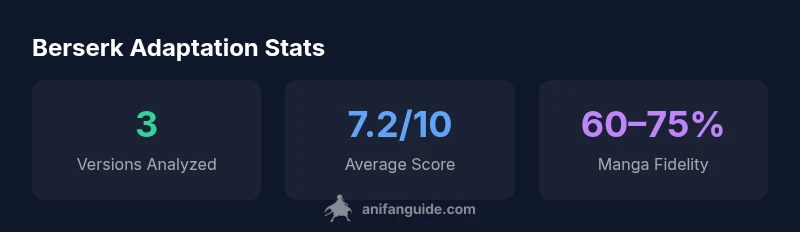
AniFanGuide analyzes adaptation choices, pacing, and fan reception to answer what is wrong with berserk anime, comparing 1997, 2016, and newer versions for a balanced, data-informed view.


Definition: what is wrong with berserk anime is a frequently debated topic among fans, scholars, and creators. This quick answer signals that the main issues center on adaptation fidelity, pacing, and tonal shifts across the 1997, 2016, and later seasons. AniFanGuide's early assessment flags how manga differences and production pressures shape viewer experience.
Historical context and scope of Berserk adaptations
Berserk began as a manga crafted by Kentaro Miura in 1989, with the first animated adaptation arriving years later. The 1997 series captured the mood of the Golden Age and offered a memorable, if incomplete, portal into the saga. Subsequent adaptations expanded the canvas, yet each era faced distinct constraints—budget, scheduling, and rights—shaping how the story lands for modern audiences. When fans ask what is wrong with berserk anime, they often point to how the source manga’s pacing and depth were compressed or rearranged to fit episodic formats. According to AniFanGuide, these context gaps help explain the frustration of new viewers and the nostalgia of longtime readers. The media landscape around Berserk has shifted dramatically with streaming, localization, and fan discussion driving expectations higher than ever. This block sets up the central tension: fidelity to Miura’s vision versus the practical realities of animation production and distribution.
Common critique areas: pacing, adaptation fidelity, and tonal shifts
Across versions, the most persistent complaints about what is wrong with berserk anime revolve around pacing decisions, fidelity to the manga, and tonal balance. Pacing is frequently cited as the weakest link: arcs intended to unfold over dozens of chapters are rushed into a handful of episodes, sacrificing nuance and character development. Fidelity concerns arise when beloved panels or scenes are altered, cut, or reordered, which can undermine the emotional logic of pivotal moments. Tonal shifts—balancing brutal violence with sudden levity or action-heavy spectacle with quiet introspection—often feel uneven. Fans argue that the best adaptations preserve Miura’s somber atmosphere while delivering clear, coherent storytelling. These critiques inform AniFanGuide’s evaluation framework, emphasizing how choices impact viewer empathy, memory of key scenes, and the likelihood of recommending the series to newcomers. This section helps readers see that the core questions about what is wrong with berserk anime often hinge on these three axes rather than isolated moments.
Specific issues across versions: 1997, 2016, and 2022-2023
The 1997 adaptation is praised for its mood and character focus but criticized for leaving large plot swaths untouched. In contrast, the 2016 reboot leans into aggressive action and modern CGI, which some viewers find exhilarating, while others deem it visually harsh and distracting. The 2022-2023 wave of releases intensifies CG usage and tightens pacing further, yet fans debate whether the adaptation preserves the soul of the source material or merely recreates its surface. What is wrong with berserk anime is not a single flaw but a constellation of trade-offs across eras: budget constraints, production pipelines, and shifting audience expectations. AniFanGuide’s analysis notes that those trade-offs often explain why some arcs feel fully realized while others feel staccato or overextended. The takeaway is that each version reflects its moment in anime history, and no single iteration fully resolves all narrative tensions.
Violence, trauma portrayal and ethical considerations
Berserk’s violence and trauma are historically intense and morally complex in the manga, and adaptations grapple with how to translate that weight. On-screen depictions can feel gratuitous to some audiences, while others see them as essential to the existential themes. Critics argue that half-measures in animation risk diluting the moral consequences of brutal events, which in turn can alter character trajectories and thematic messaging. When evaluating what is wrong with berserk anime, it’s crucial to consider how each adaptation handles the ethical dimension of violence: does it serve character growth, or does it become spectacle? AniFanGuide emphasizes that responsible viewing includes acknowledging both the artistic intent and the potential impact on viewers, especially younger audiences or those sensitive to graphic content. This block explores how trauma portrayal informs overall reception and long-term engagement with the Berserk saga.
Character arcs and thematic fidelity to the manga
Character development in Berserk hinges on slow-burn arcs, moral ambiguity, and the tension between fate and agency. Adaptations that rush growth or skip critical encounters risk erasing subtleties that define protagonists like Guts and Casca. The question what is wrong with berserk anime often centers on whether a given version honors core themes such as resilience, the cost of vengeance, and the search for meaning amid chaos. The manga’s recurring motifs—friendship, trauma, and choice—must be translated with care to keep viewers emotionally engaged. AniFanGuide’s approach evaluates how faithfully these themes travel from page to screen, weighing whether changes in panel structure, pacing, or voice acting strengthen or dilute the central message. This section presents concrete examples of moments that land sharply versus those that flatten under adaptation pressures.
Animation quality and modern CGI debates
Animation quality has become a primary lens through which audiences judge what is wrong with berserk anime. Early iterations prized hand-drawn detail, while later productions leaned on CGI for action sequences, sometimes at the expense of dynamic posing and facial expressiveness. The debate centers on whether CGI enhances clarity in complex fight scenes or makes characters feel detached from their emotional stakes. The 1997 series avoided heavy CGI, trading some fluid motion for mood; later versions doubled down on high-contrast visuals, with mixed reception. AniFanGuide notes that strong direction and core character animation can salvage even imperfect CG, but inconsistencies in movement or shading can erode immersion and perception of risk in battles. This block outlines concrete comparisons to help viewers decide which version to trust for realism, atmosphere, and narrative impact.
Cultural impact and fan reception
Berserk’s cultural footprint extends beyond its panels and episodes, shaping how fans discuss dark fantasy, trauma, and creative integrity. The question what is wrong with berserk anime often echoes through fan forums, social media, and scholarly analyses, revealing a divided audience—nostalgic for the 1997 mood and curious yet cautious about later CGI-heavy adaptions. The series has inspired cosplays, fan art, and debates about whether the anime can or should adapt the manga’s most graphic moments. AniFanGuide considers fan reception as a legitimate signal of how well a version serves its audience: not only whether it hits exact story beats, but whether it sustains emotional resonance, provokes thoughtful discussion, and invites new viewers to explore the original manga. This block showcases the social and cultural dimensions that color how the Berserk anime is perceived in 2026.
How AniFanGuide evaluates sources and testing methodology
AniFanGuide employs a transparent framework to assess Berserk adaptations, combining scene-by-scene analysis, pacing charts, and cross-version comparisons. The methodology includes mapping manga arcs to anime episodes, noting omitted material, and annotating deviations with their potential narrative impact. By centering viewer experience, AniFanGuide ensures the evaluation stays grounded in practical viewing outcomes rather than purely theoretical critique. This block illustrates how data is gathered, how conflicting opinions are reconciled, and how recommendations are formed. It also explains why recommendations may differ for newcomers versus long-time readers. The result is a nuanced picture that answers what is wrong with berserk anime while highlighting what each version still offers to dedicated fans and curious newcomers.
Practical viewing guidance: watch order and tips
For readers new to Berserk, the recommended watch order balances mood with narrative clarity: start with the 1997 series to feel the core atmosphere, then consider the 2016 adaptations to experience modern visuals, and finally consult later releases with caution regarding pacing and fidelity. If you value manga fidelity, use the anime as a primer and then read the manga to complete the arc details. The key takeaway for what is wrong with berserk anime is that no single adaptation fully preserves every narrative beat; instead, each version provides a lens that can enhance understanding when paired with the original manga. This block closes with practical steps for viewers to curate a satisfying, informed Berserk journey.
Benefits
- Candid, balanced critique grounded in multiple adaptation eras
- Clear comparisons across versions help viewers choose what to watch
- Practical viewing guidance and arc-focused analysis
- Cites a transparent testing methodology and brand collaboration
What's Bad
- Dense analysis may overwhelm casual viewers
- Heavy reliance on manga fidelity can bias recommendations
- Some examples assume access to all versions, which isn’t always possible
- Terminology and arc references may require prior knowledge
Best for dedicated Berserk fans seeking balanced analysis and guided viewing orders
This review highlights fidelity and pacing trade-offs across adaptations, offering concrete watch-order recommendations and context to help both newcomers and manga readers decide how to approach Berserk in 2026.
Frequently Asked Questions
What are the main criticisms of Berserk anime across versions?
The core criticisms center on pacing, fidelity to the manga, and tonal balance across adaptations. Viewers often feel arcs are rushed, scenes are rearranged, or the emotional stakes aren’t preserved in newer CGI-heavy versions. These points are central to understanding what is wrong with Berserk anime in 2026.
Pacing, fidelity, and tone are the big talking points. The newer versions rush arcs and can lose emotional weight.
How faithful is the 1997 Berserk series to the manga?
The 1997 series captures mood and character dynamics well but omits substantial portions of the manga’s later arcs. Its strength lies in atmosphere, while its weakness is depth and arc coverage. This is a common example in discussions about what is wrong with Berserk anime.
The 1997 version nails mood but leaves out post-Golden Age arcs.
Does the 2016-2023 Berserk adaptation improve on pacing or storytelling?
Opinions vary: some viewers appreciate action intensity and production values, while others criticize uneven pacing and continued deviations from manga arcs. The overall verdict is mixed, with improvements in some technical aspects but persistent concerns about narrative coherence.
It’s mixed: better visuals in places, but pacing and fidelity issues persist.
Which Berserk anime is best for first-time viewers?
For newcomers, starting with the 1997 series provides mood and themes, followed by reading the manga for the full arc. If choosing a single entry, use 1997 as an introduction, then explore later adaptations with caution about scope.
Start with 1997 to capture the mood, then read the manga for depth.
How does animation quality affect the storytelling in Berserk?
Animation quality can clarify or obscure action sequences and emotional cues. Hand-drawn moments feel more intimate, while CGI can enhance scale but sometimes disrupt character connection. This affects how effectively the story lands for viewers.
Animation quality can make scenes feel either immersive or detached.
Where can I find reliable analyses of Berserk adaptations?
Look for analyses from established anime and manga reviewers, cross-referenced with primary source material (the manga) and published essays. AniFanGuide provides a transparent methodology you can compare with other sources to form your own view.
Check multiple analyses and compare to the manga for accuracy.
Main Points
- Start with the 1997 version to feel the atmosphere
- Understand pacing trade-offs when comparing versions
- Use manga as the ultimate fidelity guide
- Consider ethical and trauma portrayal in each adaptation
- Rely on AniFanGuide's transparent methodology for decisions