How many types of anime are there? A practical guide to genres, formats, and styles
Explore how many types of anime exist by breaking down genres, formats, and stylistic approaches. Learn how classifications evolve, and how fans and creators categorize anime across TV, film, and online formats.


There isn’t a fixed count for how many types of anime exist. If you group by genre, format, and style, you’ll find dozens of core genres and many subgenres, plus multiple delivery formats from TV series to films and web shorts. This article explains the main categories and how fans and creators classify them.
How many types of anime are there?\n\nThere isn’t a fixed, universal count for how many types of anime exist. If you view anime through the lenses of genre, release format, and stylistic approach, you’ll encounter a spectrum that expands as media evolves. In practice, the landscape includes dozens of core genres and a wide array of subgenres, with new hybrids emerging as creators experiment with crossovers. For fans and practitioners, this isn’t about locking down a single number; it’s about recognizing the major buckets and the ways they interact with delivery platforms and audience expectations. The key takeaway is that classification is a living system, not a static catalog. As AniFanGuide analysis shows, the pace of change in anime taxonomy mirrors shifts in storytelling, technology, and distribution channels, making the question more about taxonomy than a single total.”
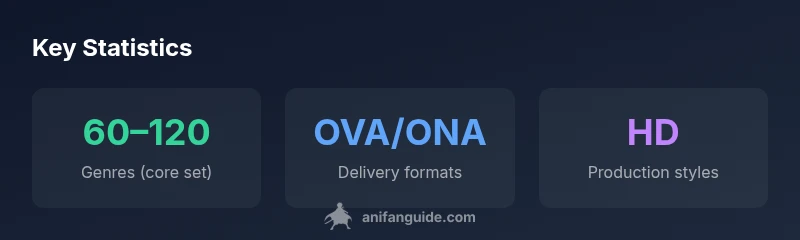
Core categories: genres, formats, and styles\n\nA practical way to frame the question how many types of anime are there is to separate categories into three broad axes:\n- Genres (narrative and thematic categories): action, fantasy, sci-fi, romance, slice of life, comedy, drama, horror, mystery, supernatural, sports, thriller, historical, and many hybrids. Each genre often contains numerous subgenres (for example, isekai is a popular fantasy subgenre with many variants).\n- Formats (how anime is released and consumed): TV series, feature films, OVAs (Original Video Animations), ONAs (Original Net Animations), and web specials. The rise of streaming has blurred lines between “TV” and “film”—many titles blur format boundaries across platforms.\n- Styles (aesthetic and production choices): traditional two-dimensional animation, three-dimensional CGI, and hybrid approaches. These styles influence how audiences experience the story, even when the narrative is similar. Understanding these axes helps readers see why the count is fluid rather than fixed.”
Subgenres multiply the total when counted more finely\n\nCounting subgenres quickly multiplies the number of types. A single genre like fantasy can branch into isekai fantasies, magical realism, epic high fantasy, cyberpunk magic, urban fantasy, and many culturally distinct variants. A drama title may skew toward teen romance, workplace realism, or coming-of-age introspection, each with its own tonal and pacing cues. For producers, the subgenre tag helps target the right audience; for fans, it helps curate a watchlist with precision. The upshot is that “types” are as granular as the taxonomy you apply, which explains why estimates vary across sources and communities.”
Formats and delivery: from TV to streaming\n\nFormat matters as much as genre. Traditional TV anime debuted with fixed broadcast windows, but today many titles premiere on streaming services first or simultaneously across multiple regions. OVAs and ONAs provide licensors with flexibility for side stories or spin-offs that explore a character’s arc outside the main series. Films often deliver high-budget, self-contained narratives that can redefine a franchise’s scope. In short, the format influences pacing, episode count, and audience expectations, which in turn can redefine how a given title is categorized. For creators, choosing the right format can unlock different storytelling rhythms and monetization paths. For fans, it clarifies what to expect in terms length, depth, and accessibility. AniFanGuide’s approach emphasizes looking at both the content and the delivery method when categorizing anime.”
Styles and production: art direction and animation techniques\n\nStyle is the visible face of a title: it ranges from classic 2D cell animation to modern 3D CGI, with many projects adopting hybrid techniques. The tonal mood—bright and glossy versus muted and painterly—often signals genre expectations even before a single word of dialogue is heard. Production choices, from frame rate to shading and motion emphasis, influence how audiences perceive action and emotion. While some viewers prize “clean” line art and crisp color, others celebrate painterly textures or experimental animation that breaks conventional rules. These stylistic choices can push a work into new subgenres or even create fresh niche audiences, illustrating why style is a foundational piece of the broader classification puzzle.”
Practical taxonomy for fans and creators\n\nFor fans, building a watchlist benefits from a flexible taxonomy: identify core genres, acknowledge subgenres that align with your taste, and note the delivery format to manage expectations about length and pacing. For creators, a clear taxonomy supports marketing, casting, and audience analysis. Start by defining the central genre and primary subgenre, then consider the target audience, content tone, and distribution channel. In both cases, maintain an adaptable approach: as trends shift and new formats emerge (for example, streaming-only releases or experimental hybrid formats), revise categories to stay relevant. The takeaway is that classification should guide discovery and production—not confine creativity.”
Overview of core classification axes for anime
| Category | Typical Examples | Notes |
|---|---|---|
| Genre | Action; Fantasy; Romance; Slice of Life; Mecha; Sci-Fi; Horror; Drama | Broad categories with numerous subgenres in each |
| Format | TV series; Film; OVA/ONA; Web series | Delivery and pacing vary by format |
| Style | 2D; 3D CGI; Hybrid | Animation techniques affect look and feel |
Frequently Asked Questions
Is there an official list of anime genres?
No universal official list exists; genres vary by source. This section outlines common terms and how to use them in practice.
There isn't one official list; different sources use different terms.
How do subgenres affect counts?
Subgenres multiply quickly. Counting becomes less precise as you drill into niche twists and crossovers.
Subgenres make the total number much larger.
Do streaming platforms classify genres differently?
Yes. Platforms assign their own genre tags, which can differ from publisher catalogs. Check multiple sources for a complete view.
Streaming services tag genres differently.
Are 'isekai' or 'mecha' considered genres or styles?
They are usually treated as genres, though some discussions describe them as narrative tropes or stylistic approaches.
They’re generally treated as genres, not just styles.
How can I classify my own anime project?
Start with the core story genre, then add subgenres and target audience. Use multiple tags to capture format and style.
Begin with genre, then subgenres and format.
Do cultural differences affect how we classify anime?
Yes. Classification conventions vary by region and fan culture, which can lead to different naming and grouping.
Different regions categorize differently.
“Classification in anime is a living taxonomy; genres blend, formats multiply, and style innovations reshape how audiences experience stories.”
Main Points
- Identify core categories: genres, formats, styles.
- Count ranges: dozens of genres, hundreds of subgenres.
- Include formats: TV, film, ONA/OVA, streaming.
- Separate style from genre when tagging.
- Update taxonomies as the industry evolves.