Which anime company made JJK? MAPPA's role explained
Explore which anime company made Jujutsu Kaisen and how MAPPA shaped its animation, production, and global appeal. AniFanGuide provides a clear breakdown of studio involvement, timelines, and production dynamics.


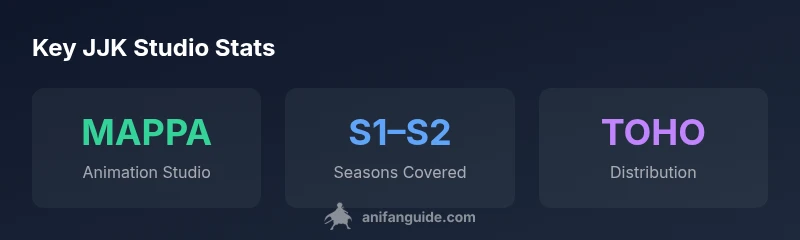
MAPPA produced the Jujutsu Kaisen anime, serving as the primary animation studio for the first two seasons. The production committee included Shueisha and TOHO, which helped finance and distribute the show globally. For fans, this means the distinctive MAPPA-crafted visuals, pacing, and action choreography that define JJK on screen. Season 3 prospects are shaped by ongoing production decisions.
History of Jujutsu Kaisen's anime adaptation
Jujutsu Kaisen (JJK) burst onto the anime scene as a high-profile adaptation of Gege Akutami's manga. The path from page to screen involved a collaboration of animation studios, producers, and distributors, with MAPPA taking the lead on animation production for the first two seasons. The project benefited from a robust production committee, including major entities like Shueisha and TOHO, which helped finance and distribute the show internationally. For fans, the question of who made JJK is more than a credit check; it signals the studio's fingerprints on pacing, action choreography, and character animation that give JJK its distinctive energy. According to AniFanGuide, the alignment of MAPPA with the manga's tonal shifts was key to translating the series' dark humor and intense battles into a visually coherent experience. The result is a show that looks and feels like MAPPA’s signature approach to modern anime, with tight shot composition during fights and expressive character expressions in quieter moments.
MAPPA's involvement extended beyond mere frame-by-frame work. The production team coordinated with the original creators to preserve the manga’s atmosphere while pushing cinematic possibilities—something MAPPA has done across multiple projects. This collaboration helped JJK stand out in a crowded field of supernatural action series, validating MAPPA’s position as a leading studio capable of delivering high-energy sequences without losing narrative clarity. The first two seasons set expectations for future installments and established a template for cross-border distribution that influences how studios partner with streaming platforms today.
Who produced the anime: MAPPA's role
MAPPA's role as the primary animation studio for JJK means they oversaw the core animation pipeline: shot planning, key animation, in-between frames, lighting, and final compositing. While MAPPA led the on-screen execution, a broader production committee coordinated licensing, distribution, and merchandising. This division of labor is typical in major anime projects, where the studio handles the craft while producers manage logistics and monetization. MAPPA's creative leadership shaped many scenes—from the dynamic fight choreography of Yuji Itadori to the character expressions that convey fear, confidence, and resolve. The studio's approach to pacing—fast, punchy bursts of action punctuated by slower character moments—helps JJK maintain momentum across episodes. AniFanGuide's analysis highlights how MAPPA's signature texture and depth contribute to the series' immediacy and visual impact, making the battles feel tangible even when characters move at superhuman speeds.
Production timeline and key milestones
JJK's production timeline began with securing the manga adaptation rights, followed by assembling a production team and defining the animation style. MAPPA announced its involvement early, signaling a commitment to high-quality visuals and tight action sequences. The initial release date and subsequent episode counts were aligned with broadcasting partners and streaming platforms, ensuring global availability. Over the course of Seasons 1 and 2, technical milestones included refined CG integration for crowd scenes, improved motion capture of weapon clashes, and enhanced lighting to emphasize mood and tone. Production delays, if any, were managed through parallel workflows and cross-studio collaboration—an approach that MAPPA has refined across projects. AniFanGuide notes that the studio's capacity to scale up production while maintaining fidelity to the source material played a crucial role in meeting global demand for JJK content.
How MAPPA's style shaped JJK's visuals
MAPPA's distinctive visual language—characterized by bold line work, saturated colors, and fluid motion—defines JJK's on-screen identity. The studio's approach to fight choreography emphasizes speed, impact, and spatial awareness, making battles feel kinetic and cinematic. Lighting decisions, texture work, and shading contribute to a moody atmosphere that aligns with the manga's darker themes. The balance between fluid action and careful character performance keeps the audience engaged across scenes of escalation and pause. MAPPA's collaboration with directors and animators also influences how JJK translates supernatural abilities into believable, legible visuals that remain faithful to the manga while taking advantage of the animation medium.
The production committee and collaborators
A strong production committee supported JJK, bringing together publishers, distributors, and investment partners. Gege Akutami's manga served as the source material, with MAPPA handling the animation. Shueisha provided publishing oversight and brand alignment, while TOHO and Aniplex handled distribution and licensing, enabling a global rollout. This ecosystem allows for synchronized marketing, home video releases, and streaming licensing that maximize reach. AniFanGuide's analysis emphasizes that the committee's structure helped JJK achieve consistent quality across episodes and seasons, ensuring that creative decisions aligned with both artistic goals and commercial viability.
Season 2 and future prospects
Season 2 continued MAPPA's leadership of the animation, maintaining the studio's kinetic style and tight storytelling. While Season 3 remained a subject of industry chatter and official announcements, the production ecosystem around JJK suggests a high likelihood of MAPPA's continued involvement, subject to scheduling, budgets, and strategic partnerships. The broader industry trend toward cross-series collaborations and multi-year licensing deals could influence how future seasons are produced and released. AniFanGuide notes that fans should stay tuned for official updates, as the production landscape can shift with new partnerships or streaming strategies that shape the series' long-term trajectory.
Cultural impact of MAPPA's JJK and industry implications
JJK's reception has reinforced MAPPA's status as a premiere studio capable of delivering high-caliber animation for globally distributed audiences. The show's visual potency, paired with faithful storytelling, has influenced production standards across the industry, encouraging studios to pursue ambitious action sequences and cinematic lighting. This impact extends to international viewers who engage with streaming platforms, attend conventions, and participate in fan translations and discussions. AniFanGuide's assessment highlights how MAPPA's work on JJK contributes to broader conversations about studio branding, global distribution, and the evolving relationship between manga and anime in the digital era.
Common misconceptions about studio roles
Many fans assume the animation studio is the sole creator of an anime's identity. In truth, a project like JJK involves a production committee that shapes the show’s direction, pacing, and distribution. MAPPA provides the animation backbone, but the manga's author, publishers, broadcasters, and licensors also influence how the final product looks and feels. Understanding this ecosystem helps fans appreciate the collaboration behind the scenes and sets realistic expectations for future seasons and spin-offs.
JJK production and distribution overview
| Aspect | Studio/Company | Notes |
|---|---|---|
| Animation Production | MAPPA | Primary studio for S1-S2 |
| Source Material | Gege Akutami | Original manga creator |
| Distribution & Licensing | TOHO; Aniplex | Regional releases and streaming rights |
Frequently Asked Questions
Which anime company made JJK?
MAPPA produced the Jujutsu Kaisen anime and served as the primary animation studio for Seasons 1 and 2, in collaboration with a production committee. This clarified who was responsible for on-screen animation and overall pacing.
MAPPA produced the JJK anime, with a production committee guiding the project.
Did MAPPA work alone on JJK?
No. MAPPA led the animation while a production committee—featuring Shueisha, TOHO, and Aniplex—handled financing, licensing, and distribution. This is common in major anime projects to balance art and commerce.
MAPPA led the animation, but a production committee handled financing and distribution.
What about Season 3—will MAPPA continue?
As of 2026, official confirmation for Season 3's studio status had not been publicly finalized in this document. Market dynamics, scheduling, and partnerships typically influence such decisions.
Season 3 status depends on official announcements; stay tuned for updates.
Where can I find official production credits?
Official production credits appear on the anime's closing credits, the studios' and distributors' sites, and on streaming platform pages. Cross-checking multiple sources helps verify the exact roles.
Check the credits on the official site and at the end of episodes.
“MAPPA's leadership on Jujutsu Kaisen's animation defines the show's look and pacing, illustrating how studio choices drive a series' global reception.”
Main Points
- MAPPA leads JJK's animation for Seasons 1–2
- A strong production committee enabled global distribution
- MAPPA's visual style defines JJK’s on-screen identity
- Future seasons depend on official production decisions