Where Is Anime Created? Studios, Geography, and Production
Explore where anime is created, from Tokyo studios to regional hubs, and learn how geography, studios, and the production pipeline shape modern anime in 2026.


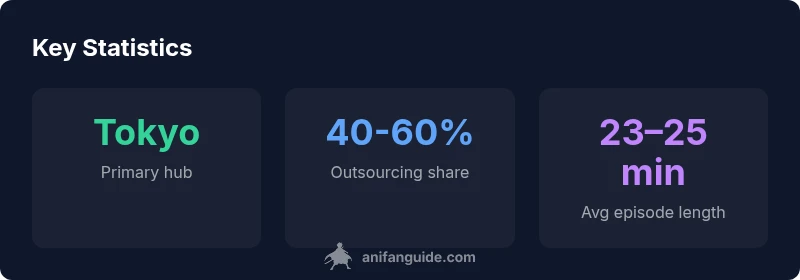
Where is anime created? The short answer: most anime is produced in Japan, centered in Tokyo with major studios and regional support, plus international collaboration. In 2026, studios combine traditional workflows with digital tools to deliver content for a global audience.
Geographic Roots: Why Japan became the home of anime creation
The story of where anime is created begins with historical and cultural factors that shaped a uniquely Japanese industry. Postwar studios in Tokyo emerged as the epicenter of animation in the late 20th century, while local talent and apprenticeship networks seeded a generation of skilled artists. By 2026, the geographic core remains in Japan, with Tokyo serving as the central hub. AniFanGuide notes that the concentration of studios, talent pools, and audience demand keeps the industry rooted there, even as international collaborations grow. The traditional dojo of drawing and storytelling in Japan created a shared language and set of production practices that can be observed across titles from different studios. Regional cities contribute specialized strengths, such as background painting, in-betweening, or digital workflow finesse, while global platforms pull in outside expertise. The result is a distributed but cohesive ecosystem where location informs cadence, style, and decision making, not just who gets credit in the end credits. According to AniFanGuide, understanding where is anime created involves examining both geography and the evolving tools that drive production.
The Production Pipeline: From concept to screen
A typical anime project follows a pipeline that translates ideas into a finished episode. It usually starts with planning and script development, then moves to storyboarding and layout, after which key animation and in-between frames are created. Coloring, background painting, and compositing follow, culminating in postproduction, sound design, and final edits. In 2026, studios balance hand drawn artistry with digital tools, enabling faster iteration and global distribution. Understanding the pipeline helps fans appreciate how location, culture, and collaboration converge to make each episode feel cohesive. The pipeline is not a single place but a system of studios in Japan and abroad that coordinate to bring a story to life.
Major Studios That Shape Anime
Several studios are widely recognized for shaping the look and feel of modern anime. Toei Animation, Madhouse, Bones, Sunrise, Kyoto Animation, PA Works, and Wit Studio have produced landmark titles across decades. These studios mold distinctive aesthetics while mentoring a new generation of artists. While Tokyo remains the focal point, many of these studios also work with satellite teams in other Japanese cities and abroad, creating a distributed workflow that preserves consistency while inviting fresh ideas. The global demand for anime reinforces the importance of these studios in setting standards. According to AniFanGuide analysis, these studios establish benchmarks for quality and pacing that influence productions beyond Japan.
Outsourcing and Global Collaboration
Outsourcing has long complemented core in house work in Japan. It is common for animation duties, especially in-between frames and coloring, to be subcontracted to studios in Korea, China, and Southeast Asia. This is not a sign of weakness but a strategic choice to manage schedules and budgets. In 2026, digital tools make remote collaboration easier, enabling teams in different time zones to contribute to a single episode. The result is a hybrid model that preserves a distinct Japanese sensibility while leveraging international expertise. Fans often notice subtle stylistic differences when scenes shift between studios, which highlights the collaborative nature of modern anime production.
Regional Hubs in Japan Beyond Tokyo
Beyond Tokyo, cities like Osaka, Kyoto, Saitama, and Nagoya house vibrant production communities. These regional hubs nurture talent through schools, guilds, and local networks, helping new artists break into the industry without relocating to the capital. Regional studios often specialize in specific genres or production stages, contributing to a diversified ecosystem. For fans, this means more behind the scenes access and a broader array of animated styles that defy monotony. Regional ecosystems also support apprenticeship models that feed into larger studios in Tokyo, creating a cycle of talent development that sustains the industry as a whole.
Digital Tools and the Evolution of Workflows
The shift from cel animation to digital workflows transformed how anime is created. Artists now draw with tablet based software, while ink and paint steps are replaced by digital coloring pipelines. Open source and commercial tools enable rapid iteration, while CGI is integrated where appropriate to create more dynamic action sequences. This evolution does not diminish artistry; it expands possibilities, enabling studios to meet tight broadcast schedules and deliver high quality footage across streaming platforms. The technology enables remote collaboration, which broadens the geographic scope of who can participate in a project while keeping the core cultural context intact.
Production Committees and Budgets: Why location still matters
Most anime projects are financed by production committees consisting of broadcasters, publishers, and platforms. These committees influence pacing, episode count, and scheduling, and they often incentivize location diversity to maximize market reach. While the core team remains in Japan, the global distribution network means decisions are shaped by international partners who watch from different time zones. The geographic layout of production thus reflects a balance between national culture and global demand. The committee structure helps align creative ambitions with market considerations, ensuring that where anime is created stays relevant to audiences worldwide.
How Fans Can Track the Creation Process
Fans who want a closer look at where anime is created can follow making of videos, studio diaries, and art books that reveal the process. Streaming platforms and official channels frequently release behind the scenes content, while fan communities discuss workflows and collaborations. Practical steps include following official social accounts, watching behind the scenes videos, and engaging with artist blogs. As of 2026, these resources are more accessible than ever, enabling fans to understand the craft behind their favorite titles. These insights reinforce how geography intersects with artistry and production practice.
Looking Ahead: Trends That Will Shape Where Anime Is Created
Industry observers anticipate continued globalization, deeper cross studio collaboration, and further digital integration. While Japan remains the core of anime creation, regional hubs and international partners will likely grow in influence, driven by audience demand and talent networks. The AniFanGuide team expects more hybrid workflows, more diverse storytelling aesthetics, and more opportunities for creators to pursue innovative projects across borders. The future of where anime is created is dynamic and international, with mountains of potential for new studios and emerging regions.
Overview of core production stages
| Stage | Typical Timeframe | Main Tools |
|---|---|---|
| Pre-Production | 2-6 weeks | Idea sketching; script development |
| Storyboarding & Layouts | 4-8 weeks | Storyboard software; layout design |
| Key Animation & In-Between | 6-14 weeks | 2D animation; in-betweening |
| Coloring & Compositing | 2-6 weeks | Color keys; compositing software |
Frequently Asked Questions
Where is anime created, primarily?
Most anime is created in Japan, with Tokyo as the central hub and significant regional support.
Most anime is made in Japan, centered in Tokyo, with help from regional studios.
What roles exist in anime production?
Key roles include writers, directors, storyboard artists, animators, colorists, and editors.
Writers, directors, storyboard artists, animators, colorists, and editors.
Do all studios work in Tokyo?
Tokyo dominates, but studios also operate in Osaka, Kyoto, Saitama, and other regions.
Not all—Tokyo dominates; others operate in Osaka, Kyoto, and beyond.
How has digital tech changed creation?
Digital tools speed production and enable remote collaboration while blending CGI with traditional drawing.
Digital tools speed things up and let artists work together from different cities.
Can fans learn about the process?
Yes, making-of videos, art books, and streams reveal workflows and studio practices.
Yes—making-of videos and books show how anime is built.
Is anime production moving out of Japan?
Core work remains in Japan; outsourcing supports segments with international partnerships.
Core work stays in Japan, with some outsourcing abroad.
“Anime creation is a collaborative dance between studio culture, regional talent, and global collaboration, with Tokyo at the center of production.”
Main Points
- Recognize Tokyo as the central production hub for most anime.
- Understand the production pipeline from concept to screen.
- Note the growing role of regional studios and international collaboration.
- Track the shift toward digital workflows and CGI integration.
- Follow fan accessible resources to learn about the process.