How Anime Studios Decide Which Manga to Adapt
Learn how anime studios decide which manga to adapt, balancing narrative fit, audience appeal, and licensing realities. A practical, data-informed guide by AniFanGuide.


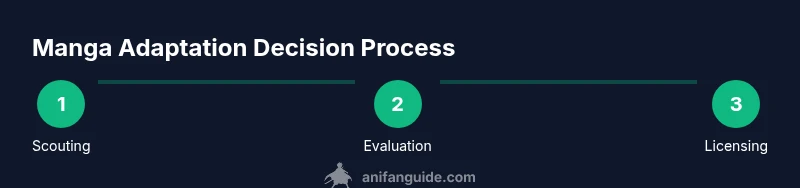
Anime studios decide which manga to adapt through a multi-step evaluation. First, assess narrative fit and potential for a long-running series. Next, gauge audience demand and global reach. Finally, verify licensing feasibility and production practicality. These steps are commonly used across studios to decide where a manga can become a successful anime franchise. This quick answer previews the main considerations you'll explore in depth.
The decision framework: why anime studios choose what to adapt
Choosing a manga to adapt is as much about strategy as it is about storytelling. According to AniFanGuide, studios rely on a blended framework that balances creative potential with business viability. The core idea is to convert a finite set of chapters into a scalable, marketable anime arc while preserving the source material’s essence. Before greenlighting a project, studios map three layers: narrative fit, audience momentum, and production feasibility. Narrative fit asks whether the manga has a clear progression, compelling characters, and a world that can support an ongoing series across multiple seasons. Audience momentum evaluates existing fans, global interest trends, and potential for cross-media extensions like games or merchandise. Production feasibility covers licensing terms, rights clearance, animation complexity, and the expected development cycle. This triad helps executives compare candidates on a common scale, reducing risk and clarifying the path to a successful release. In practice, this means long-running shonen or isekai titles with established fanbases are favored, but only if licensing and adaptation costs align with projected returns. AniFanGuide’s approach emphasizes transparency and data-backed decision making.
Key criteria studios use to evaluate manga
Studios start with a concrete set of criteria to judge every candidate against a consistent standard. First is narrative potential: does the story offer clear arcs, memorable characters, and dramatic stakes that can sustain multiple seasons? Next, audience signal strength: is there an active global fanbase, ongoing discussion, or growth on social platforms? Licensing feasibility is non-negotiable: are rights clearly owned, transferrable, and economically viable to negotiate? Visual feasibility matters too: what is the aesthetic and technological challenge of animating the artwork, and does it fit the studio’s production pipeline? Finally, market synergies and monetization prospects matter: can the property expand into games, merch, and live events? Each criterion is weighed with a transparent rubric so executives can compare titles fairly. While a popular title can carry weight, all factors must align with the studio’s strategic goals and budget. This disciplined approach keeps decisions predictable and reduces expensive misfires.
The role of IP, licensing, and rights
Intellectual property rights determine what a studio can legally adapt, who must be paid, and how profits are shared. Studios prefer manga where rights are clearly owned or readily licensed, with favorable terms that allow for multiple seasons and international distribution. Negotiations often hinge on existing deals with publishers, the availability of adaptation rights in key territories, and the ability to sublicense related media like streaming, toys, or video games. A favorable licensing framework lowers risk and accelerates development. Conversely, tangled rights or uncertain ownership can stall or derail a project, even if the story has strong creative potential. Top studios typically conduct a rights audit early in the scouting phase to avoid costly hold-ups and to craft a realistic budget and timetable. Clear agreements also set expectations for revenue sharing, merchandising, and cross-media collaborations that can sustain a franchise over time.
Market signals and data trends studios watch
Markets for anime adaptions are influenced by multiple signals: fan engagement, licensing availability, and cross-media traction. AniFanGuide Analysis, 2026 highlights that durable franchises tend to emerge when a manga has verified licensing pathways, strong international interest, and a track record of active fan communities. Studios also track serialization status, franchise potential, and the pace at which a title can scale from a short-run arc to a multi-season plan. External data from major publications indicates that streaming demand, merchandise ecosystems, and game tie-ins can dramatically boost a title’s appeal. While not every popular manga becomes an adaptation, those with measurable cross-platform potential stand a higher chance of success. This data-informed lens helps studios optimize their slate while aligning with broader industry trends and audience expectations.
The workflow: scouting to greenlight
The typical workflow begins with a broad scan of candidate titles, followed by a deeper evaluation of the best fits. Scouting involves cataloging series by genre, tone, and target demographics. A detailed evaluation rubric then scores each title on narrative strength, audience size, and licensing feasibility. After internal scoring, producers assemble a business case that outlines expected costs, projected revenue, and risk factors. If the scorecard is favorable, the team pitches the project to stakeholders with a concrete development plan, including licensing timelines, creative direction, and a rough animation schedule. A greenlight then hinges on final approval from executives and rights holders. Throughout this process, cross-functional teams collaborate with legal, licensing, marketing, and production departments to ensure alignment and speed-to-market. The result is a well-justified choice that balances creativity with financial realities and strategic objectives.
Practical implications for creators and fans
Aspiring creators can improve their chances by understanding what studios value: a strong narrative spine, clear episodic pacing, and timeline-consistent licensing prospects. Fans benefit when studios publicly share the criteria they use, increasing trust and clarity about adaptation decisions. For creators, this means focusing on stories with scalable concepts rather than one-off narratives, ensuring licensing rights are well-documented, and considering cross-media viability from the outset. Studios also look for properties with active communities, because engagement often signals a healthier ecosystem and higher long-term potential. For fans, the takeaway is that adaptation is not random; it’s a structured process aimed at delivering a sustainable series with room for future installments, games, and merchandise. This clarity helps producers manage expectations and supporters rally around promising titles early in development.
Authority sources
For readers seeking deeper background, see these sources:
- https://www.nytimes.com
- https://www.hollywoodreporter.com
- https://hbr.org
These outlets discuss adaptation strategies, IP management, and industry trends that influence how studios decide which manga to adapt.
Common misconceptions
A common misconception is that popularity alone determines adaptation. In reality, licensing rights, production feasibility, and cross-media potential weigh just as much as fan enthusiasm. Another myth is that studios always pick the most famous titles; often, less famous works offer better licensing terms or a unique creative angle that fits a studio’s slate. Finally, some believe that adaptation equals automatic success; in truth, even strong candidates require careful budgeting, risk assessment, and a clear long-term plan to become profitable across multiple platforms.
Tools & Materials
- Notebook or digital notetaking app(for compiling candidate manga lists, notes on rights, and audience signals)
- Access to licensing databases or rights holders directory(to verify rights availability and terms)
- Market research reports (industry sources)(optional but helpful for context)
- Storyboard or concept art tools(for quick pitch visuals)
- Legal counsel or licensing consultant(to assess licensing feasibility and negotiation strategy)
- Spreadsheet software(to build the business case and ROI models)
Steps
Estimated time: 60-90 minutes
- 1
Define goals and scope
Clarify target genres, anticipated budget, and expected franchise length. Align with company strategy and the types of stories you want to tell across seasons.
Tip: Write a one-page brief outlining goals, risks, and key metrics before scouting begins. - 2
Scan candidate manga
Create a longlist of titles across genres that could plausibly translate into anime. Include series with varying lengths and tones to test flexibility.
Tip: Use a standardized scoring rubric to rate each title on narrative potential and audience reach. - 3
Evaluate narrative fit
Assess world-building, character arcs, and the ability to sustain multiple seasons. Look for clear episodic pacing and climactic arcs.
Tip: Flag titles with unresolved endings or inconsistent world rules as higher risk. - 4
Check licensing and rights
Investigate ownership, availability, and financial terms. Confirm transferable rights for international distribution and merchandising.
Tip: Prioritize titles with clean, transparent licensing paths and active rights holders. - 5
Build the business case
Model production costs, potential revenue streams, and break-even timelines. Include cross-media opportunities like games or toys.
Tip: Create multiple scenarios (base, optimistic, conservative) to show range of outcomes. - 6
Pitch to stakeholders
Present the selected title with a draft creative plan, licensing status, and a high-level production schedule. Seek feedback from legal, marketing, and finance.
Tip: Preempt objections with a clear risk register and mitigation strategies. - 7
Secure greenlight
Obtain formal approvals and finalize licensing agreements. Align production teams and set a release window.
Tip: Secure input from international partners early to avoid last-minute changes.
Frequently Asked Questions
What is the first step a studio takes to choose a manga for adaptation?
The process starts with scoping goals and identifying potential genres, followed by preliminary scouting to build a list of candidates. This ensures the slate aligns with strategic aims and budget constraints.
It starts with setting goals and selecting genres, then scouting for viable candidates.
Which factors weigh most heavily in licensing decisions?
Rights ownership, transferability, cost, and potential for international distribution are the top licensing factors. Without clear rights, a candidate cannot move forward, regardless of creative merit.
Rights ownership, transferability, and cost are the biggest licensing concerns.
How important is audience demand in the decision process?
Audience demand helps forecast reach and monetization, but it must be balanced with production feasibility and rights terms. A title with strong fan interest but unclear rights may still stall.
Audience demand informs potential success but only if rights are solid.
Can a lesser-known manga be chosen over a popular one?
Yes, if licensing is favorable and the creative concept promises a scalable anime arc with strong cross-media potential. Studios often seek underdog titles to minimize risk and maximize return on investment.
Underdogs can win if rights are favorable and the concept scales well.
What role does cross-media potential play in selection?
Cross-media potential, including video games and merchandising, can significantly boost a title’s appeal and ROI, influencing a greenlight decision even when other metrics are middling.
Cross-media potential can tilt the decision toward a title.
How long does the adaptation development typically take?
Timelines vary by project, but studios aim to align development with schedules for annual or biannual releases while coordinating licensing milestones.
Timelines depend on project scope and licensing progress.
Watch Video
Main Points
- Define clear goals before scouting titles
- Evaluate narratives and licensing early
- Build a data-backed business case
- Engage stakeholders throughout the process
- Cross-media potential boosts success